
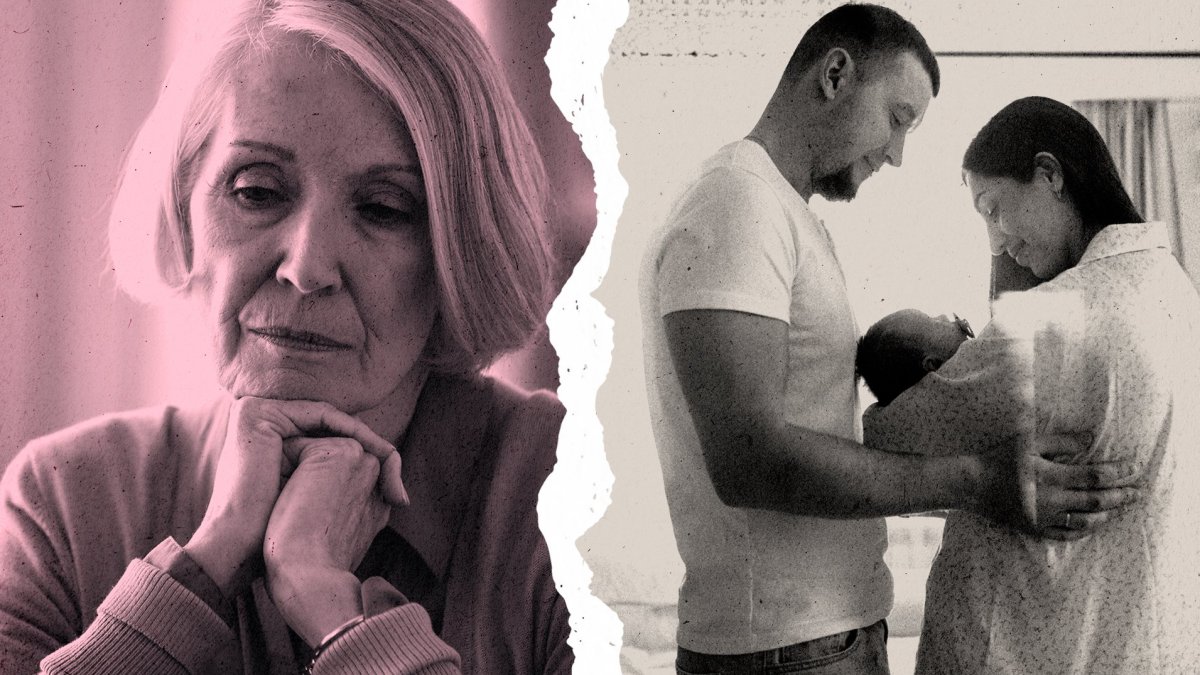
Helen, 68, from Worcestershire, has an adult daughter who is happily married but has decided not to have children. Her daughter worries about climate change and the state of the world and does not believe bringing another person into it is right for her. Helen respects that viewpoint. What else can she do? Yet, respect does not necessarily cancel disappointment. A friend of mine in Cheshire, 70-year-old Jane, has a fiercely independent adult daughter who has spent much of her life travelling, working from a laptop and living in different countries. Now in her mid-forties, motherhood looks increasingly unlikely. Jane once said to me, almost without thinking: “She never gave me a grandchild.” Then immediately corrected herself. “God, that sounds awful. She doesn’t owe me one.” But those tiny words reveal a lot. Grandchildren are sometimes spoken about as though they are the final instalment in an unwritten family contract. We raise our children and, decades later, they supply us with grandchildren. Except there is no contract. Our children grow up and remind us of something important: their lives belong to them. Shorts They do not owe us marriage or parenthood. And they certainly do not owe us a small child on whom we can lavish all the time and attention. Knowing that does not mean we cannot mourn the experience we expected to have, though. For many, becoming a grandparent is something we quietly assume will happen. We may never formally decide that we want it, we simply imagine grandchildren somewhere in the vague landscape of later life. And this feeling isn’t exclusive to parents. Ruth, 71, from Bristol, never had children. She had two long relationships when she was younger, but motherhood never happened. She never pursued fertility treatment. She was enjoying her life. She and her partners had freedom, disposable income and opportunities that friends with children did not. She does not describe herself as someone who regrets being childless. But now, watching friends become grandparents, she occasionally wonders about the road she didn’t take. It isn’t necessarily a baby she imagines. It is the relationship she might have had now. She has time, affection and things she would love to pass on. She wonders what it might have been like to take a grandchild to a museum, teach them to cook or help plant something in the garden. When we talk about the divide between people with grandchildren and people without, we often make it sound straightforward. Some are; others are not. But it is often not that neat. Susan, 69, recently told me about a regular get-together she has with a group of women she’s known for years. One of them doesn’t come very often anymore because she spends so much time with her grandchildren. When she does come, she is full of updates: her granddaughter has just got into grammar school. And during the holidays, they’d been to France. Another woman produced photographs of her granddaughter’s artwork. She was extraordinarily talented, apparently, and having extra art lessons. Perhaps she might even take Art A-level. There is nothing malicious about this. These are proud grandmothers. But Susan sat listening and felt something she didn’t want to feel: envy. What would my life be like if I had that? The uncomfortable truth is that Susan does have a grandchild. She has simply never met them. Her relationship with her adult child broke down years ago. The circumstances are complicated, as family estrangements usually are. She knows she has a grandchild, now seven, but she has never held that child, taken them to the park or seen a school photograph. She doesn’t know whether she ever will. Indeed, part of what can make this grandparent divide so painful is that what people share about their grandchildren is rarely about exhaustion, family conflict or the teen who no longer wants anything to do with Granny. There are photos and stories of birthday cakes, Christmas pyjamas and smiling children on beaches. Grandparenthood has its own Instagram filter. People can feel less of a priority: I have known people who arrange to meet friends only to find that plans are repeatedly abandoned because a daughter needs emergency childcare or somebody has to collect a grandchild from school. Again, it is understandable. But if you are the friend who keeps being displaced, it can begin to feel as though you have slipped down the hierarchy. And then there are just the grandparents who are spectacularly full of it. There are people who can turn almost any conversation into an account of what little Nathan said at breakfast or how advanced Isla is for three and a half. But even here I hesitate to blame them. Perhaps what feels like smugness to the listener is simply delight to the speaker. Although having grandchildren is no guarantee of the sentimental later-life idyll either. Geoffrey, 67, from Cheshire, worries desperately about a teenage grandchild who is skipping school and mixing with a crowd he believes is pulling him in the wrong direction. His daughter’s marriage is volatile and family relationships are strained. He hears other grandparents talking about exam results and university applications and stays quiet. His grandparenthood is defined by worry, helplessness and wondering when he should intervene or stay quiet. And there are grandparents who live hundreds of miles from their families. Grandparents who see children being raised in ways they profoundly disagree with but know they have little right to challenge. There are also people who discover that the grandparent role they anticipated simply does not suit them. Perhaps the divide is not really between people who have grandchildren and people who do not. It is between the life we imagined and the life that actually arrived. One of the challenges of later life is accepting how little control we have over what happens in the generations beneath us. We can love our adult children. We can advise when invited. We can hope for things. But we cannot live their lives for them. And perhaps there are other places to put that part of ourselves. People without grandchildren sometimes build wonderfully important relationships with nieces and nephews, godchildren, friends’ children or younger people in their communities. They volunteer. They mentor. They teach somebody to knit, bake bread, grow vegetables or identify birds. None of that needs to be presented as a consolation prize. A grandchild cannot simply be substituted by finding another young person. But the desire beneath grandparenthood – to care, encourage and pass something on – does not have to disappear because the family tree developed differently from the one we once imagined. And when a friend reaches for her phone and says, “You must see what my granddaughter did,” perhaps two things can be true at once. You can be genuinely pleased for her. And still feel the small ache of the life you didn’t get to have. Dr Denise Taylor is a chartered psychologist and author who writes about later life and exploring meaning beyond full-time work. Her latest book, ‘ThriveSpan: Walking Gently Into What Matters Now’, is out now
My daughter never gave me a grandchild – I can’t help but feel disappointed
Full Article
Original Source
Read the full article at Inews →KhanList aggregates and links to publicly available news content. We do not host full articles from third-party sources. Always verify important information with original sources.