
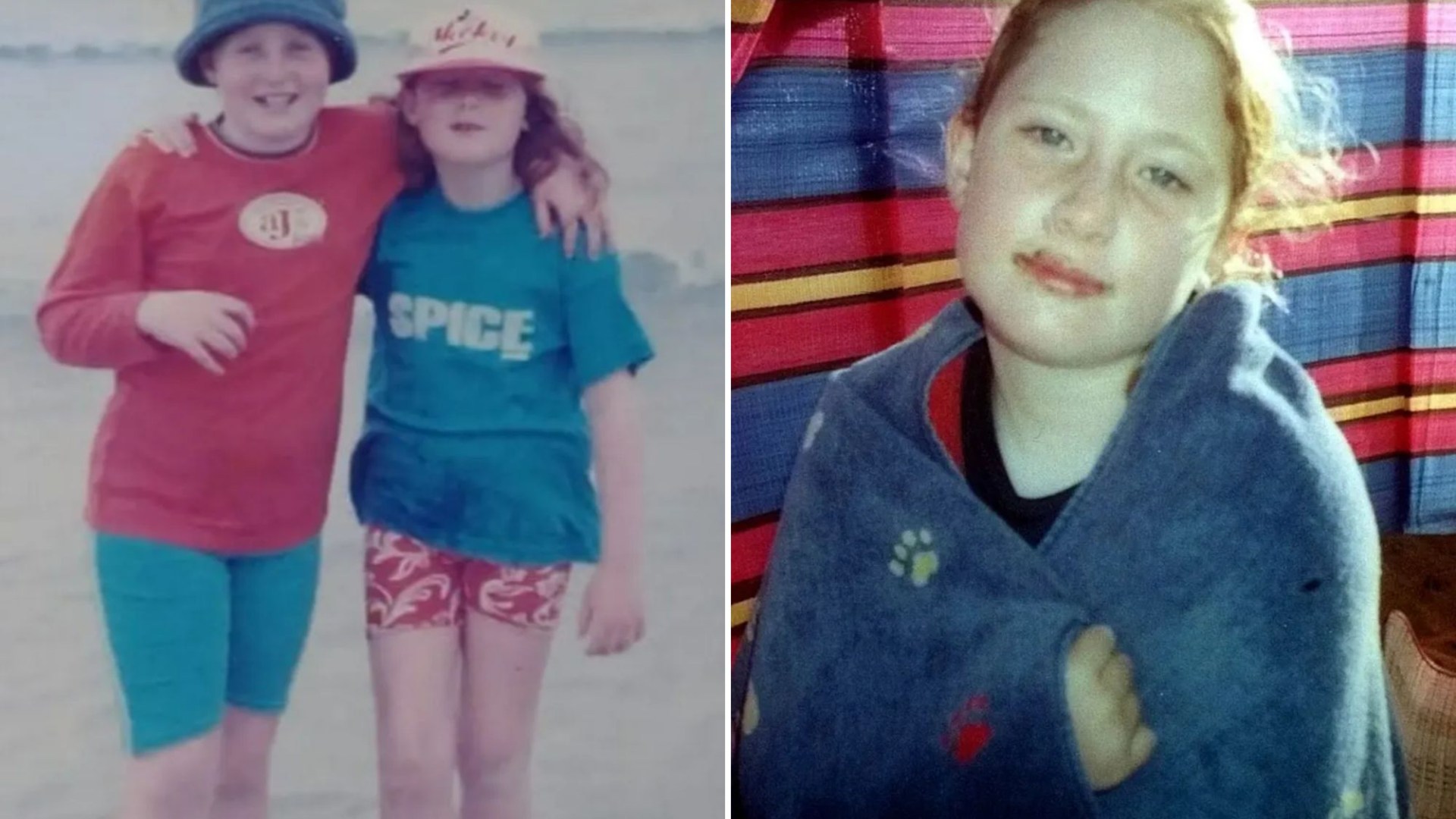
EIGHT-year-old Heather Preen died just two weeks after swimming in sewage-filled water at a Devon beach during a family holiday. First complaining of an upset stomach, Heather was diagnosed with E. coli and deteriorated rapidly before her horrified family’s eyes. Heather Preen, 8, died whilst on holiday at Dawlish Warren beach, Devon Credit: Apex News & Pictures Heather Preen, with her sister Suzanne Preen Credit: SWNS Her mum Julie Maughan, 59, believes her daughter caught the disease from sewage in the water at Dawlish Warren – though South West Water claims no definitive source of infection was established. Heather died over 25 years ago, in 1999. But Julie says it’s still risky for families to swim at UK beaches this summer, as water companies are continuing to illegally dump sewage. Sign up for the Health newsletter Thank you! An investigation by the charity Surfers Against Sewage found there were illegal dry spills – where untreated sewage is discharged into streams, rivers and the sea during periods of dry weather – in 105 bathing spots in 2025, spanning 7,885 hours. Yet 79 per cent of these locations were classified as “good” or “excellent” for swimming. Julie Maughan, 59, has been campaigning for better water quality since the death of her daughter in 1999 Credit: SWNS Heather’s foot slipped and went into sewage-filled water – she went in the sea to wash it off Credit: Times Media Ltd Meanwhile, the SSRS app – which stands for Safer Seas and Rivers Service shows live information about water quality and recent sewage spills around the UK coast – has issued 5474 sewage alerts in 2026 so far. “There’s toxic soup going on, and it’s an outbreak waiting to happen,” said the personal trainer from Bromsgrove, Worcestershire, who’s campaigned for better water quality since losing her daughter. “Right now, this is a public health crisis. “I don’t want people to suffer what I suffered. Most read in Health “I don’t want children to spend half their holiday with sickness and diarrhoea.” Julie is urging people to download the SSRS app and check it before going swimming this summer. “If it says it isn’t safe, do something else for the day and check again tomorrow. It’s not worth risking it,” she said. Julie’s tragic story inspired Channel 4‘s Dirty Business documentary – a three-part series investigating England’s systemic sewage pollution crisis. Heather was diagnosed with E. coli and her condition rapidly deteriorated Credit: SWNS It exposed widespread, illegal raw sewage discharges into UK waterways and the failure of privatised water companies to properly manage environmental regulation. In late July 1999, Julie and her husband Mark took their children, Heather, eight, and Suzanne, ten, to Dawlish, in Devon. But before their swim on the Dawlish Warren beach, they came across a sewage pipe. They tried to jump over the water that was spilling out of it, but Heather slipped and her foot entered the water, which Julie’s husband Mark remembered seeing toilet paper in. Heather entered the sea to wash off. That night, she became suddenly ill. “She had a really bad upset stomach and she came out of the bathroom really distressed,” said Julie. “I just did what any mother would. I calmed her down, kept her off her food and made sure she drank water.” But over the course of a week, instead of getting better, Heather became weaker. Heather with her sister Suzanne Credit: SWNS E. coli symptoms Escherichia coli (E. coli) bacteria live in the guts of people and animals. Most types of E. coli cause no harm or mild illness. But a few strains can cause bad stomach cramps, bloody loose stools and vomiting. People can get an E. coli infection from tainted water or food, mainly raw vegetables and ground beef that isn’t cooked through. But it’s also possible to get infected with E. coli after swimming in pools or lakes tainted with stool. Symptoms can include: Loose stools, which may range from mild to serious and from watery to bloody Stomach cramping, pain or tenderness Upset stomach and vomiting They tend to begin three to four days after contact with bacteria. But symptoms can start as soon as one day after contact, or they can begin more than a week later. “As time went on she started to deteriorate,” Julie recalled. The parents took Heather to the chemist when she started bleeding from her rectum, who gave them anti-sickness tablets. “Then the dysentery really started – I had to put sanitary towels on her because she was bleeding so much,” Julie said. Another doctor advised Julie and Mark to take Heather to casualty straight away. “I’ll never forget when they tried to take her blood pressure,” the mum said. “They wheeled in one machine but couldn’t get any reading of her blood pressure. “So they wheeled it out, assuming it was broken, and wheeled in another. But they still couldn’t get a reading. That’s when they realised it wasn’t the machine.” Doctors said Heather had been infected with an aggressive strain of E.coli – a type of bacteria found in contaminated water and faeces. “Other families and other children started to appear with the same symptoms and illness, and we started to realise it was an outbreak,” Julie claimed. “That’s when doctors started asking questions about the water and where we sat on the beach.” Heather started suffering fits during the night. “Now, looking back, I realised I was watching her die. That was when most of the damage was happening,” Julie said. Heather was rushed to intensive care in Bristol after a “massive fit” the following morning, but things continued to “spiral” from there. After a week, doctors told Julie that there was no activity in her brain. “They told us we needed to turn off the life support, because her brain had been so damaged,” the mum said. Heather died on August 8 and an inquest into her death took place the following February. It was heard there was a sewage discharge a few days before Julie’s girls visited the beach, but South West Water and the Environment Agency said that a “single spill” from the storm overflow was unlikely to be the source. Ultimately, the cause of the outbreak was not identified, and a verdict of misadventure was returned by a jury. From that moment, Julie focused on campaigning for better water quality and sharing her daughter’s story, but Mark Preen tragically took his own life 17 years after he lost his daughter. As the UK grapples with blistering heat and water shortages, Julie fears people might get sick once again after swimming. “[Water companies] are doing dry discharges now, which is completely illegal,” she claimed. “They’re pumping pathogens into the water, without any consequence at all.” The charity Surfers Against Sewage, who have supported Julie, say: “Sewage overflows… are designed to discharge waste only during heavy rainfall, when sewer systems risk becoming overwhelmed. “However, our investigation shows that sewage is being discharged even when it hasn’t rained. “A dry spill occurs when a sewer overflow releases sewage when rainfall is below 0.25mm on the day of the spill and the following 24 hours. “Because there is no rainwater to dilute the waste, pollution released during dry spills can be more concentrated and potentially more harmful for swimmers, surfers and other water users.” Julie said: “When I see parents now on the beach, I can’t run around screaming and shouting saying ‘get out of the water, get out the water,’ but I want them to know how dangerous it is,” she said. “I don’t want people to not go on holiday, I just want people to be safe, be informed, know what’s happening.” She advised families to check the SSRS app before swimming, use hand sanitizer, and cover any cuts or open wounds before going in the water. Comment now
My daughter died after unknowingly swimming in sewage in Devon – what every Brit should know
Full Article
Original Source
Read the full article at Thesun →KhanList aggregates and links to publicly available news content. We do not host full articles from third-party sources. Always verify important information with original sources.