Oversubscribing to traditional notions of manhood is hurting boys and men. These men are rejecting the boys don't cry trope and embracing "expansive masculinity". As a boy, my loving, generous parents bought me gifts I didn't always deserve.I'd have a brattish meltdown if the gift wasn't the right brand or specific thing I'd wanted. I feel ashamed of this now. Then again, I was just a kid.One 13th birthday present, though, I accepted with convincing gratitude and enthusiasm, despite not having requested it. It was a Pamela Anderson clock for my wall. Her tight Baywatch bikini left little to the imagination. I remember asking mum: “Why is her hair so messy?” Mum laughed. “It’s supposed to be sexy,” she said. Out loud, I agreed. Inside, I panicked that my mask was slipping.The mask, to dupe them into believing I was straight, was across my whole bedroom. My single duvet cover was emblazoned with the Liverpool Football Club logo. I had zero interest in football but believed that was what "real men" would choose. I secretly chose it because it was Spice Girl Melanie C's favourite club. I was cos-playing masculinity.Around the same time, Madonna released Human Nature. The lyrics included five words — aptly whispered for their salacious potential — which really spoke to me: Express yourself, don't repress yourself.Resolving that, one day, I'd be brave enough to express my true self, I lifted the clock from the wall and scrawled the lyrics in permanent marker on the wall behind it, then replaced Pamela Anderson so nobody would ever see. One American blonde bombshell concealed who I really was; another revealed it.Those words remained behind that clock until the day my dad, then living alone in the family home, died.I was 32 and as I solemnly packed up the house and my belongings, ready to sell, it occurred to me: those words saved my life.They could have also saved my dad's.The masculinity crisisMasculinity is in crisis. It has for too long depended upon a narrow definition that relies on outdated, hackneyed clichés: Boys don't cry. Men are stoic. Men are strong. Men are providers. While the clichés endure, men themselves are not doing so well.The latest stats show that men are around three times more likely to die by suicide than women. Yet men are far less likely to talk to a counsellor. They're more likely than women to lose touch with their friends. And, much like my dad, their coping mechanisms are killing them.Depressingly, right now, healthy masculinity can feel a way off. But a fresh cohort of Australian men are fighting for change and educating the next generation of boys on what being a strong man can look like.They're showing boys how to be good men, breaking gender conventions, and a select few are becoming primary caregivers. These men are putting themselves forward as better role models than boys are finding in the manosphere.'Expansive masculinity'By the time I meet Ben Vasiliou, 40, chief executive of the Man Cave — a charity creating safe spaces to challenge problematic gender stereotypes and improve boys' and men's wellbeing — in the lobby of a Sydney hotel, we've already spoken at length on the phone.I already know how passionate he is about making boys "more emotionally mature and expressive" so they're not "locked into the rigid dominant, aggressive stereotypes of a bygone era, that harm everybody". As it turns out, Ben came dangerously close to discovering just how harmful these stereotypes can be.Ben — whose upcoming book, Better Man, is about reclaiming masculinity for good — tells me how he talks to his two adult children about difficult subjects, such as porn, and the charity's workshops create that same space. "Teenage boys need a safe space for messy, sometimes politically incorrect conversations," he says. "Instead of immediately course correcting or judging them, we need to open up the conversation, then give them space and opportunity to find healthier role models." Ben Vasiliou, CEO of the Man Cave, wants to move away from "toxic" and "masculinity" always being lumped together.(ABC News: Kate Nickels)Ben says one in three young men aged 16 to 24 is currently living with a mental health condition, most commonly anxiety, substance misuse or depression. He says many boys feel distressed, and he blames digital technologies, porn and the pandemic. But people like Ben insist this crisis is preventable.I'm keen to discover what drives those like him on the frontline of the Herculean task of improving the lives of the next generation's boys. A task made more difficult by toxic manosphere figures like Andrew Tate, the incels and the "looksmaxxers".Ben wants to move away from "toxic" and "masculinity" always being lumped together. Three words you'll often hear him say are "unconditional positive regard". This is his radical starting point for all boys, so toxicity doesn't become a self-fulfilling prophecy. "Such regard always comes with accountability," he says.Ben grew up in social housing with his parents and two siblings. When he was 11, his dad began using heroin. "He constantly stole from us to buy more drugs," he says. Then, when he was 16, his mum died of cervical cancer. Shortly afterwards, his dad, driving under the influence, hit a car full of Ben's schoolmates. While nobody died, Ben left school, in shame, with few role models and no primary caregiver.Ben went off the rails with "drink, drugs, stealing cars," he says. "Hanging with the wrong crowd."His girlfriend fell pregnant with their son when he was 19, then again with their daughter when he was 24. Then he says something that surprises me: "Aged 28 I had a massive mental health crisis about huge identity issues I'd been struggling with; feelings that weren't natural or allowed to ever see the light of day, thoughts that showed up in bad behaviour and suicidal ideation. I was gay."After much soul-searching, he decided to come out. "In the depths of my despair, I realised my kids were better off with a gay dad than a dead dad," he says. "Having a dead parent really screwed me over."Ben emphasises "opening up, seeking help, checking in on your mates" as key values for all boys, no matter what they're going through. But it must feel like an uphill battle.Always act tough; never look girly or gayEarlier this year, the first Australian study to examine the connection between rigid gender norms and life outcomes among adolescent boys was released. It found that the pressure to appear "strong" and adhere to rigid masculine norms leads to bad mental health and problematic attitudes towards women. Forty-three per cent of teenage male participants in the survey agreed no matter what happened, a teenage boy should appear strong to others; 48 per cent said being thought of as gay makes them seem like less of a man.According to the study, the tough bravado expected of men also includes refraining from sharing feelings with others; distancing themselves from anything feminine or "gay"; and "being able to stand up to and dole out teasing and taunting in the peer context". Those who most strongly agreed with these rigid, traditional expectations were more likely to have perpetrated violence, hold violence-supportive attitudes and have consumed violent pornography.The conclusions were stark. Those who clung tightest to these notions of masculinity were more likely to struggle with wellbeing. Boys who weren't governed by such limiting ideas were more likely to thrive.'You've always been my best boy'I grew up as a gay boy who was confused about how to be a man.My dad, who I lived with when my parents divorced, was a stoic, muscled, tough nightclub bouncer and bodybuilder. He broke the arms of aggressive men who harassed women in the nightclub and refused to leave when asked; he did it out the back, where there was no CCTV.Being a man, I thought, meant being "strong" — physically but also by showing few emotions, especially "girly" ones. It meant not crying, especially not in public.Ultimately this archaic notion of manhood led to my dad's downfall. He died aged just 63, struggling to find his way in a world that didn't make a safe space for him to express vulnerability and difficult emotions, or make him feel he belonged once he felt his "provider purpose" was served; he was an empty-nester nearing retirement. His unhealthy, destructive coping mechanisms told me he was struggling but he consistently, stubbornly refused the mental health support I urged him to accept. Perhaps, to him, like he once said of my gayness, talking therapy was "just so very unmanly". Ironically, denying it was the very thing that made him weak, not resilient and strong. As he grew up Gary Nunn felt he drifted apart from his father. (Supplied: Gary Nunn)My dad was his strongest, to me at least, at the very moment he felt able to push through all of that. Feeling lonely, purposeless, on the scrap heap, pessimistic for what lay ahead and no doubt repressed, his last ever text message to me was completely out of character. It was affectionate: "You've always been my best boy xx"Dad hadn't said anything like this to me since I was about seven. The cute joke was that my sister was his best girl and I was his best boy. I felt like I was until the day he discovered I was gay. Then it felt like we were two men, each living out our very different versions of masculinity under one roof, doing our best to relate to one another, yet drifting slightly, sadly apart from the closeness we once shared. I still had him wrapped around my princess finger; he'd give me lifts at my polite request, but denied me hugs, even once — crushingly — after I asked for one following 18 months apart.A week after that uncharacteristic text, he was dead.'End the nihilism'This is "one of the hardest times to be an adolescent male in human history," says clinical psychologist and associate professor at the University of Melbourne Zac Seidler, who is also director of research at Movember."OK, you won't die of the bubonic plague, but far more stressors exist: technological, financial, global uncertainty all fray the existing social fabric and scaffolding," he says.We've seen the rise of the "lone wolf" and "the entrepreneur" men, he says, who are disconnected from each other and themselves, which leads to loneliness and feelings of inadequacy when men are pitted against each other. "People mostly flourish when they feel connected," he says, as they're better equipped to "sit with such uncertainty". Dr Zac Seidler is calling on people to end the nihilism he believes we have about men.(Supplied: Zac Seidler) Zac believes this is something happening as a direct result of their nurture."I've spent my career upskilling people about male distress and suicidality — it slips through the cracks consistently, because it doesn't look and sound like they expect," he says."When young guys have been told since they were four that expressing feelings is dangerous, expecting them to just show up and offer you that on a platter is madness."One solution, he says, is to end the nihilism we have about men."We've created an entire cultural movement around girl power, which literally shifted their education and employment outcomes. But we're sleepwalking our way into the next generation of boys potentially being even more stifled and unsupported than the previous generation, because we're not willing to engage in the messy, uncomfortable conversation around what it means to be a man today," he says. "Fathers can only do that once they've grappled with this themselves."The role modelsDrew Hanger, 33, from Melbourne, is the manager of education at the Men's Project at Jesuit Social Services — the organisation which produced the study showing that men are more likely to thrive when unshackled from rigid notions of masculinity. He meets me for coffee in between overseeing the rollout of programs for schools, teachers, students and parents.He's driven by a childhood of feeling different. "I didn't fit into the box as a young man and grappled with not feeling like a young man should. I was very close to my sisters and women, and felt safer around them," he says. "I liked to read; I wasn't sporty."Having grown up with violence in his home, and having previously been a teacher, he wants boys to "have the freedom to be authentic and show up how they want to show up, without feeling confined".One of the biggest blockers to such authenticity is boys' fear of being teased and ridiculed, he says.But he's also hopeful."In the next generation, there are some really progressive young males rejecting these norms and moving away from this restrictive view of masculinity, which is really exciting." Drew Hanger, manager of education at the Jesuit Social Services's Men's Project, believes the future is bright. (Supplied: Gary Nunn)Recent changes by the Australian government, including age verification for adult content sites and the social media ban for under 16s, help set the tone and draw a line in the sand, he says. "We're lucky to have these legislative changes, and an e-safety commissioner trying to make them work. People may say, 'it's not going to work well,' but it's like smoking and alcohol — you can't stop it, but you can cut down access to it. It's a really good step in the right direction."Another key repeated solution is role modelling. Ben Vasiliou names heterosexual rugby league star and reformed gambling addict turned Booktok literacy influencer Luke Bateman as a top Australian example of positive masculinity."He's this big, burly, sporty, lumberjack guy. And he loves reading romance novels and doesn't care about saying that his favourite series is Heated Rivalry, about two gay dudes in the Ice Hockey League," Ben says.He's a prime example, he adds, of "more expansive masculinity" which incorporates "compassion, kindness, respect and setting boundaries" alongside more traditional "masculine" values. Former NRL player Luke Bateman, who grew up on a cattle station in western Queensland, embodies "expansive masculinity".(Supplied: Simon & Schuster Australia)And there's research that shows boys most appreciate real life, local role models, he says. "They acknowledge they're better at giving advice than manosphere influencers." That's why workshop facilitators are youth workers, counsellors, artists, rappers and beatboxing champions.Man Cave workshop facilitator Al Green says when boys are invited to anonymously share their thoughts on becoming men they often write, "'Why would I want to grow up to be a man? I'll just get cancelled,' or, 'I'm bad, why should I even try?'" he says. "These are their formative years; they [often] haven't actually done anything wrong yet."For this reason, Al, who has two young children himself, counteracts the recent hand-wringing about boys. "I choose to have hope, because if we start from the point that men are bad and destructive, that's what they'll grow into. I refuse to have my kids grow up in that world."Who's most likely to thrive?The new cohort of men advocating for "expansive masculinity" say it'll be the men who know that being strong means not being afraid to be vulnerable, show humility, or admit when they're in need of professional help. All the things that, when I was growing up, made me a "sissy". But when I look around, the sissies are strong. They talk when they need support. And there are more of them here, and surviving, than in the generation before.Although, gay men suffer too. Almost half of all LGBT+ people (47.8 per cent) have seriously thought about taking their own life at some point in their lifetime, compared with just over one in seven heterosexual people (15.3 per cent). All men, gay or straight, are over-represented in suicide stats. One solution to ensure things are better for the next generation of boys entails trying to convince them of a tricky paradox: that perceived softness can equal strength. That by being thoughtful, emotional and gentle, they're more likely to survive life's slings and arrows.To honour my dad's life, and the values he instilled in me as a good, bedtime story-reading dad — along with the inevitable Phillip Larkin-esque stuff-ups he made like all parents ("They f*** you up, your mum and dad") — I made myself a promise.Shortly after his death, I decided I'd dedicate much of the rest of my life and journalism, unpicking some of the issues that led to this good man's untimely death. I'd dare to envisage a world in which you can still feel like a complete and respectable man even after the things dad felt able to offer the world as a traditional bloke evaporated. A new way of being. A different kind of strength, one that endures as the muscles wither with age.'Are these boys gay?'At the beach earlier this year I saw a young lad lay his head lovingly, not mockingly, on his mate's chest. They laid like that peacefully for a while before exploding into a boisterous game of football in which they hurled insults at one another.Days later I was at a café with my sister. We witnessed a similar scene: one laddish boy sat on another's lap; the boy softly brushed his hair from his eyes, before leaping up and jumping around. I tried not to stare."Are these boys gay? They don't seem it," I whispered to my sister. "No, I don't think so," she said. "Some boys aren't as afraid to act this way these days."For every centimetre of progress, an inch of regression. My sister, an early childhood educator, tells me a mum recently picked up her young son who'd tried on a dress. "Don't let his dad see that," the mother said. "He'll go mad."But the kindy staff don't intervene when boys do things like play with dolls, my sister says, "it means they might make gentle, caring dads".Now, around half of all kinder pick-ups are done by men, says my sister, who's seen it increase since she started working in the sector 15 years ago.We're in Sydney's inner-west at a daycare centre and an adorable almost-3-year-old, Riley, rushes into her dad's arms like it's the most natural thing in the world.Watching them I feel surprisingly moved. He beams and twiddles her hair; she beams back and strokes his neck."Sometimes, kindy staff make comments, like, 'Oh, where's Mum tonight?'" Alex McMillan, 34, says. "Or if Riley's sick in the middle of the day, they'll call her mum, rather than me."Her mum, an investment banker for Westpac, tells them to call dad, who is Riley's primary caregiver. Changing working norms means dads like Alex, a financial advisor, can work remotely and do childcare — he now does a four-day week. "My wife earns triple what I do so it made sense," he says. Alex McMillan with his wife and baby daughter, Riley.(Supplied: Mia Screpnek)Alex feels "secure and comfortable with the power dynamic" with his wife, even though it has occasionally raises eyebrows.Even in Sydney's enlightened inner-west, he says parent groups aren't always particularly welcoming to a father. "It's still quite isolating, operating outside of society's norms," he says. "I don't expect a wave of sympathy cards — I'm a straight white male — but I'm just being honest about the reality of breaking gendered stereotypes. We've removed the automatic expectation of the woman being the primary carer, without allowing men to feel fully supported, included and thriving in that role. Getting more men in those spaces would normalise it — sometimes I feel like an intruder in playgroup spaces."We pass a school where mums are more common than dads at the school gate — this'll be Alex when Riley starts in two years' time. "I'm proud of my close bond with my daughter," Alex says. "It means a lot to me."His own upbringing was more traditional. His dad was at work all day; as are many of his male friends today. But they're supportive of his lifestyle choice and don't mock it.To pick up parenting tips, Alex listens to parenting podcasts usually hosted by mums, but he finds them valuable.Things are improving for him, too. "As Riley has gotten older, I've found women in playgrounds slightly more approachable and allowing of a man in the space," he says. He'd warmly welcome a local "beer and braids" night, in which men are taught on mannequins how to plait their daughter's hair and, importantly, connect with one another about parenting.When he discovered they were having a daughter, Alex was "relieved"."I just don't really know how to raise a boy in the current environment," he says. "The dynamic has changed so much in the last decade. Raising a girl seems easier because you can tell them they can do anything; they're amazing."With boys, that same message feels complicated and problematic; it licenses their tendency towards dominance."Finally, some good newsPamela Anderson from my "sexy clock" went on to become a poster-woman for expansive femininity. Having been a 90s pin-up, today she eschews the very thing that made her famous, going make-up free at red carpet events, describing it as "freeing, fun, and a little rebellious". Her mascara-free face is one I'd love to look at on my wall clock today.Madonna, too, refuses to conform to conventional society's narrow expectations of women as they age.While there are fewer of them, male role models are also charting their own path into more expansive masculinity, showing there's a way forward outside of the stubborn stereotype — and they won't always be humiliated for showing it.For someone like Alex, it makes him feel not just strong, but happy."Reflecting on the kind of parent I want to be has also impacted how I interact with the world as a man," he says. "My daughter Riley's taught me a lot about myself, how I temper and process my emotions, patience and gratitude."Alex believes "there's a lot of harm in this internet era that we need to undo" but he feels men's attitudes are progressing."More are wanting to be much more involved in their kids' lives. I do feel that attitudes are gradually changing."Riley has her drawing book, full of pictures of her daddy and mummy in one hand. The other waves me a wobbly goodbye at her dad's gentle, loving suggestion."I think we're going to be okay," Alex says, beaming.Gary Nunn is a freelance journalist and a graduate of the Walkleys Our Watch Journalist Fellowship, devised to encourage better reporting of violence against women.CreditsWords: Gary NunnEditing and Production: Catherine Taylor, Rhiannon StevensIllustrations: Michelle McNamara Posted Sun 19 Jul 2026 at 4:45amSun 19 Jul 2026 at 4:45am
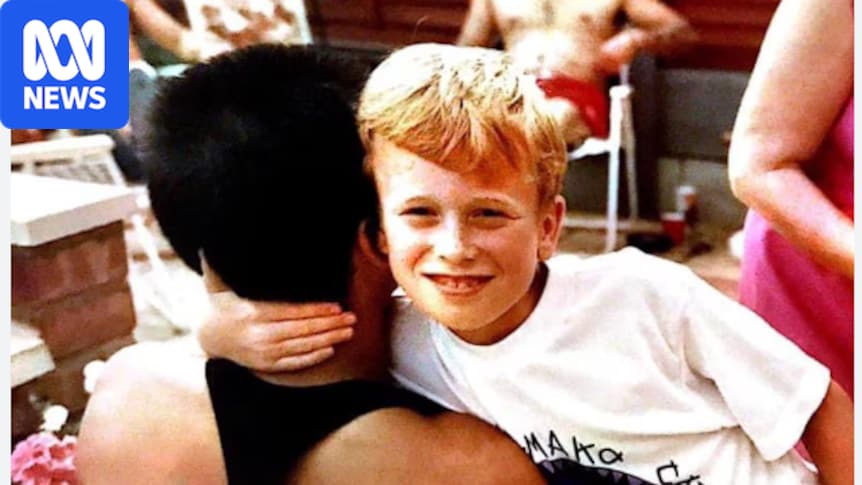
My dad couldn’t express his love for me. I chose to be a different man
Full Article
📰 Original Source
Read full article at Abc →KhanList aggregates and links to publicly available news content. We do not host full articles from third-party sources. Always verify important information with original sources.