
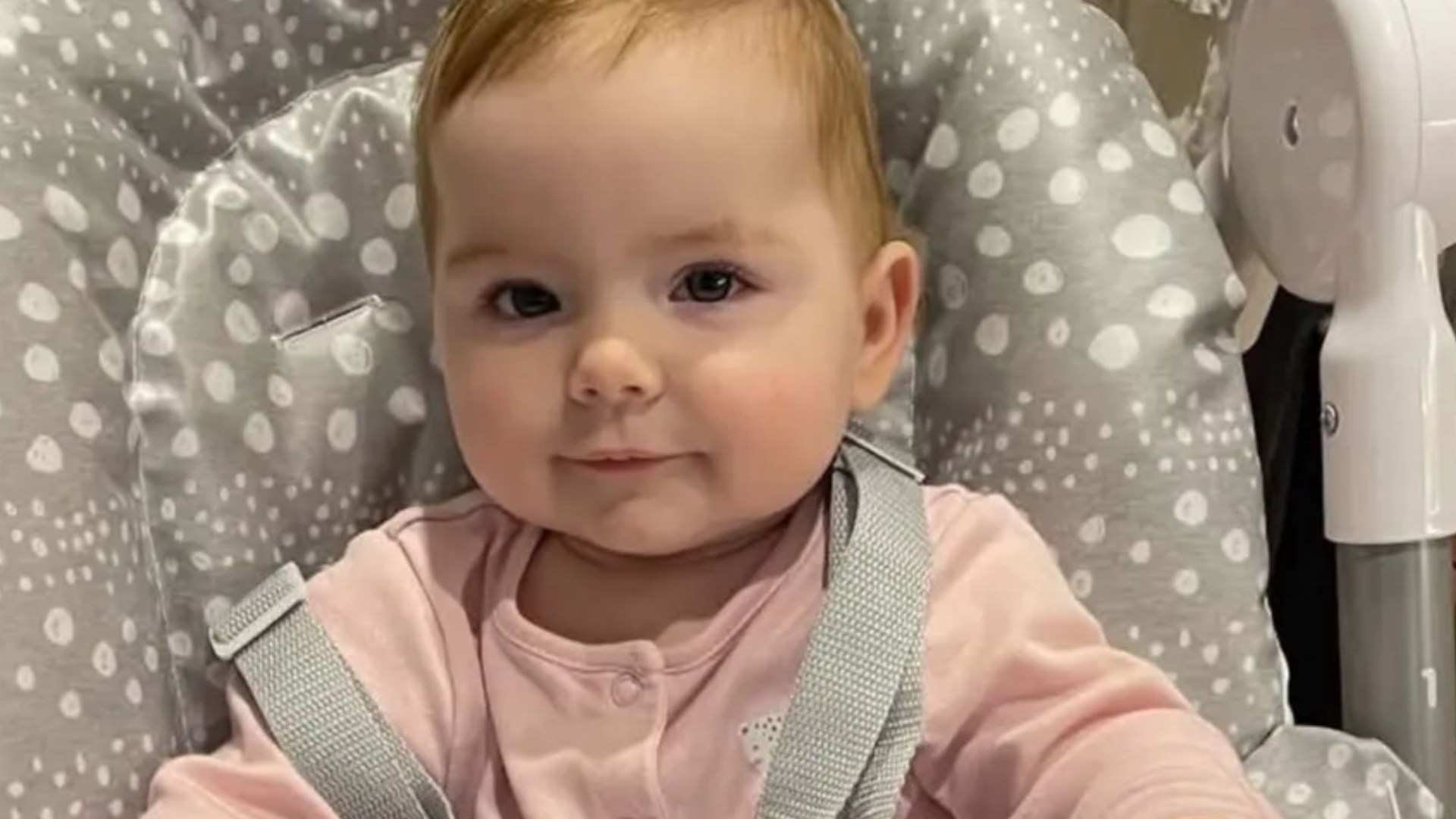
AT 10 months old, Sienna Dumas was “adorably chubby” like all babies her age. That’s what mum Sophie thought at least, until a health visitor noticed something. Sienna had started going through puberty, her body was “robbing her of her youth”. Now five, Sophie is preparing to have “heartbreaking” conversations with her little girl, years before she should have to. Little Sienna was diagnosed with early puberty at just 10 months old Credit: Jam Press Now five, Sienna is on injections that block her hormones, to prevent her going through puberty earlier than her peers Credit: Jam Press Sophie, 41, from London, tells Sun Health: “The breast buds weren’t something I’d noticed before, and as babies are usually the sort of chubby that makes them that little bit more adorable. “And also that she was breastfed, I didn’t think anything of her appearance as being out of the ordinary.” But the concerned health visitor suggested Sophie take her to the GP, which led to a paediatric endocrinologist referral. After a series of distressing tests, Sienna was diagnosed with central precocious puberty (CPP) – a condition in which the brain begins sending the signals that trigger puberty much earlier than usual. Breast development (breast buds followed by progressive enlargement) is usually the first sign of puberty in girls, followed by hair and the onset of periods and a change in body shape. Sophie says: “The emotional impact this may have on Sienna could be devastating. “Having any sort of differences today can lead to all sorts of bullying, isolation and mental health issues. “We all want our children to remain children for as long as we can, to maintain those magical dreams and nurture vivid imaginations with fairies and princesses, so Sienna’s body trying to rob her of her youth felt unfair. Mum Sophie Dumas, 41, has spoken of the heartbreaking conversations she will need to have with her little girl Credit: Jam Press Sophie just thought her baby was ‘adorably chubby’ until a health visitor suggested otherwise Credit: Jam Press “Sienna is still a little girl, obsessed with fairies and Disney princesses, and I’d love to take her to Disneyland next year to keep the magic of childhood alive for as long as possible.” Sophie says the tests Sienna had to go through were “horrible”, taking up whole days at hospital, in which doctors would measure hormones in her blood. “Sienna became so stressed that she sweated the cannulas out and one of her veins collapsed,” Sophie remembers. “They then had to draw her bloods via another method from her heels with a pin-prick. “It was incredibly distressing. “The only way I could soothe Sienna through procedures and tests was to breastfeed her in all sorts of strange positions and with one of those heavy blankets over me.” When Sienna’s tests were positive for precocious puberty, Sophie says she’d never heard of the condition and was left desperately researching what this meant for Sienna. She says: “I found that the lack of knowledge about it very hard, and the only parents I could find to talk to were via Facebook groups for it. “But even then, they were parents of seven to eight-year-olds, so it was never relevant. “I still have so many questions about it, mostly about how I can explain this to Sienna.” In some cases, central precocious puberty can be linked to abnormalities in the brain. Sophie said the possibility was “terrifying”, but thankfully, Sienna’s MRI was clear and the cause of her CPP is unknown. Sienna went through a series of ‘distressing’ tests for her diagnosis Credit: Jam Press Pictured as a tot, Sienna has some symptoms that appear not to be controlled by her injections, including moods and spots Credit: Jam Press Sienna now has injections of a hormone blocker known as a GnRH analogue every four weeks, which suppresses the hormones responsible for puberty. Sophie says: “Sometimes she’s absolutely fine about them, but there are still lots of occasions where she kicks, screams, hides and as her parent, it’s a labour of love, knowing it’s best for her, but it does kill you inside.” The family has been told that Sienna is likely to remain on the hormone-blocking treatment until she is around 11 or 12, although this will depend on her bone age and how she develops. Sophie says: “Sienna doesn’t look, nor feels different from her friends, and she’s at that age where her peers’ differences are innocently noted.” However, she adds: “Sienna’s getting to an age where some of the untreatable symptoms are causing her to deal with spots on her face in the areas that are linked to hormones. “It’s difficult explaining it to her. “There’s been some teasing from her school friends who have said they think she has chickenpox. “It makes me really sad. No one wants to think of their child being upset, especially when it’s from what someone else has said to them.” Sienna may develop body hair early, which Sophie is looking out for – but admits she’s not sure how it would be addressed. She adds: “We see that her moods can fluctuate just before she is due to have her hormone suppressors. “It can be tricky to know whether her mood reflects her emotional development at that age, or if it’s circumstantial, such as not ‘getting her own way’.” While the condition is not life-threatening, doctors explained that early puberty can affect final adult height because children initially grow rapidly but their growth plates can mature sooner. Sophie says: “CPP is certainly not life-threatening, but it is somewhat life-changing. “We are incredibly lucky to have a healthy, happy daughter, so we can’t complain. “However, when it’s your daughter who you have to hold down so the doctors can take bloods or give her injections and she’s crying ‘Mummy, please help me, please don’t let them hurt me’ is heartbreaking. “I also can’t tell her that she needs to have these injections to stop her getting sick, as this is untrue. Sophie worries that Sienna will want to finish treatment early, or that she will experience early menopause Credit: Jam Press What is precocious puberty? It’s normal for puberty to start any time between the ages of 8 and 14 years old, says the NHS. Outside of these ages may be early or delayed puberty. Girls are more likely than boys are to have precocious puberty. At puberty, the brain starts the process by making a hormone called gonadotropin-releasing hormone (GnRH). This leads to more of the female sex hormone oestrogen in the ovaries, and more of the male sex hormone testosterone in the testicles, Mayo Clinic explains. Some of the conditions that can cause early or delayed puberty include: Problems with the ovaries, testicles or hormones Certain conditions, such as cystic fibrosis or diabetes Damage to the brain – from surgery, radiotherapy, infection or a severe head injury, for example Not getting enough nutrients from food (malnutrition) – caused by conditions like coeliac disease or an eating disorder Differences in sex development (DSD) – rare conditions that affect genes, hormones and reproductive organs Early puberty With central precocious puberty, puberty starts too soon but develops as usual. For most children with this condition, there’s no medical problem or other known reason for the early puberty. In rare cases, the Mayo Clinic says that a brain tumour, or radiation, injury or changes to the brain from birth, can cause central precocious puberty, With peripheral precocious puberty, the cause does involve GnRH. Instead, it’s the release of oestrogen or testosterone in the body, due to a problem with the ovaries, testicales, adrenal or pituitary glands. The complications of precocious puberty are mostly social and emotional problems. But also, the bones can mature too early, which means they grow quickly and be taller than others their age, but then stop growing earlier, causing them to be shorter adults. “CPP isn’t considered an ‘illness’, and if she weren’t to continue with her treatment, she wouldn’t become ‘unwell’. “But there would be detrimental symptoms, such as her height and the emotional isolation of going through puberty early. “This isn’t easy to explain to a child who thinks of illness as being ‘poorly’ like having a temperature, vomiting or a sore throat.” Sophie is now looking ahead to her daughter’s future and is considering freezing her eggs. She says: “I’m currently looking into that possibility in case her condition affects her fertility later down the line. “When she was diagnosed, I was worried that she may not be able to start a family of her own one day if she wanted to, that the choice may be taken away from her. “However, the research states that her fertility shouldn’t be jeopardised. “My concern is whether or not this could also trigger an early menopause. “Hopefully, the hormone blockers will prevent this from affecting her fertility.” For now, Sophie says she is determined to let her daughter enjoy being a little girl. But she fears that Sienna will want to stop her treatment early. “My main concerns are that all little girls want to grow up before they should, and the pressures around things like breast size,” says Sophie. “Girls have a tendency to want to be more physically ‘developed’, like wanting breasts earlier. “So I am worried that once Sienna understands what would happen if she were to refuse her treatment early, her mental maturity wouldn’t be ready for all that comes with it. “Puberty is such an abstract concept for a child, so to talk to her about it is complicated for her to understand and also for me to explain.” Sophie warns other parents with concerns to seek medical advice and a second opinion, “even if they think it makes them look or sound neurotic”. “Our health visitor didn’t even think it would get taken seriously and, without her noticing something I never did, Sienna would not have received treatment as early as she did,” she says.
My baby started puberty at 10 months old – I just thought she was adorably chubby until health visitor spotted key sign
Full Article
Original Source
Read the full article at Thesun →KhanList aggregates and links to publicly available news content. We do not host full articles from third-party sources. Always verify important information with original sources.