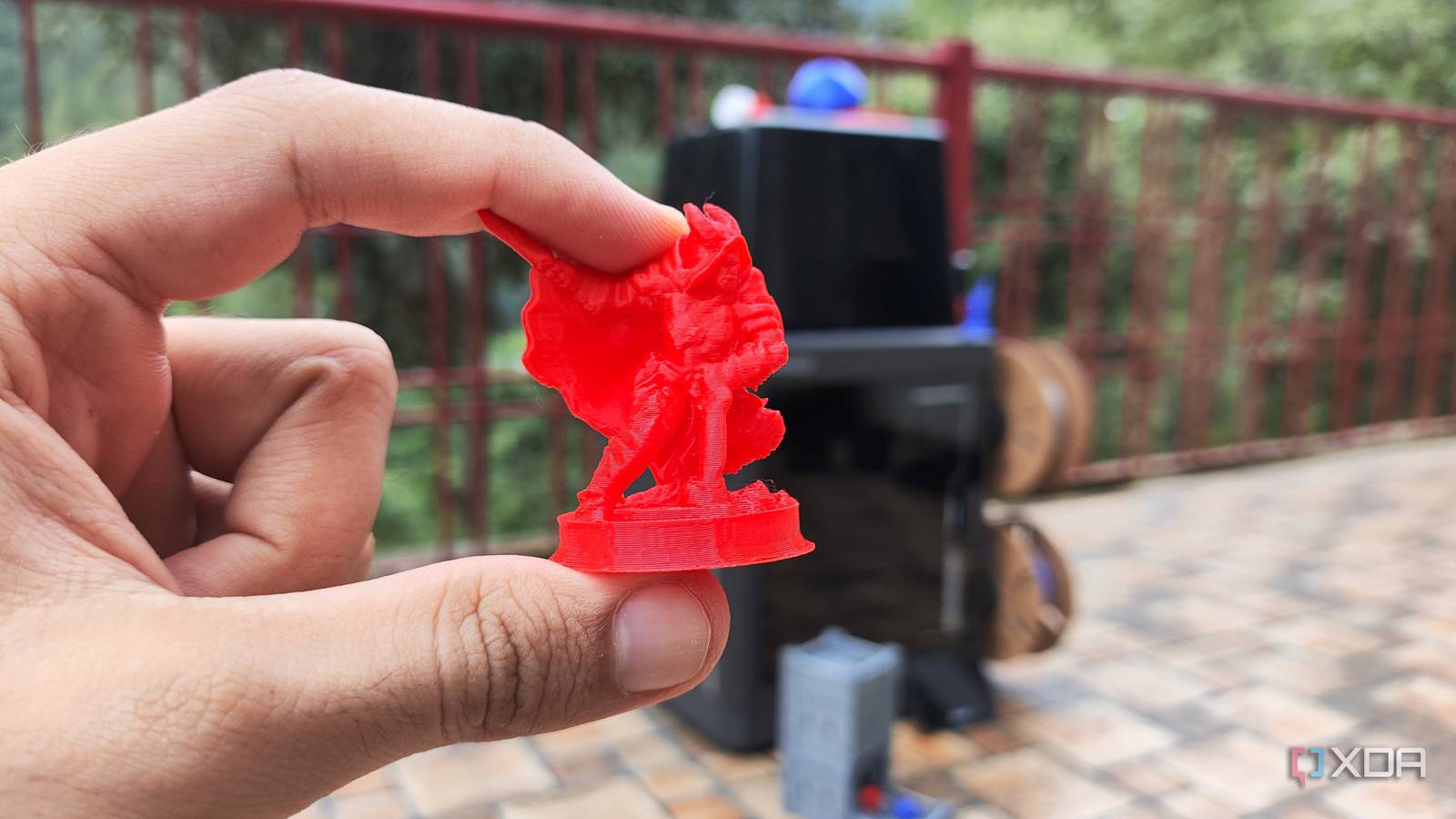
Published Jul 24, 2026, 11:00 AM EDT Ayush Pande is a PC hardware and gaming writer. When he's not working on a new article, you can find him with his head stuck inside a PC or tinkering with a server operating system. Besides computing, his interests include spending hours in long RPGs, yelling at his friends in co-op games, and practicing guitar. What I really adore about the 3D printing domain is that your use cases for an FDM/resin printer can vary considerably depending on your hobbies. Tangible models of media characters are universally loved, but you’ll often find tinkerers (including yours truly) adjusting CAD files to create boring-looking yet extremely useful components. Heck, I’d almost exclusively used my 3D printer to create replacement parts and home lab accessories in February, when I needed to create an extra enemy unit for a D&D campaign. Five months later, my 3D printer has become the most important tool for my party’s D&D misadventures, as it not only creates models for our virtual 3D characters, but also turns STL files of spell trackers, dice towers, and HP trackers into functional props for our campaigns. Minis and map layouts are my most common 3D prints I often use TitanCraft to design original characters This may come as a no-brainer to D&D-loving readers, but printing miniature models of my favorite creatures after going through monster guides has become my hobby as of late. For one, 3D-printing custom characters is significantly cheaper than grabbing off-the-shelf models. I don’t usually go too deep when it comes to refining my prints, especially if they happen to be anything other than bosses, recurring enemies, or our playable characters, so my monetary and time investment is fairly low as well. But even if it took extra time to sand and paint all my models, I'd rather spend a total of $2–3 on the filament (which ranges between 10-15 g for my models), sand paper, spot putty, and paint instead of paying several times as much for their pre-designed counterparts. But the fact that I can customize everything from their scale and pose to equipment, base, and other finer details makes 3D printed D&D models worth my time. And I’m not just talking about the really cool STL and 3MF files I can grab from MakerWord or Printables, either. Since TitanCraft has a neat character creator that can export files even for free users, I often use this beginner-friendly tool to design OCs for my party members. I’ve also printed a few backdrops for my 3D campaigns, and these range from miniature bars and homesteads featuring furniture to ruins with broken archways and debris. Buying a retail set that includes all the assets needed by our dungeon master would be pretty expensive, while my 3D printer can create them for a fraction of the price – all while letting me add a personalized flavor to our tabletop rounds. I typically opt for 32mm characters, as they don’t look too bad on my FDM printers, but I occasionally go for 28mm versions as well. But I’ve started relying on functional prints as of late I especially adore mechanical HP trackers Whereas minis and maps add some personality to my otherwise stale boards, practical prints are all about making my campaigns more convenient. Take my HP trackers, for instance. Rather than using pen and paper to keep track of the health points on our playable characters (and special bosses), I use 3D-printed functional counters that can be spun to modify the HP left after each hit. I’ve created counters with two rings that go up to 99 for my playable characters, while a separate triple-ring tracker rests with the DM for the bosses. Then you’ve got the spell trackers, which provide a visual estimate of the number of times a specific spell can be used before mages, warlocks, and hybrid classes that use spells need to rest. Speaking of magic, I’ve also created templates to track AoE spells on the map. I’ve also tried my hand at creating PLA and PETG dice, but even if I pay a lot of attention to the wall thickness, infill, and other print settings, I just can’t get a truly fair die, which is why I’d consider these novelty prints and rely on off-the-shelf solutions. That said, custom dice towers are fair game for my D&D campaigns, with my fort-like tower serving as both an aesthetic model that boosts immersion and a functional part that creates randomized rolls for my (non-3D printed) dice. I’ve also created a DIY modular screen for my dungeon master, and it’s probably their favorite print. However, the real drawback of such a utility item is that I’ve been asked to adjust the custom clips and add yet more initiative trackers, spell references, and other functional aspects every time we get together for some rounds. I also print simple cosplay items for my party Collapsible weapons don’t require a lot of storage space, either Besides my minis and functional prints, my D&D misadventures involve a handful of cosplay props. For example, I’ve 3D printed a couple of collapsing swords that the players can receive as rewards for quests or as loot from powerful enemies. Since they fold into the hilt, I don’t need to carry extra bags just to haul them halfway across the district, either. Heck, I sometimes create new accessories before starting a new round, just so we have more props to deck out my party members in real life. Rings and necklaces barely consume any filament, and with a few hours of custom paint, they look really well. I often create headgear for my party members, but it’s mostly circlets and crowns instead of full-blown helmets. A 3D printer can be surprisingly useful for D&D enthusiasts Back in my early 3D printing days, I thought minis were pretty much the only tabletop-related STL models that I could print. However, one random doomscrolling session on Printables changed that, and now I’ve got most of my D&D buddies using functional prints and cosplay props during our campaigns. Elegoo Centauri Carbon 2 Combo $399 $499 Save $100
My 3D printer transformed my D&D table from static maps into functional game mechanics
Full Article
Original Source
Read the full article at Xda-developers →KhanList aggregates and links to publicly available news content. We do not host full articles from third-party sources. Always verify important information with original sources.