
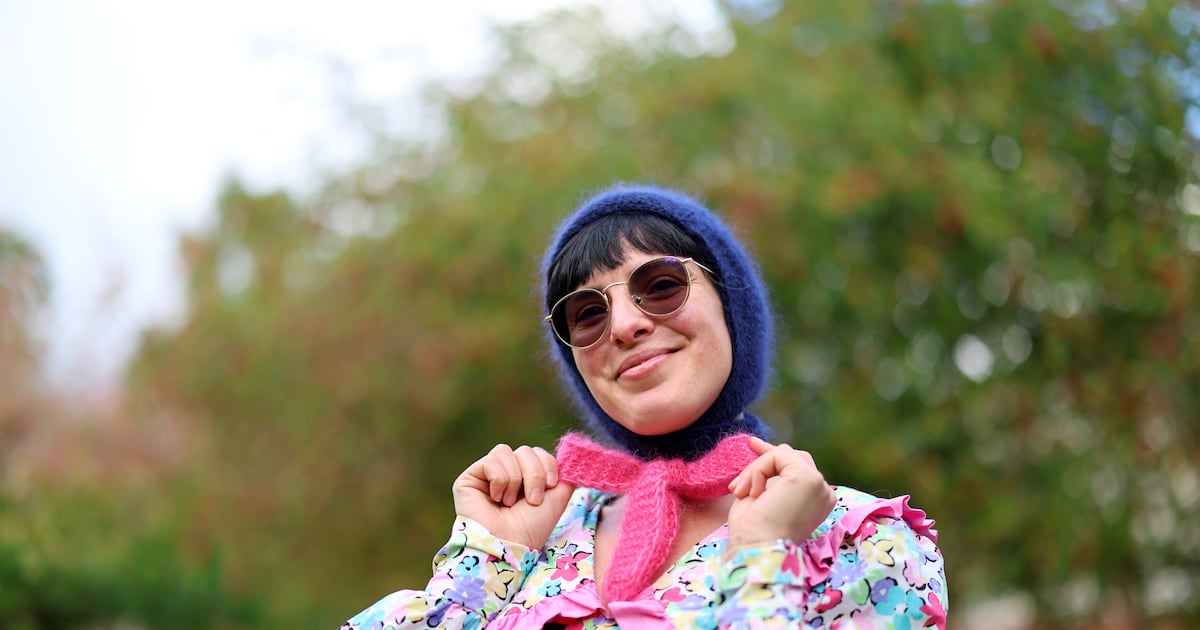
Marie Becerra met her Irish husband while picking blueberries in Australia Maria Becerra, knitwear artist, at home in Donabate, Co Dublin. Photograph: Dara Mac Dónaill/The Irish Times Maria Becerra (36), who moved to Ireland in 2023, believes that social classes in Ireland mix more than they do in her native Chile.“Chile is very classist,” Becerra says.In Ireland you can go to a party and be hanging out with someone who works a minimum-wage job and it is not a big deal, she says. Whereas in Chile, society is a lot more stratified and different classes do not mix.Born the year the military dictatorship in Chile ended, 1990, Becerra was the first person in her family to finish secondary school and go to university.READ MORE“Compared with life in Ireland, my childhood was probably the same as it was for people in Ireland who are 80 years old today,” she says. Growing up, her house was heated by a fire and some of her relatives did not have electricity. Both of her parents were taken out of school to work and support their families, so they were very aware that education was the key to a better life and encouraged their daughter’s studies.After college she travelled around the Atacama desert in Chile and made a living by making and selling knitwear. Because she spoke some English, Becerra was eventually offered a job as a tour guide. A number of her friends moved to Australia on working-holiday visas and they began to tell her how much more money they were making there.“I thought, this is insane, you are earning the same as a doctor in Chile by being a cleaner in Australia?”After saving up, Becerra bought a one-way ticket to Australia. “I thought this is a good opportunity for me to polish myself a bit because I didn’t have social capital.”Maria Becerra says settling in was fairly easy for her because she had an inbuilt family and community through her husband, Cormac. Photograph: Dara Mac Dónaill/The Irish Times After initially working as an au pair, she had to complete three months of mandatory farm work per the terms of her visa. She was working on a farm picking blueberries when she met her now husband, Cormac.He was the first Irish person she had ever met. She was confused that English was his first language.“I asked him: ‘What is your original language?’ He said: ‘English.’ I said: ‘What? I think you have your own language,’” she says.Cormac explained that in Dublin, where he is from, people might know Irish but they did not speak it in their everyday life.“Then I learned that Ireland is an island and he started to introduce me to all these cultural things,” she says.They spent a few years working around Australia and then travelling. They had jobs in hospitality and Becerra continued to make and sell her knitwear.[ From the US to Mayo: ‘They warned of slow internet and tiny roads. It wasn’t a problem for me’Opens in new window ]After the pandemic the pair decided they had had enough of their nomadic lifestyle and were deciding whether to move back to Ireland or Chile.“Cormac said: ‘I miss my friends. I have a lovely community in Ireland. There is a family property that we can rent at a reasonable price.’”Her move to Ireland has not all been smooth sailing, but three years later she believes they made the right decision.Settling in was fairly easy for her because she had an inbuilt family and community through Cormac, she says. Becerra has joined a DJ collective and become more serious about her knitwear, though she describes it as an artistic endeavour and not something from which she could ever make a living. Irish and Chilean people have a lot in common, according to Becerra, especially when it comes to the influence of the Catholic Church.“The oppression from the Catholic Church, same story with the woman, babies and adoptions. We are a bit behind, so the Catholic Church lost power in the state after the 2000s in Chile.”[ From Kazakhstan to Ireland: ‘In Dublin you hear so many different ways of saying sorry and thank you’Opens in new window ]She also finds similarities in Irish and Chilean humour – saying that Chilean people are also always making fun of themselves and cracking jokes all the time.In Chile they refer to the Spanish that they speak as Chilensis, which is a bit like how Irish people speak English, she says, as it can be “unique to understand”.The only time Becerra has doubted her decision to move was during her first winter. “I was so depressed. I did not know what was going on with having these negative feelings that I never had before.”Becerra had never heard of seasonal affective disorder before she moved to Ireland. Seeing pictures of her friends back in Chile and Australia enjoying the sun made her want to cry, she says. The pair made a trip back to Chile soon after, which, alongside replenishing her vitamin D levels, also gave her some perspective about how good life was in Ireland.[ Could your low mood be seasonal affective disorder?Opens in new window ][ Hot drinks, daylight and cosy layers: how to prepare for winter – and even embrace itOpens in new window ]“I came back and saw all the street dogs and people living in shacks – entire villages of shacks. Seeing how people struggle and work an entire shift for €20. I was being a princess. I realised it was hormonal or from the lack of vitamin D.”Becerra and Cormac plan to stay in Ireland long term. They dream about moving to the west coast one day. but for now their careers keep them in Dublin.We would like to hear from people who have moved to Ireland in the past 10 years. To get involved, email newtotheparish@irishtimes.com or send us two lines about yourself using the form below. IN THIS SECTION
‘My 1990s childhood in Chile was probably the same as Ireland in the 1950s’
Full Article
Original Source
Read the full article at Irishtimes →KhanList aggregates and links to publicly available news content. We do not host full articles from third-party sources. Always verify important information with original sources.