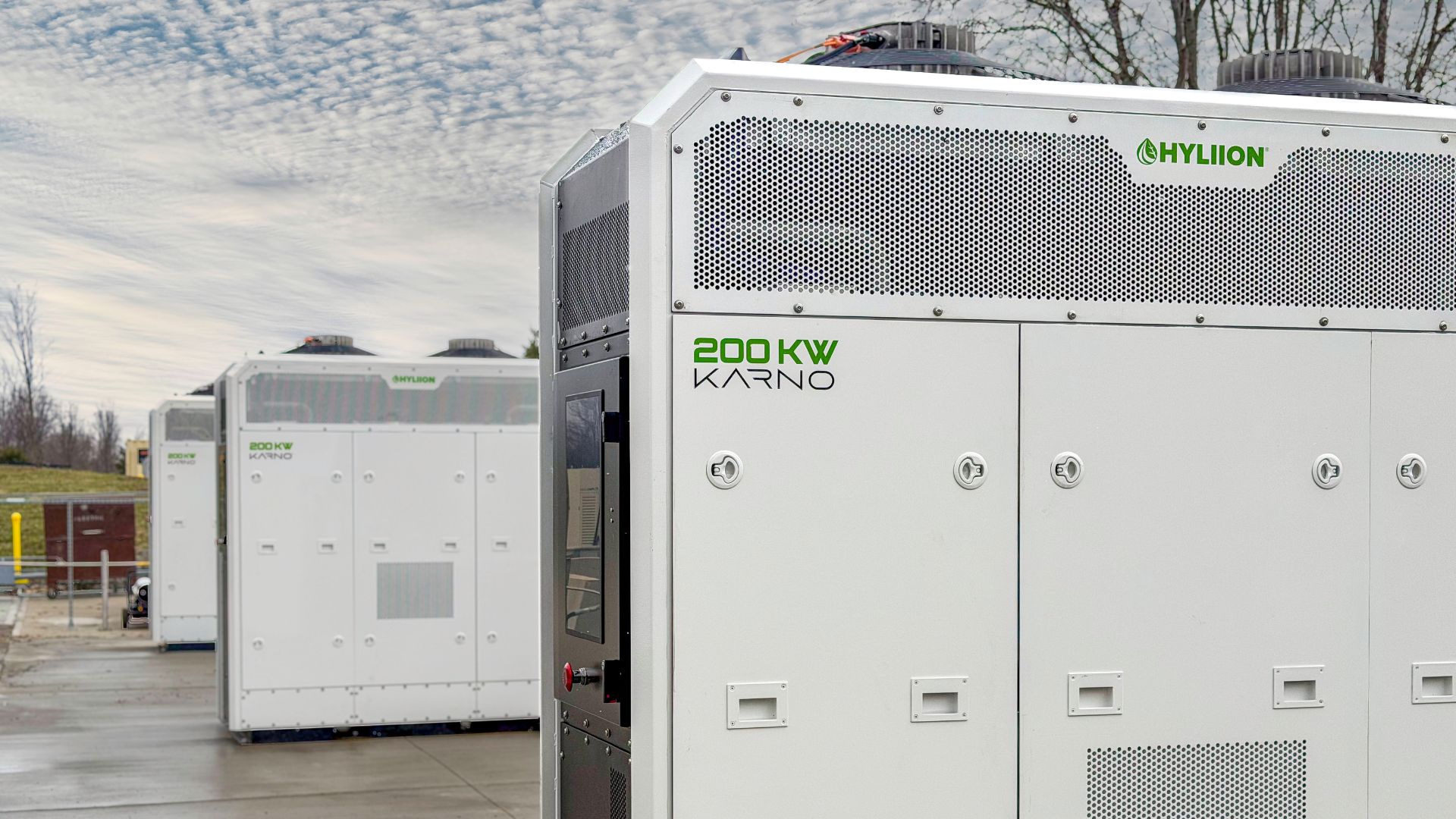
Growing demand for reliable on-site electricity has pushed equipment developers to focus on modular power systems that can expand alongside customer needs. Hyliion Holdings says it has cleared an important technical milestone in that effort after demonstrating that two of its 200 kW KARNO Power Modules can operate together as a single coordinated generation system. During the demonstration, the units automatically balanced changing electrical loads while maintaining stable power output. The result moves the KARNO platform beyond standalone operation and gives Hyliion a foundation for larger multi-megawatt installations built from standardized modules. At the center of the demonstration was the KARNO Management System, the software platform responsible for coordinating multiple Power Modules connected across a common network. As electricity demand changed throughout the test, the system adjusted each module’s output in real time to keep power delivery steady. Unlike conventional systems that rely on a single controller, the KARNO architecture distributes control responsibilities across the connected modules. One unit serves as the primary coordinator, but another can immediately take over if the active controller becomes unavailable. Hyliion says that design reduces single points of failure and improves system resilience, particularly in larger installations where uninterrupted operation is essential. The company believes the same software architecture will allow customers to deploy standardized power blocks without redesigning the control system for every project. That approach also simplifies expansion because additional modules can join an existing network as power requirements increase. Scaling to megawatts The successful demonstration supports Hyliion’s plans to offer an 800 kW standardized building block. The same architecture can also support 2.4 MW and 3.2 MW power plant configurations by operating multiple 200 kW KARNO systems in parallel. Founder and CEO Thomas Healy described the test as an important milestone for the company’s commercialization strategy. “KARNO Power Modules can now operate together as one larger power plant,” Healy said. “Customers can combine KARNO Power Modules to meet the needs of an individual site.” He added that the same standardized technology will support Hyliion’s expansion into multi-megawatt systems. Instead of designing entirely new generators for larger projects, Hyliion plans to increase output by adding more identical modules. That modular strategy could simplify installation, lower maintenance complexity, and give customers the flexibility to expand capacity as demand grows. Markets with rising demand Hyliion expects the technology to serve a broad range of applications that require dependable on-site power. According to the company, two or three KARNO Power Modules could meet the electricity needs of larger commercial facilities. Larger multi-megawatt systems are intended for data centers, industrial operations, and defense installations, where reliable power has become increasingly important as energy demand continues to grow. The modular approach also allows operators to scale generation without replacing existing equipment. Organizations can install only the capacity they currently need and add more modules as electricity requirements increase. That flexibility could prove attractive for facilities facing uncertain demand growth or long utility interconnection timelines. For Hyliion, synchronizing multiple KARNO units marks a significant engineering milestone beyond the performance of a single generator. The demonstration shows the platform can function as the building block for much larger power plants while relying on the same standardized technology. If future commercial deployments deliver similar results, the architecture could provide customers with a straightforward path from hundreds of kilowatts to several megawatts without fundamentally changing the underlying system.Recommended ArticlesGet the latest in engineering, tech, space & science - delivered daily to your inbox.Aamir is a seasoned tech journalist with experience at Exhibit Magazine, Republic World, and PR Newswire. With a deep love for all things tech and science, he has spent years decoding the latest innovations and exploring how they shape industries, lifestyles, and the future of humanity.
Multiple 200-kW power modules achieve unified operation for scalable 3.2-MW power plants
Full Article
Original Source
Read the full article at Interestingengineering →KhanList aggregates and links to publicly available news content. We do not host full articles from third-party sources. Always verify important information with original sources.