
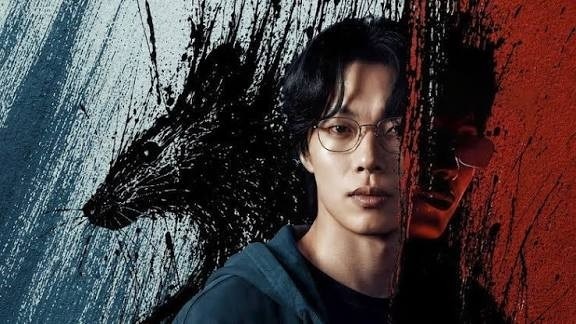
Mousetrap series review: A novelist teams up with a ruthless loan shark after his identity begins to vanish. The thriller turns that chase into a tense study of paranoia, guilt and uncertainty.Mousetrap review and rating.The easiest way to make a thriller predictable is to keep explaining it. Mousetrap does almost the opposite. It leaves gaps, lets uncomfortable silences hang in the air and trusts the audience to fill them. Just when you think you have figured out what those gaps mean, the series makes you question the conclusion you have arrived at.Directed by Kim Hong-sun and starring Ryu Jun-yeol (Je Moon-jae) and Sul Kyung-gu (Noja), the Netflix Korean thriller follows a successful novelist whose carefully controlled life begins to unravel when his identity is suddenly no longer recognised as his own. His phone, bank accounts and other markers of his existence stop belonging to him, while a mysterious figure known as The Rat seems to be one step ahead of him. A ruthless loan shark, Noja, gets pulled into the mystery, and the two form an unlikely alliance as they try to understand who is manipulating Moon-jae and why.On paper, it sounds like a fairly familiar identity-theft thriller setup. Mousetrap, however, is less interested in the mechanics of the crime than in what happens to a person when every external proof of who they are begins to disappear.Moon-jae’s paranoia becomes the show’s greatest asset. His fear is not limited to being chased or attacked. He is frightened by the possibility that his own understanding of reality cannot be trusted. The series repeatedly places him — and, by extension, the viewer — in situations where there is just enough information to form a conclusion, but never quite enough to feel certain about it. That is where the direction becomes particularly effective. There is a deliberate uneasiness to the way Mousetrap frames its characters and spaces. The cinematography frequently makes ordinary surroundings feel threatening, while the chase sequences have a physical urgency that contrasts nicely with the quieter psychological games. The action is handled with confidence, too. There is a grimy underbelly to the world Moon-jae is forced into, and the series knows how to make its pursuit sequences feel dangerous without turning them into empty spectacle. But the most effective sound in Mousetrap is sometimes no sound at all. The decision to let silence speak — and, occasionally, haunt — gives the series an atmosphere that a heavier score could have easily ruined. It does not constantly tell us when something is sinister or when a character should be afraid. The pauses are allowed to do some of the work. When the background score does arrive, it complements that restraint, building the tension around the chase rather than overwhelming it.The writing plays a similar game. You are encouraged to make guesses. In fact, the show almost seems to want you to. But it rarely gives you enough certainty to settle comfortably into one theory. Even when you begin to work out how or why something may have happened, the screenplay retains enough unpredictability to catch you off guard.The foreshadowing is one of its better tricks because it does not always announce itself. A line in the finale is particularly effective. Moon-jae says, “In the end, good guys win,” only for Noja to ask, “Are you sure you are the good guy?” In isolation, it is a simple exchange. By the end, it becomes something much more pointed: a question that has been sitting beneath Moon-jae’s story for much longer than he realises.The performances hold the psychological game together. Ryu Jun-yeol plays Moon-jae as a man whose vulnerability keeps changing shape. He can look helpless in one scene and deeply suspicious in another. His anxiety is physical, but so is his desperation to hold on to the life and identity he believes belong to him. Crucially, Ryu never makes him an entirely straightforward protagonist. Sul Kyung-gu brings a completely different energy as Noja. If Moon-jae survives by trying to understand the world around him, Noja survives by confronting it head-on. Their unlikely partnership is built on necessity rather than instant camaraderie, and that friction gives the show some of its strongest interactions.The trouble is that Mousetrap occasionally mistakes complication for depth. As the mystery expands, more twists and layers are introduced, and not all of them carry the same emotional weight. The ten-episode format also feels slightly generous. There is a leaner eight-episode thriller hiding somewhere inside Mousetrap. Some portions could have moved faster, particularly when the central mystery temporarily loses momentum. Still, the show ties its threads together well enough that the length never completely works against it.The finale gives the title its darkest meaning. The confrontation between Moon-jae and The Rat finally forces him to face the past he has spent years burying. But Mousetrap is not interested in giving its protagonist the comfort of a conventional victory. The chase follows him till the end.That is where Mousetrap leaves its strongest impression. Its twists are entertaining, its action and cinematography are top-notch, and its use of silence gives the thriller a distinctive atmosphere. Ultimately, Mousetrap has an innate ability to get inside your head.Mousetrap is streaming on Netflix.- EndsPublished By: shweta keshriPublished On: Sep 3, 2026 12:59 IST
Mousetrap review: Ryu Jun-yeol leads a thriller that gets under your skin
Full Article
Original Source
Read the full article at Indiatoday →KhanList aggregates and links to publicly available news content. We do not host full articles from third-party sources. Always verify important information with original sources.