
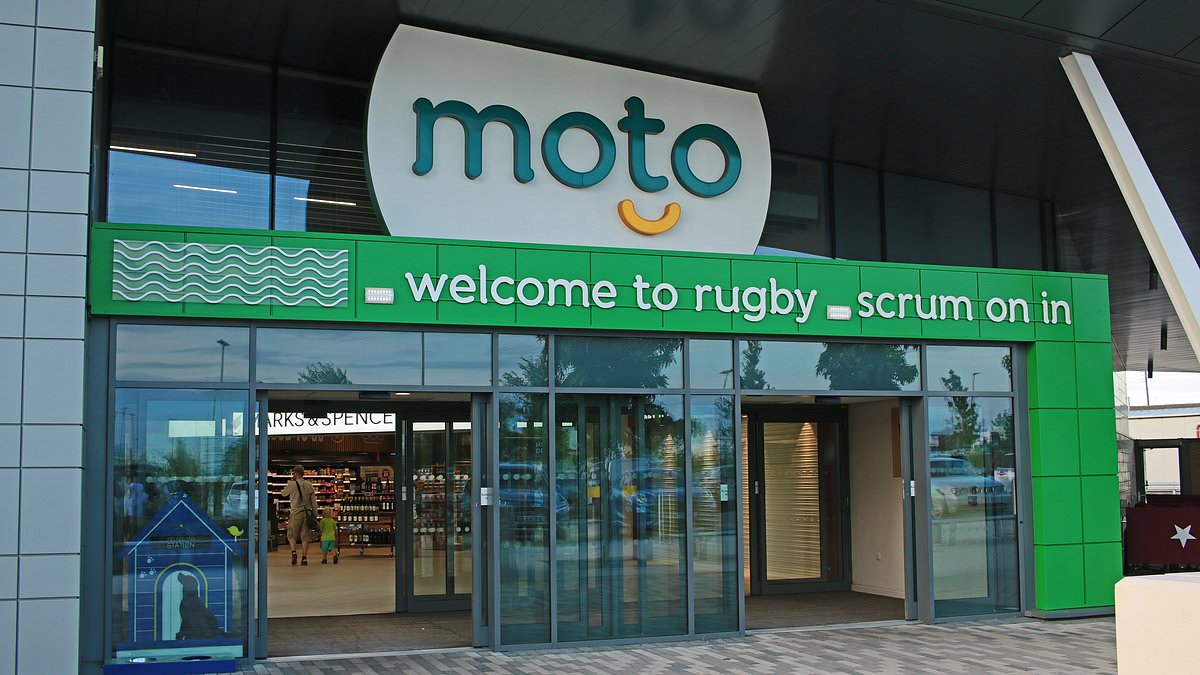
Published: 13:06 EST, 15 November 2026 | Updated: 13:26 EST, 15 November 2026 Britain's biggest motorway service chain is building solar farms around its sites to power electric vehicle charging hubs due to a failure to provide sufficient grid connections to power the EV transition. Moto, which runs 70 service stations across the UK, is planning more than a dozen solar sites, with consent already secured for four locations including a 7-megawatt solar array at Wetherby.Ken McMeikan, the firm's chief executive, said: 'Probably my single biggest frustration is just the speed at which we're getting sufficient power to sites.'The demand is just growing, and the amount of power that we need is just growing. And connections are taking too long.'Installers have warned that planning issues and a slow process for securing grid connections are holding back projects.Analysis by the Department for Transport found that, at July 2024, only around 10 per cent of motorway service areas in England had the power capacity they would need to meet rapid charge point demand to at least 2035, with around half needing to increase their capacity by between two and ten times.As they're often some distance from built up areas, connecting service areas to the grid can involve laying cables across miles of farmland. In an illustration of the engineering and administrative challenges it has faced, Moto has previously commissioned tunnellers to drill underneath busy eight-lane carriageways to hook up its chargers to distant substations. Moto chief executive Ken McKeikan says grid connections for chargers like this one are 'taking too long' Moto's Rugby site on the M6 has 64 rapid electric vehicle chargers Mr McMeikan said: 'It can take four years to get the power to each site, and you can't be operating four years behind demand. You've actually got to be ahead of demand, so that when motorists turn up, the power's there.'Our biggest focus has been trying to get sufficient electricity and power to each of our sites, and that has been a gargantuan effort.'Mr McMeikan told the Sunday Telegraph the firm had grasped the nettle by buying or renting farmland around service areas in order to install solar farms backed up by battery storage facilities.He estimates that in just four years, Moto service areas alone will be dispensing power equivalent to 'half the output of an average nuclear power station'. Moto is the leading provider of ultra-rapid EV charging points on the motorway network. Its other solar farm projects include a 7.15-megawatt solar development at Donington Park services on the M1 and a 4-megawatt site at Stirling, while negotiations are underway for 11 more locations.
Motorway service stations having to build their own solar farms beside the road to power electric cars because they can't connect to the grid
Full Article
Original Source
Read the full article at Dailymail →KhanList aggregates and links to publicly available news content. We do not host full articles from third-party sources. Always verify important information with original sources.