
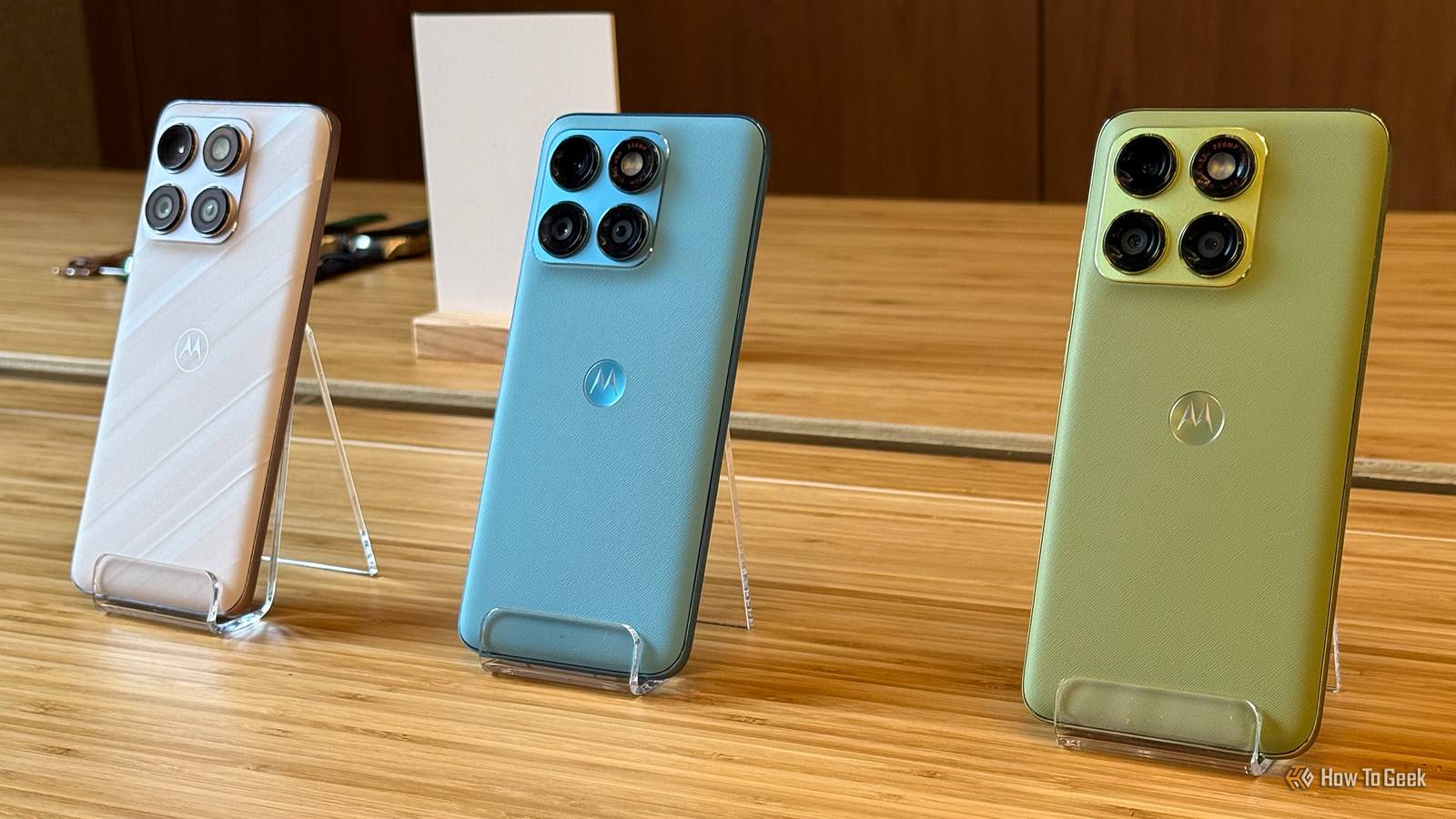
Published Sep 25, 2026, 5:00 PM EDT Jon is a seasoned journalist who has written definitive coverage of consumer tech at publications like Engadget, Android Authority, and BetaKit. He's an expert on making tech accessible ranging from mobile and PCs to emerging platforms like wearables. When he's not writing, he's going on adventures with ihis family and is an avid photographer. Motorola makes great phones like the Razr Fold, but its U.S. presence is... bleak. Beyond foldables, you're limited to value-for-money budget Android phones and just one current mid-tier model, the Edge. There's not much variety in conventional phones, and no option at all if you want a flagship. That's what made this year's IFA trade show so frustrating. Motorola was showing phones that might never reach U.S. shores, but would inject some much-needed competition at a time when Samsung, Apple, and Google reign supreme. Here's what you're missing, and why Motorola should bring all its best phones stateside. Motorola Razr Fold Motorola's Razr Fold (2026) is its first book-style foldable Android phone, offering high-end performance and cameras. These Motorola phones are simply better Even the mid-range models are sweeter Motorola Edge 70 Plus.Motorola Edge 70 Plus. Motorola hasn't forgotten higher-end phones. Head to regions like Europe and you can get a Signature with a fast Snapdragon chip, its best cameras, and even the seven years of Android updates the company doesn't usually deliver. But it's not available in the U.S., and that's a shame — I'd love to have a blockbuster Android phone that isn't the usual Galaxy or quirky Pixel. The worst omissions might be in the mid-range, however. I was there when Motorola introduced the Edge 70 Plus, a surprisingly capable mid-range phone with a 200-megapixel main camera, a big 6.8-inch screen, and the latest mid-tier Snapdragon chip. In America, the best Motorola offers is the plain Edge with a so-so 50MP camera, a 6.3-inch display, and a good-but-not-great MediaTek chip. There's no question the 70 Plus is better than many affordable phones. Motorola likely has its reasons: its strongest markets are outside the U.S. (Moto G phones are popular in Latin America) and it tends to fill gaps in carrier lineups for lower-priced and foldable devices. But how is it going to ever make inroads if it doesn't try? I want the best Motorola has to offer in every field, not just its safest choices. The flagship Signature 27 is a good start, but just a start. Motorola needs to return home It should commit to its first country Motorola Mobility hasn't been in U.S. hands since 2014, when Google sold the phone unit to Hong Kong tech giant Lenovo. There's still an American headquarters, of course, but the days of focusing on the red-white-and-blue have been over for a long time. But it now has a prime opportunity to return to its roots. There's a renewed fervor for made-in-America products, and not just from domestic companies like Apple and Google. Even foreign brands like Samsung are expanding their presence in the country. Motorola should stage a comeback by offering a better phone selection where it came from. That doesn't mean offering every phone to U.S. buyers, and I'm sure Motorola would face uncomfortable questions about its Chinese ownership and the lack of American manufacturing. But that's much better than treating the country as secondary, and might even spur investments that would once again have Motorola phones built on this side of the Pacific. I'd feel much better about buying a Motorola phone if I knew the company was fully committed to the U.S. and brought more to customers in its homeland. We need more competition in the American phone market There can't be just two major Android brands Shop any U.S. carrier store and the Android phone catalog is grim, to put it mildly. If you're not interested in Samsung or Google, you'll find a modest array of Motorola phones followed by niche devices from the likes of TCL. And while indies like Nothing are available through other channels, that limits their appeal to in-the-know enthusiasts. OnePlus exited the U.S. precisely because it lost its main foothold after its T-Mobile partnership ended. Motorola needs to offer its best phones in the country to reignite competition. If I'm shopping for an Android phone upgrade, I want more than two choices in every category. As much as I like Samsung's sheer versatility, I don't want to be forced to buy a Galaxy if I'm not a fan of Google's latest hardware. An improved Motorola U.S. lineup should also spur rivals to do better. I'm not expecting Samsung to suddenly offer Galaxies in Pantone colors, but it might have to compete more on price and avoid taking its dominance for granted. Google, meanwhile, would have to step up its performance if it wants to continue being the go-to alternative. There's no doubt a U.S. expansion would be challenging. Motorola has to convince carriers that more of its phones are worthwhile, and that doesn't mean Americans will immediately flock to them — inertia is all too real, especially when you factor in the iPhone. If Motorola can clinch those expanded network deals, though, it will draw me and others who want true variety, not just token nods to the rest of the Android universe.
Motorola's US phone lineup is woefully limited—and it's hurting Android
Full Article
Original Source
Read the full article at Howtogeek →KhanList aggregates and links to publicly available news content. We do not host full articles from third-party sources. Always verify important information with original sources.