
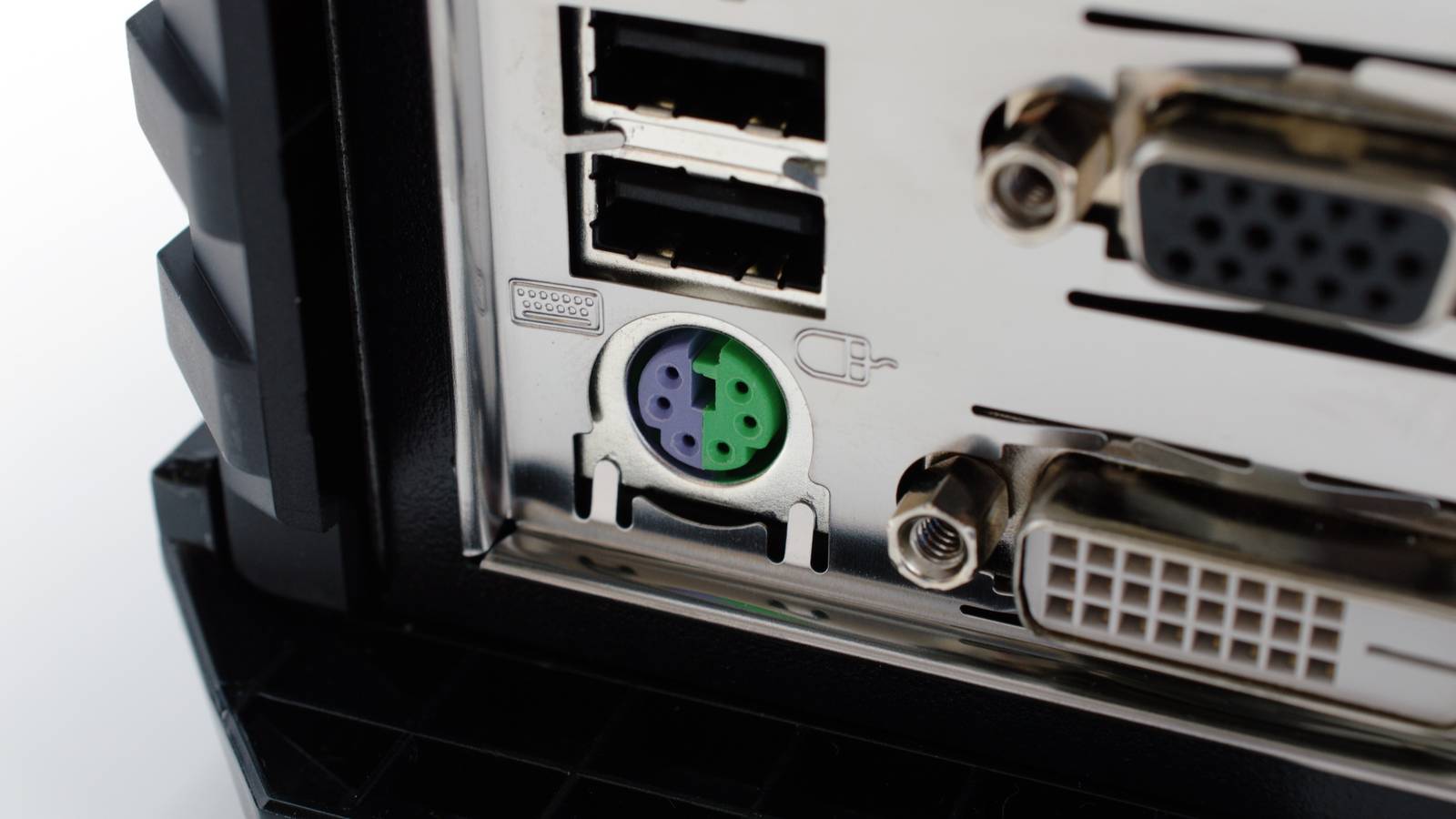
Published Aug 11, 2026, 4:30 PM EDT After a 7-year corporate stint, Tanveer found his love for writing and tech too much to resist. An MBA in Marketing and the owner of a PC building business, he writes on PC hardware, technology, and Windows. When not scouring the web for ideas, he can be found building PCs, watching anime, or playing Smash Karts on his RTX 3080 (sigh). The list of legacy motherboard ports that have faded into obscurity is long, featuring heavyweights such as the VGA, DVI, FireWire, and Parallel ports. One such outdated port that has survived nearly 20 years of obsolescence is the PS/2 port. It can be seen on some modern motherboards to this day, despite being replaced by USB decades ago. The reason some manufacturers still retain this ancient port is the type of communication it uses with the system. It differs from USB in terms of input latency and driver-free communication, making it ideal for niche use cases. Even some enthusiast boards still feature the PS/2 port for this very reason. Many of you might fondly remember the PS/2 days Simpler times, not so simple ports My first PC was an HP pre-built powered by the Intel Pentium III. It was a 90s PC in every way, and the purple and green PS/2 ports were one of its hallmarks. Back then, connecting the keyboard and mouse to these color-coded ports with weird pin layouts felt normal. Of course, USB ports would only replace PS/2 ports by the mid-2000s; until then, the onus of not bending or breaking the PS/2 pins lay on the consumer. The PS/2 port was developed by IBM in 1987 for its Personal System/2 computers (hence, the name). It simplified peripheral connectivity by replacing older 5-pin and 9-pin connectors for keyboards and mice, respectively. That said, it had none of the benefits of the modern USB port, such as a universal design, integrated power delivery, a simplified flat connector, and hot-swapping. Once manufacturers started phasing out the PS/2 port in favor of USB, the shift was rapid and permanent. Today, it's tough to find these legacy ports on modern motherboards, but some models still feature them for a handful of use cases. Your motherboard might still have one or two PS/2 ports You don't need them most of the time, but they serve a purpose You can spot dual or hybrid PS/2 ports on several B850, B860, and even enthusiast motherboards. It's natural to wonder why a port that should have disappeared nearly two decades ago still exists on modern motherboards. The reason is that the ancient PS/2 port still offers advantages over USB ports, making it useful in certain scenarios. Overclockers who want to save every last CPU cycle often use PS/2 peripherals. The PS/2 port uses interrupt-driven input to communicate with the CPU, unlike USB, which is polling-based and checks for inputs multiple times a second. This minimizes input lag on PS/2 peripherals compared to USB devices and helps enthusiasts avoid needless resource overhead. Another advantage of PS/2 is that it connects directly to the system core instead of using drivers the way USB peripherals do. If you're troubleshooting your PC and the USB drivers fail to load, a PS/2 keyboard and mouse will still work. These peripherals are among the first to initialize after a power cycle. Besides, many enterprises need to disable USB ports for security reasons, so PS/2 peripherals are actively recommended. Lastly, true N-key rollover is also an argument in favor of PS/2 keyboards, but USB models can achieve that with software, so it's not that relevant for 99% of gamers. The PS/2 port doesn't make sense on most motherboards, but it's not extinct yet Legacy motherboard ports like the PS/2 port may not serve any purpose for most people, at least 99% of the time, but they still exist for a reason. Troubleshooting and CPU overclocking benefit from PS/2 peripherals, and so does industrial data security. As a consumer, it's easy to disregard PS/2 ports, but you can at least appreciate its advantages over modern USB ports.
Motherboards still have a port that nobody has needed in 20 years, but there's a real reason why
Full Article
Original Source
Read the full article at Xda-developers →KhanList aggregates and links to publicly available news content. We do not host full articles from third-party sources. Always verify important information with original sources.