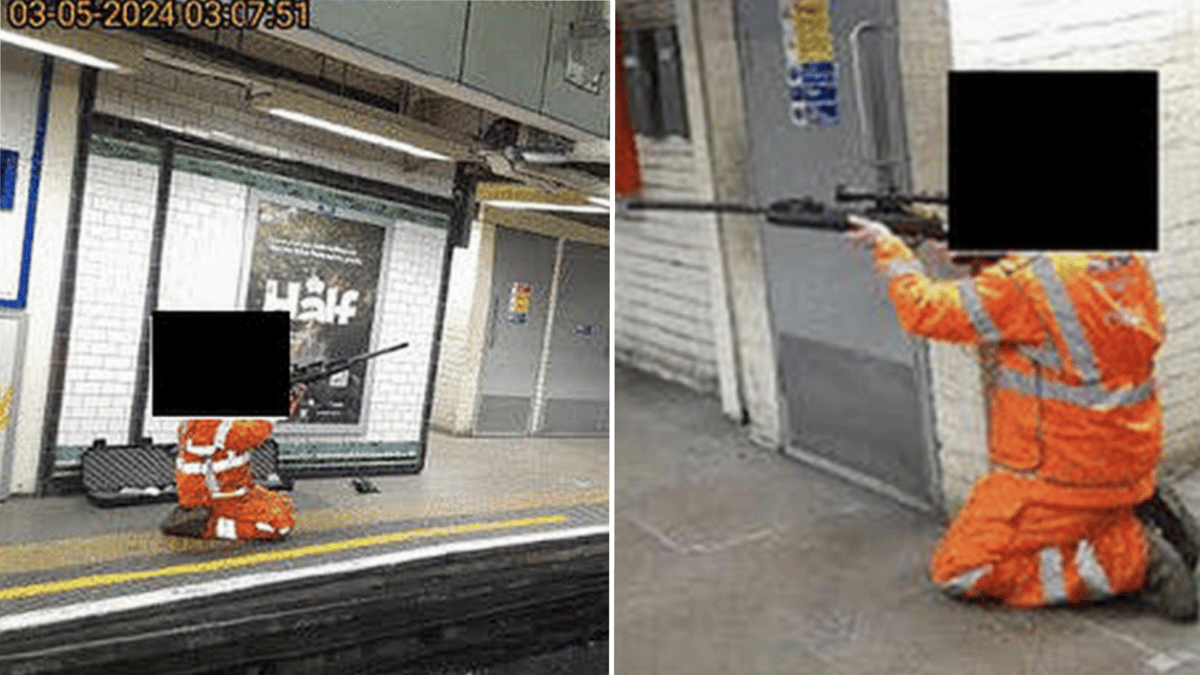
As many as 123 organised shootings have been arranged between March 2024 and March 2026 to eliminate birds nesting on ledges in London stations, according to a wildlife group. Shocking images show dead pigeons piled up on train platforms, while another shows a worker at Stanmore station stepping on a bloodied bird with his boot. Data obtained by Manchester Pigeon Rehab shows that at least 655 pigeons were killed, 17 active nests were removed, and at least seven dependent chicks were killed or removed. Shoots took place out of hours, typically between midnight and 5am, at various depots and stations across the capital, the group said. The campaigners have filed a crime report to British Transport Police, saying the TfL operation “reduced sentient animals to pests that must be eradicated.”A bleeding pigeon was stepped on by a worker at Stanmore stationSuppliedBirds were killed in organised shoots SuppliedThe cull is said to have included baby chicks and fledglings being left without parents or killed using “humane bird dispatchers” - which snap their necks when pressure is applied. Two fledglings were “removed” from Hendon Central station, while chicks estimated to be 10-days-old were found dead at a platform at Arnos Grove station. Dead birds were collected and binned, sometimes with their nest and eggs, according to the campaigners. Blood, feathers, and any other evidence was also cleaned up before the morning. Pest control services were contracted out to AGS One - a railway support provider that was awarded TfL Supplier of the Year in 2019. On 12 occasions, birds became trapped in the netting installed at TfL stations. Workers were allegedly found to have shot the birds, instead of releasing them. Three of those incidents took place at Woodford station.The shoots were contracted out to AGS One SuppliedThe campaign group said it also found evidence to suggest that some birds were struck multiple times. At Arnos Grove station, a TfL job report confirmed that four shots were fired at a single bird.Some birds also managed to escape, even after being shot at. In one report, a worker wrote: “1 pigeon flew [out] the open doors [after] being shot, despite best efforts it couldn’t be located to be able to remove.” A similar incident took place at New Cross Gate Depot, where a worker wrote: “Pigeon flew down and exited the shed and landed along the live tracks.” Read MoreThe condition and fate of these pigeons is unknown. Pigeons have been shot after getting caught in netting SuppliedPhotos show pigeons piled up on platformsSuppliedTfL is permitted to carry out pigeon control operationsSuppliedTfL is permitted to carry out pigeon control operations under a GL41 license, but the license has strict conditions, including having a lawful public health purpose and taking reasonable precautions to minimise suffering. In a statement, Manchester Pigeon Rehab told The Standard: “Manchester Pigeon Rehab strongly opposes all uses of lethal control, as well as the removal of active nests, eggs and dependent young. “We reject TfL’s stance that these bird shoots were humane. We believe Transport for London should immediately end lethal control in favour of habitat modification, humane deterrents and other non-lethal management measures. “In some circumstances this may also mean accepting that wildlife willcontinue to exist in shared urban spaces.”Manchester Pigeon Rehab is not alleging any illegality against TfL, but has reported its concerns. In a statement to Metro, TfL said: “Our approach is focused on prevention, and the avoidance of animal cruelty is taken very seriously. We continue to invest in preventative measures as our primary approach, exhausting all appropriate non-lethal methods, and have significantly increased our mitigations on stations and in depots as part of this work.“Unfortunately, in a few small number of cases, preventative measures are not always successful or effective, creating an unsafe environment. When this is the case, we work with our suppliers to ensure that the removal of pigeons, or their nests, is undertaken with consideration and only ever as a last resort when other deterrents have failed.“Ultimately, we have a duty of care to customers, staff, contractors and other third parties to maintain a safe, clean environment for those using or working on our property. Pigeon waste carries risks of bacteria and insects, while nesting and waste material creates fire hazards and structural damage.” The Standard has reached out to TfL and the British Transport Police.
More than 600 pigeons shot and killed across London Underground in organised cullings
Full Article
Original Source
Read the full article at Standard →KhanList aggregates and links to publicly available news content. We do not host full articles from third-party sources. Always verify important information with original sources.