
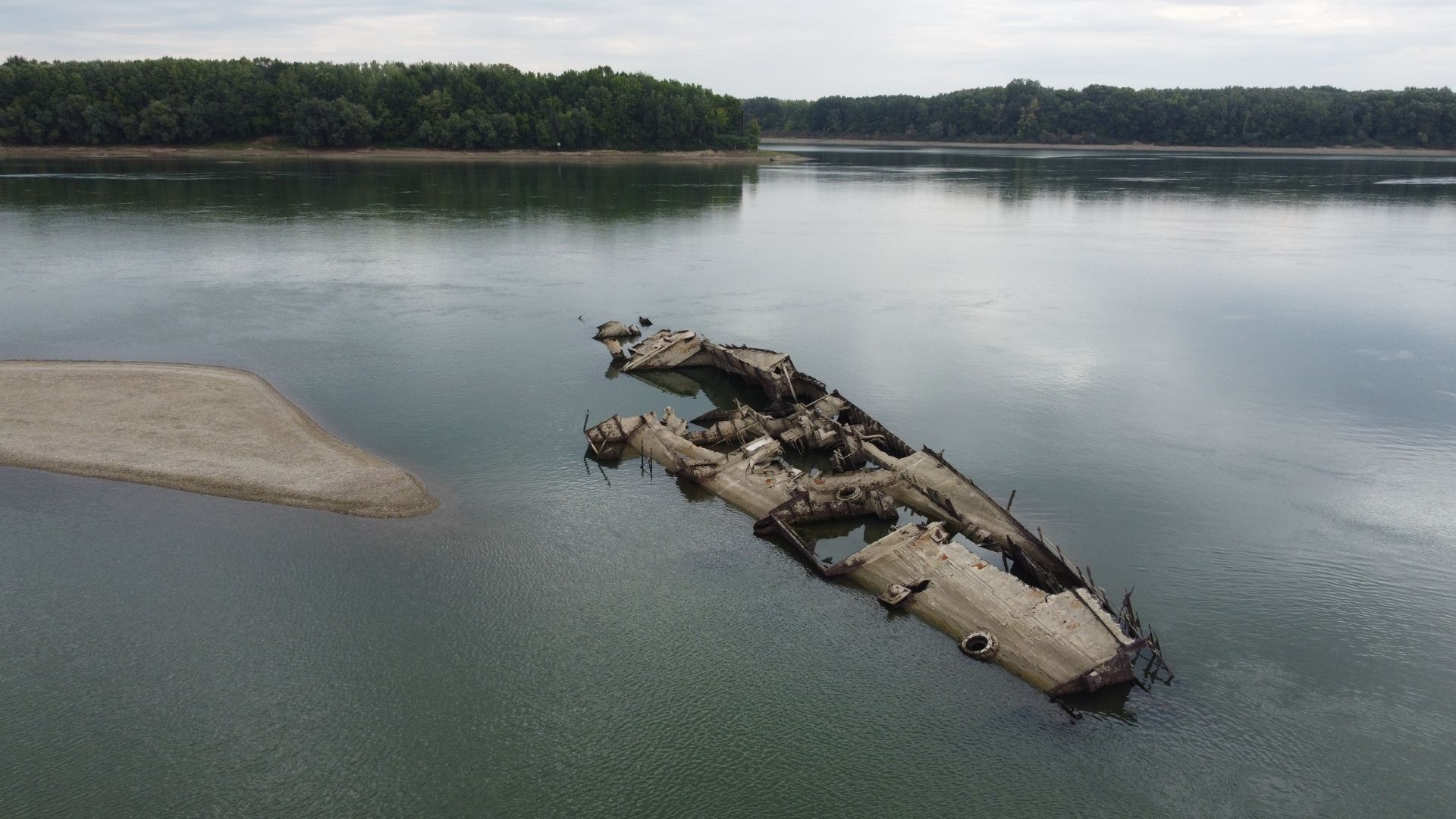
More than 80 years after the end of World War II, one of Europe’s largest wartime graveyards is once again emerging from the water. Record-low water levels along the Danube River have exposed dozens of German military shipwrecks near the Serbian town of Prahovo, where an estimated 200 vessels were deliberately scuttled by retreating Nazi forces in 1944. The dramatic reappearance of the rusting wrecks has become one of the most striking visual reminders of both Europe’s wartime history and the severe drought currently gripping much of the continent. A retreat frozen in time According to Euronews, the ships belonged to the German Kriegsmarine’s Danube and Black Sea flotillas, which were intentionally sunk as German forces retreated before the advancing Soviet Red Army during the final months of World War II. The goal was to deny the vessels to the enemy while simultaneously blocking the Danube’s navigation channel. That improvised wartime barrier has outlasted the conflict itself. The European Investment Bank (EIB) estimates that roughly 200 wrecks, including warships, barges, tugs, and cargo vessels, remain scattered across a five-kilometer stretch of the river near Prahovo. Some are believed to still contain ammunition and unexploded ordnance, making recovery operations both technically difficult and potentially dangerous. Why are they appearing now? The latest discoveries are the result of one of Europe’s most severe droughts in recent years. Persistent heatwaves and below-average rainfall have pushed sections of the Danube to exceptionally low levels across Serbia, Croatia, Hungary, and Romania. In some areas, vast sandbanks have emerged, cargo shipping has been disrupted, tourism has suffered, and even electricity generation has been affected as river levels continue to fall. While the wrecks become partially visible during previous dry summers, this year’s drought has exposed far more of the vessels, revealing twisted hulls, decks, and steel structures that have remained underwater for decades. Reuters photographs from Prahovo show residents swimming and boating alongside the exposed remains as the river receded. More than historical relics The wrecks are more than archaeological curiosities—they continue to pose practical problems. According to the European Investment Bank, the submerged vessels have long restricted navigation through this stretch of the Danube, contributing to delays in commercial shipping and economic losses estimated at around €5 million annually for Serbia. As a result, an EU-backed recovery project has already begun removing some of the most hazardous wrecks while leaving others buried beneath the riverbed where removal would be too risky. Recovery crews must proceed carefully because some vessels may still contain explosives dating back to World War II. Before lifting a wreck, divers inspect the site while specialized equipment removes decades of accumulated silt and sediment. Climate change meets history The resurfacing of these warships highlights an increasingly common phenomenon across Europe. Extreme weather is exposing long-hidden pieces of history. Recent droughts have uncovered everything from ancient settlements and prehistoric fossils to unexploded wartime ordnance and forgotten shipwrecks. In the Danube’s case, the exposed German fleet serves as a reminder that climate-driven changes to rivers are reshaping not only transportation and energy systems but also the archaeological landscape. As Europe continues to experience prolonged periods of extreme heat and drought, historians, engineers, and environmental scientists may find themselves studying more than changing river levels. They may also be rediscovering chapters of history that have remained hidden beneath the water for generations.Recommended ArticlesGet the latest in engineering, tech, space & science - delivered daily to your inbox.Kaif Shaikh is a journalist and writer passionate about turning complex information into clear, impactful stories. His writing covers technology, sustainability, geopolitics, and occasionally fiction. A graduate in Journalism and Mass Communication, his work has appeared in the Times of India and beyond. After a near-fatal experience, Kaif began seeing both stories and silences differently. Outside work, he juggles far too many projects and passions, but always makes time to read, reflect, and hold onto the thread of wonder.
More than 200 WWII German shipwrecks emerge as Danube River reaches record lows
Full Article
Original Source
Read the full article at Interestingengineering →KhanList aggregates and links to publicly available news content. We do not host full articles from third-party sources. Always verify important information with original sources.