
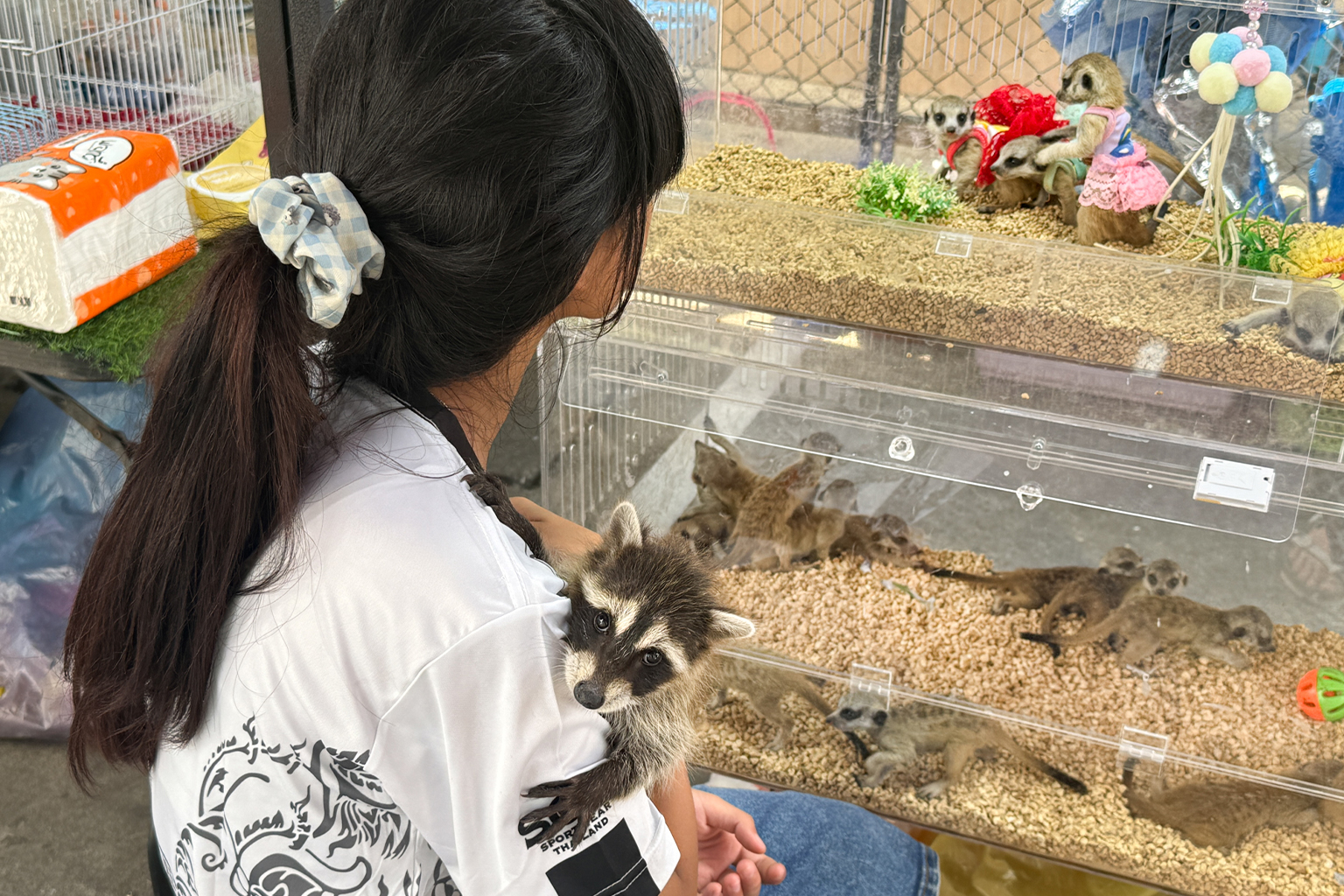
More Amazonian species, in larger numbers, are appearing for sale on the other side of the planet in Southeast Asia’s exotic pet trade, reports contributor Gloria Dickie for Mongabay. Over the past two years, Scott Roberton, who leads the countertrafficking program for U.S.-based nonprofit Wildlife Conservation Society, has observed a rise in Latin American species, including marmosets, capuchin monkeys, tamarins, capybaras, matamata turtles, and rare Amazonian fish, crammed into small enclosures alongside domestic pets in Thai markets. “It’s changed a lot in the past two years. The volume is greater. The diversity of species is great,” said Roberton. “Every time we come, there is a new species here.” The supply chain can originate deep in the rainforest, often centered around hubs like Iquitos in Peru, Dickie reports. Animals poached from Colombia, Brazil, and neighboring nations are ferried along Amazonian rivers into Peru, where corruption and illegal trafficking, including fraudulent documentation, allow wild-caught specimens to be laundered as captive-bred stock that can be legally traded. “Iquitos is a city where a lot of illegal commodities move freely within the Amazon,” said Renata Cao, Latin America project lead with the wildlife trade monitoring network TRAFFIC. “A lot of products from different countries get to Iquitos, and then in Peru it’s easier to launder.” From South America, the animals endure stressful multi-leg flights lasting more than 25 hours to reach Asian markets. The trade is further fueled by social media platforms that connect buyers and sellers globally, according to Neil D’Cruze, a wildlife researcher. “The market stall is really just the visible part of a much longer supply chain,” D’Cruze said. “And increasingly, that physical supply chain is intersecting with a global digital marketplace capable of connecting sellers and buyers thousands of miles apart.” Roberto Vieto, animal welfare adviser with U.K.-based World Animal Protection, said the trade inflicts pain and suffering on the animals, with many dying during transit due to extreme stress and confinement. “There are no direct flights, so it will be a super-long journey with several stops,” Vieto said. “That is only causing extreme stress for the animals, and the level of mortality is super high.” While it’s unknown exactly how many animals die in transit, a report from the European Union on wildlife trafficking found that 70% of wild animals die within six weeks of capture. In Bangkok’s Chatuchak Market, overcrowded conditions, high heat, and proximity to food stalls also elevate biosecurity and zoonotic disease risks. Despite international criticism and a 2024 fire that killed more than 1,000 animals, such market operations continue. Read the full story by Gloria Dickie here. Banner image: A shopper walks through Chatuchak Market carrying her pet raccoon. Image by Gloria Dickie. Credits Topics
More Latin American species are surfacing at a Bangkok wildlife market
Full Article
Original Source
Read the full article at News →KhanList aggregates and links to publicly available news content. We do not host full articles from third-party sources. Always verify important information with original sources.