
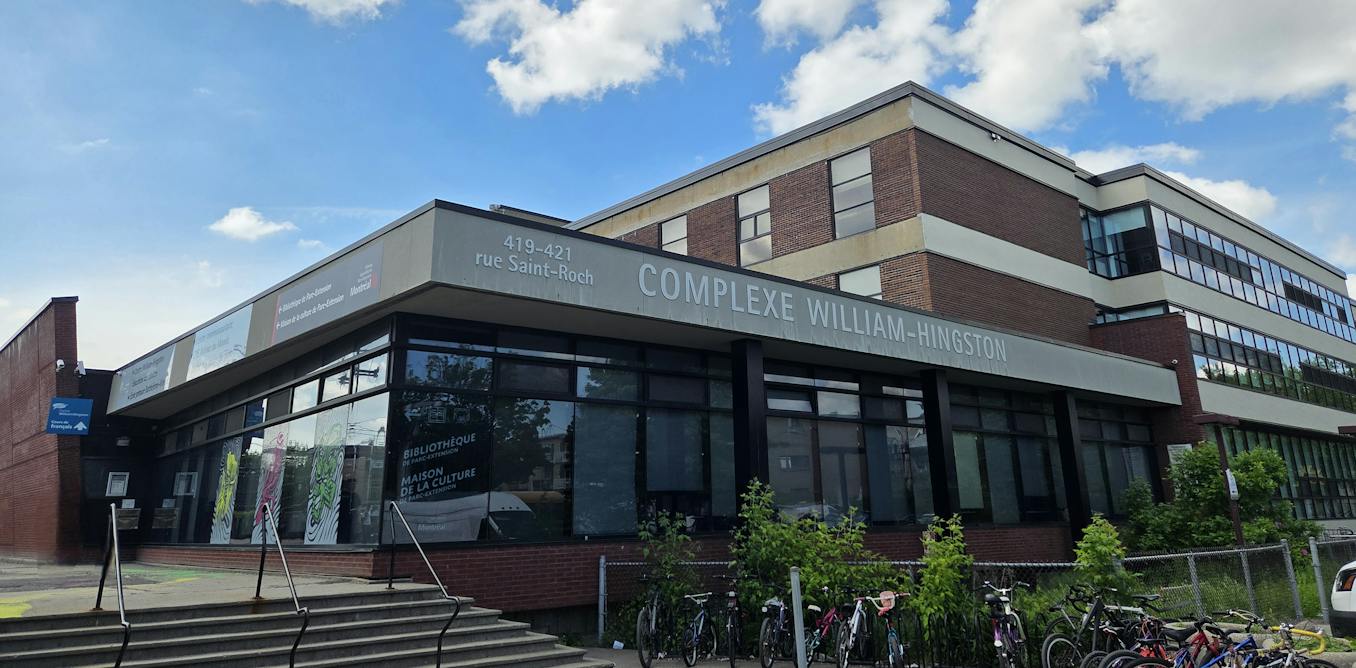
For newcomers to Montréal’s Parc-Extension neighbourhood, the William-Hingston Centre was a place to find several kinds of supports under one roof. As the largest community centre in the area, it housed 15 community groups in a neighbourhood where roughly 14,000 people rely on local organizations each month. They included Afrique au Féminin, which offered women’s support; the Comité d'action de Parc-Extension, which provided housing assistance; and the Parc-Extension Youth Organization, which ran youth programming. That changed in 2021, when the Centre de services scolaire de Montréal (CSSDM), which owns the building, notified the groups of plans for major renovations. All 15 groups were required to relocate by June 2025 at the latest. The timing could hardly have been worse: the neighbourhood was already grappling with land speculation and rising rents. The mass eviction has placed further pressure on a vulnerable immigrant community. But what happened at William-Hingston is not an isolated case. It’s part of a citywide pattern that reflects a growing tendency for the state to transfer responsibility for addressing social problems to private entities. A woman from the community picks up a food basket in the hall of William-Hingston in December 2020. (Isabelle Prud'homme) Gentrification meets a loss of services Parc-Extension is one of Montréal’s most multicultural and economically vulnerable neighbourhoods. It’s home to a large number of families and immigrants: 69 per cent of residents speak a mother tongue other than French or English, and 39 per cent of the population living in low income, compared with 21 per cent for the city of Montréal as a whole. Over the past few years, the neighbourhood has faced rapid land speculation and rising evictions. The inauguration of the Université de Montréal’s Campus MIL, which straddles Parc-Extension’s southern border, has sparked waves of displacement, with rent increases disproportionately affecting the most vulnerable residents. Following their displacement, the William-Hingston groups had to seek new locations within Montréal’s competitive and increasingly unaffordable real estate market, while already operating with limited staffing and insufficient funding. Only seven managed to remain in the neighbourhood, divided between public-sector facilities, such as park chalets and arenas, and privately operated spaces that placed a significant financial burden on them. Five were forced to leave Parc-Extension altogether, distancing them from the people they served. People now have to travel to multiple locations to access the community support they need. At least one service disappeared entirely: the Parc-Extension Youth Organization lost its low-cost cafeteria following an eviction, serving its final meal in March 2024 after being part of the community for 22 years. The large turnout at that last meal underscored the community’s growing needs at a time when available services were declining. Community groups struggling to survive In Community-Based Action Research (CBAR) network meetings, organizers in Parc-Extension have expressed deep frustration with the current situation. Rose Ndjel, director of Afrique au Féminin, emphasized the importance of keeping community groups together in a central, shared location, such as the former William Hingston Centre. That kind of co-location was particularly vital for newly arrived immigrant families. In one building, they could find housing support, women’s programs, library services, French-language courses and food assistance. Losing that centralized access disrupts established networks of support and contributes to the broader fragmentation of a local care ecosystem that remains vital to residents. Christmas food distribution baskets are assembled in the hall of the William-Hingston building in December 2020 for around 600 families from the Parc-Extension neighbourhood. (Isabelle Prud'homme) A citywide pattern of evictions The eviction of community groups from CSSDM-owned sites is becoming a recurring trend in Montréal. In communications between CSSDM and the city, the reason given has been the need for urgent major renovations. In Hochelaga-Maisonneuve, 11 community groups were evicted by the CSSDM, further undermining a neighbourhood already grappling with gentrification and evictions. In Ahuntsic, 13 community groups faced eviction last year by the CSSDM in 2024. Even more concerning, in some cases, the CSSDM is selling surplus buildings to the private market and it’s already announced plans to sell some of its buildings in Rosemont, Ahuntsic, Saint-Michel and Plateau-Mont-Royal. No sale of William-Hingston has been announced, but the experience of other neighbourhoods seems to be a warning. Most of these changes have happened since 2020, when the Montréal school commissioners was abolished and replaced by the CSSDM. Since then, there has been no local political counterpart with whom to discuss the future of surplus school buildings accentuating the centralization of power to the provincial level. Previously, elected representatives offered a more accessible point of contact, and some were more willing to engage constructively with residents and community organizations. Today, decisions are made more directly by the ministry of education, and it has become much harder for neighbourhood concerns to be heard and addressed. Combined with a lack of investment in community organizations and buildings at both the municipal and provincial levels, these changes have left community groups uncertain about their future. Québec, as a province, is moving away from a model in which community groups are primarily supported by public funding and housed in government-owned buildings. Instead, they are increasingly expected to develop and finance new community centres themselves, without adequate public support and despite lacking the necessary resources and expertise all while having terrible working conditions. This has led to Le Communautaire à Boutte (the community sector is fed up), a provincial grassroots movement demanding more funding and recognition from the provincial government. In Parc-Extension, the Table de quartier de Parc-Extension, a local social development collaborative forum, is working to develop a new community centre on city-owned land with federal support. Provincial funding, however, is still pending. As the situation in Parc-Extension illustrates, this transfer of responsibility risks exacerbating vulnerabilities and contributing to this trend of eviction. This article was co-authored by Lucas Raimbault, a development agent at Bureau d'information de Parc-Extension
Montréal’s school service centre is evicting community groups in its surplus buildings. An urban neighbourhood shows the cost
Full Article
Original Source
Read the full article at Theconversation →KhanList aggregates and links to publicly available news content. We do not host full articles from third-party sources. Always verify important information with original sources.