
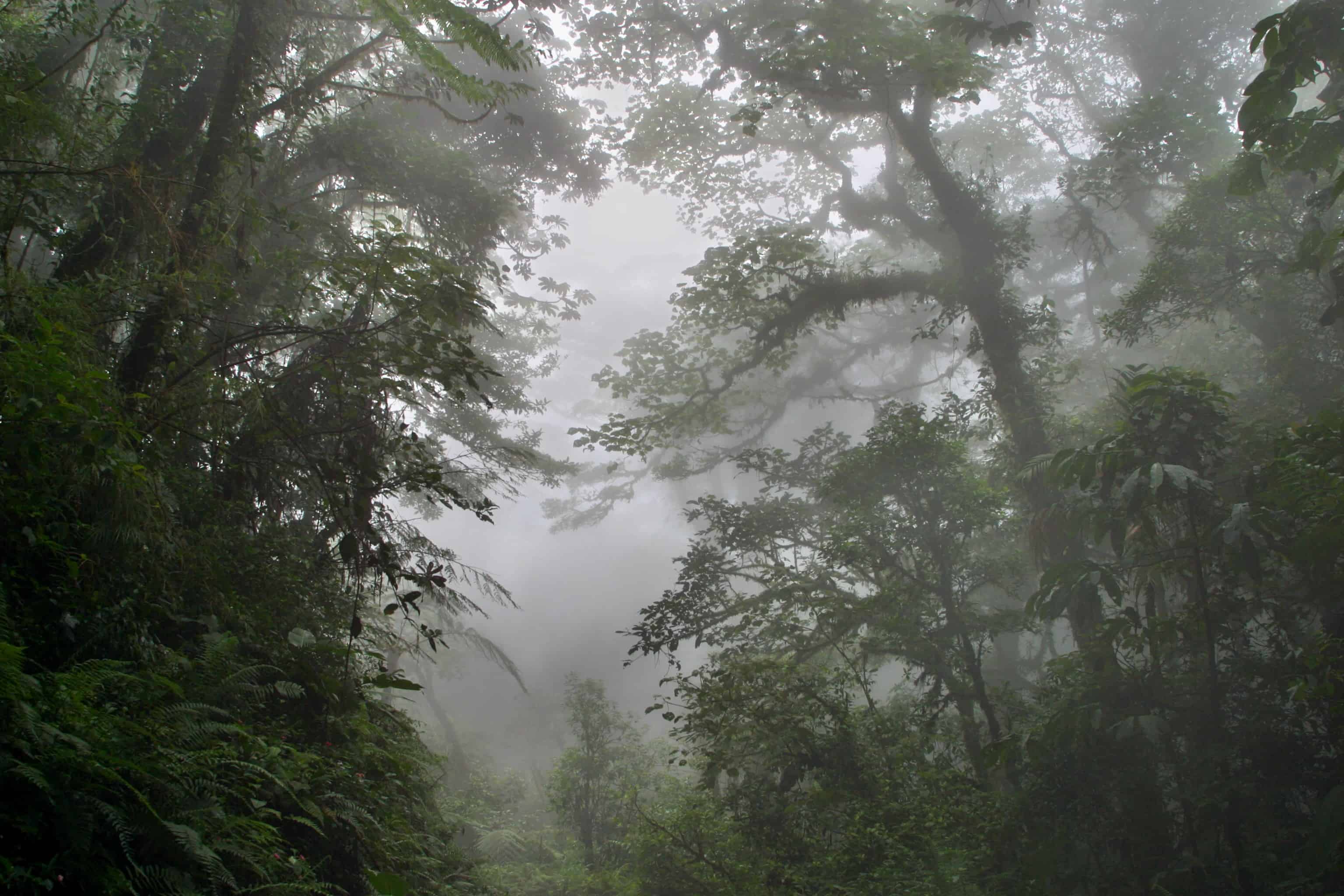
Costa Rica’s best known cloud forest is in the international spotlight this week after the BBC published a lengthy feature on Monteverde, reporting that the clouds that define the forest are pulling away from it and changing the life inside. The piece appeared on November 12 on BBC Future, the British broadcaster’s science and environment section. It was written by journalist Jocelyn Timperley, who reported from the Children’s Eternal Rainforest and other reserves around Monteverde. The central message will be familiar to anyone who has followed the science here. The BBC reports that the fog bank that once sat on the forest almost year-round is rising with warmer temperatures, leaving the canopy exposed to sun and dry air for much of the dry season. It leans on the long running records of Alan Pounds, resident scientist at the Monteverde Cloud Forest Biological Preserve, who has counted the days when neither rain nor mist reaches his gauge. There were about 25 a year in the 1970s. His latest figures, which the BBC describes as preliminary, put the recent average near 119. Much of the feature is devoted to the epiphytes, the orchids, mosses, bromeliads and ferns that cover Monteverde’s trees and drink directly from the mist. The BBC follows ecologists Nalini Nadkarni of the University of Utah and Sybil Gotsch of the University of Kentucky, along with Costa Rican scientist Elenter Cubero Campos, whose experiments are designed to show what the forest loses as those hanging gardens dry out. The feature also revisits the golden toad, the Monteverde species that vanished after 1989 and is widely cited as one of the first extinctions linked to a warming climate. It also describes the newcomers now arriving from the lowlands, including toucans, terciopelo snakes and bats that were once kept out by the cold. Local voices get a share of the space. The BBC speaks with members of the Monteverde Institute, the Costa Rican Conservation Foundation and the community group CorClima about tree planting, biological corridors and whether ecotourism, long credited with saving the forest from cattle pasture, is approaching its limits as new hotels go up. Little of this is new to Costa Rica as reseasrchers here have reported on Monteverde’s rising dry day count for years. What is different is the scale of the audience. Monteverde is one of our signature protected areas and a place known by name around the world, and a prominent BBC feature puts its troubles in front of millions of readers and potential donors. That attention cuts both ways. Coverage of this kind can bring research funding and support for conservation groups working on the mountain. It can also change how the world sees a place whose identity is built on mist and dripping moss. For now the forest remains green, the quetzals still nest and the reserves are open. But the BBC’s reporting makes plain that the scientists who know Monteverde best believe it is becoming a different kind of forest, and that the rest of the world is now watching it happen.
Monteverde Went From 25 Dry Days a Year to Nearly 120, BBC Reports
Full Article
Original Source
Read the full article at Ticotimes →KhanList aggregates and links to publicly available news content. We do not host full articles from third-party sources. Always verify important information with original sources.