
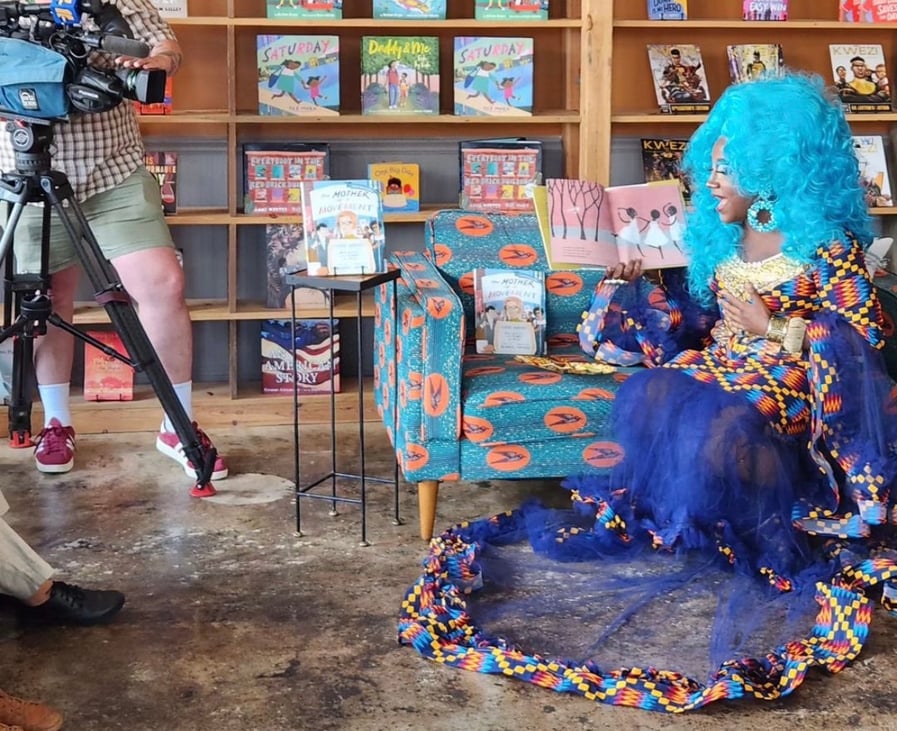
The Ninth Circuit upheld a block on the state's ban, and now the state wants a federal court to narrow the law to allow enforcement.(CN) — Montana appeared before a federal judge Thursday in an attempt to reinstate its ban on “sexually oriented performances.”Specifically, the state wants the federal court to narrow a challenged bill and sever any portions the court may find unconstitutional — such as those explicitly banning drag story hours — said Michael Noonan with the Montana Department of Justice.“To answer a question likely to arise: yes, we do not defend every word as written,” Noonan said. “That is not a confession of judgment; it is an opening move of the narrowing case.”The dispute centers on Montana House Bill 359, signed by Governor Greg Gianforte in 2023. The bill restricted drag performers from reading books to children and banned minors from attending what it described as “sexually oriented shows.”Under the law, owners, mangers and employees of those shows would have faced fines from $1,000 to $10,000, and, for a third offense, would have lost their business licenses. Teachers and librarians could have their teaching or administrative certificates permanently revoked for a second violation. It also created a private right of action for aggrieved parents to sue those parties for up to 10 years.A coalition of Montana businesses, nonprofits and performers who said the bill targets their First Amendment rights sued the state and in late 2023, U.S. District Judge Brian Morris ruled in their favor, preliminarily blocking enforcement of the bill.This March, the Ninth Circuit upheld the injunction, finding the legislation’s restrictions are content-based limits on “purely expressive activity.”The plaintiffs and the state appeared before Morris, a Barack Obama appointee, again on Thursday with duelingmotions for summary judgment.The state argued the plaintiffs don’t have standing to challenge section two of the bill since it applies only to a “sexually oriented business,” which is defined as a “nightclub, bar, restaurant, or similar commercial enterprise” that serves alcohol and provides performances.However, the plaintiffs contended that at least the Roxy Theater, a performing arts venue in Missoula, arguably falls within that definition.“Bars serve alcoholic beverages, restaurants serve food, nightclubs offer entertainment; the Roxy Theater does all three,” said Constance Van Kley, attorney representing the plaintiffs. “If that isn’t a similar commercial enterprise, I don’t know what is.”The state argued that while the theater serves alcohol, it is not a bar since alcohol isn’t the primary source of its gross income.The state also argued the court should adopt a narrowing construction and sever any portions of the bill it deems invalid.“We’re asking the court to apply the act’s own obscenity definition so the ban only reaches a performance that is obscene as to a minor and sever any remaining portions of the bill the court may find unconstitutional,” Noonan said.But the plaintiffs argued federal courts can’t issue a binding interpretation of state law and lack the power to interpret it in a way that revises the law.“Instead, this is a question of ‘Let’s try to give effect to the legislature’s intent,’” Van Kley said.Likewise, Morris seemed wary of altering the interpretation of the law.“How do I, looking back at what the Legislature did, fairly and accurately represent the views of those legislators in narrowing or changing the language of the statute?” Morris asked the state.Montana argued the requested changes would work with what the legislature intended.“Which was, overall, keep certain performances away from minors that in this case would be obscene as applied to minors,” Noonan said.The plaintiffs argued the statute is void for vagueness.“We’ve spent three-and-a-half years talking about this statute and have not settled on a conclusive interpretation of it; I don’t know how an ordinary citizen or a law enforcement officer or a county attorney could do something we’re not able to do,” Van Kley said.Morris questioned the state about the law’s limitations on parental consent.“Where do we draw the line here? Can a parent not consent to taking a child under this bill?” Morris asked.Montana explained the state has an interest in shielding minors from explicit sexual content, much in the same way places like strip clubs have an age restriction.Morris said he intends to return a decision before the end of the year.Subscribe to our free newslettersOur weekly newsletter Closing Arguments offers the latest about ongoing trials, major litigation and rulings in courthouses around the U.S. and the world, while the monthly Under the Lights dishes the legal dirt from Hollywood, sports, Big Tech and the arts.Additional Reads
Montana fights to salvage law banning drag story hours
Full Article
Original Source
Read the full article at Courthousenews →KhanList aggregates and links to publicly available news content. We do not host full articles from third-party sources. Always verify important information with original sources.