
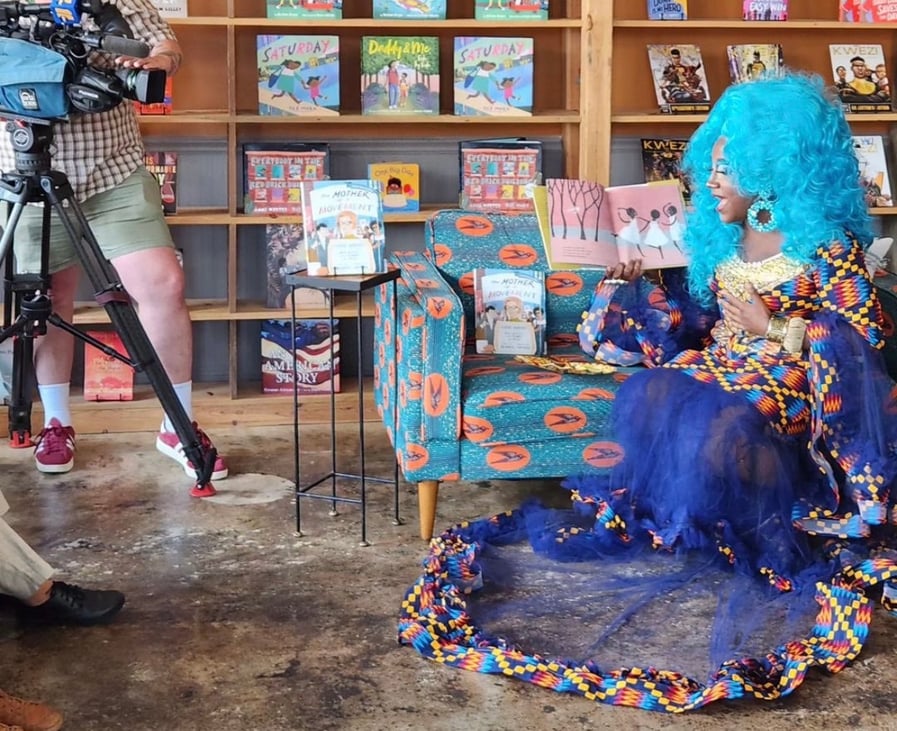
The ruling follows a Ninth Circuit opinion from March that the drag story hour restrictions were content-based limits on purely expressive activity.(CN) — A federal judge ruled Wednesday that a Montana law that, among other things, criminalizes so-called drag story hours in schools and libraries that receive state funding is unconstitutional.Chief U.S. District Judge Brian Morris in Butte granted summary judgment to a coalition of Montana businesses, nonprofits and performers on their claims that the 2023 statute, H.B. 359, violates their free speech rights under the First Amendment and their due process rights under the Fifth Amendment.The judge, a Barack Obama appointee, rejected the state’s request to preserve the statute, which also prohibits minors from attending sexually oriented shows, by severing the unconstitutional portions and narrowing the remaining provisions so that they’d fall within the constitutional regulation of obscenity.Evidence of legislative intent, the judge said, counsels against constructing the law so that the definition of “sexually oriented performances” incorporates an established legal definition of “obscenity.”“Defendants have maintained throughout this case that the language and legislative intent of H.B. 359 extends to performances that are not obscene,” Morris wrote.“H.B. 359 does not cabin the definition of ‘sexually oriented performances’ to obscenity,” he added. “To construct it as doing so would require the court to add language to the law that does not currently exist, and that the Montana Legislature previously rejected. Applying that construction would be impermissibly rewriting the law to pass constitutional muster.”The dispute centers on the law signed by Governor Greg Gianforte in 2023 that restricts drag performers from reading books to children and bans minors from attending what it described as “sexually oriented shows.”Under the law, owners, managers and employees of those shows would have faced fines from $1,000 to $10,000, and, for a third offense, would have lost their business licenses. Teachers and librarians could have their teaching or administrative certificates permanently revoked for a second violation. It also created a private right of action for aggrieved parents to sue those parties for up to 10 years.A coalition of Montana businesses, nonprofits and performers who said the bill targets their First Amendment rights sued the state, and in late 2023, Morris ruled in their favor, preliminarily blocking enforcement of the law.This March, the Ninth Circuit upheld the injunction, finding the legislation’s restrictions are content-based limits on “purely expressive activity.”At a hearing before Morris earlier this month, an attorney for the state argued the judge should adopt a narrower construction and sever any portions of the bill it deems invalid.“We’re asking the court to apply the act’s own obscenity definition so the ban only reaches a performance that is obscene as to a minor and sever any remaining portions of the bill the court may find unconstitutional,” Michael Noonan with the Montana Department of Justice said.But the plaintiffs argued federal courts can’t issue a binding interpretation of state law and lack the power to interpret it in a way that revises the law.“Instead, this is a question of ‘Let’s try to give effect to the Legislature’s intent,’” Constance Van Kley told the judge.Representatives of the Montana Department of Justice and attorneys for the plaintiffs had no immediate comment on the ruling.Subscribe to our free newslettersOur weekly newsletter Closing Arguments offers the latest about ongoing trials, major litigation and rulings in courthouses around the U.S. and the world, while the monthly Under the Lights dishes the legal dirt from Hollywood, sports, Big Tech and the arts.Additional Reads
Montana ‘drag story hours’ ban ruled unconstitutional
Full Article
Original Source
Read the full article at Courthousenews →KhanList aggregates and links to publicly available news content. We do not host full articles from third-party sources. Always verify important information with original sources.