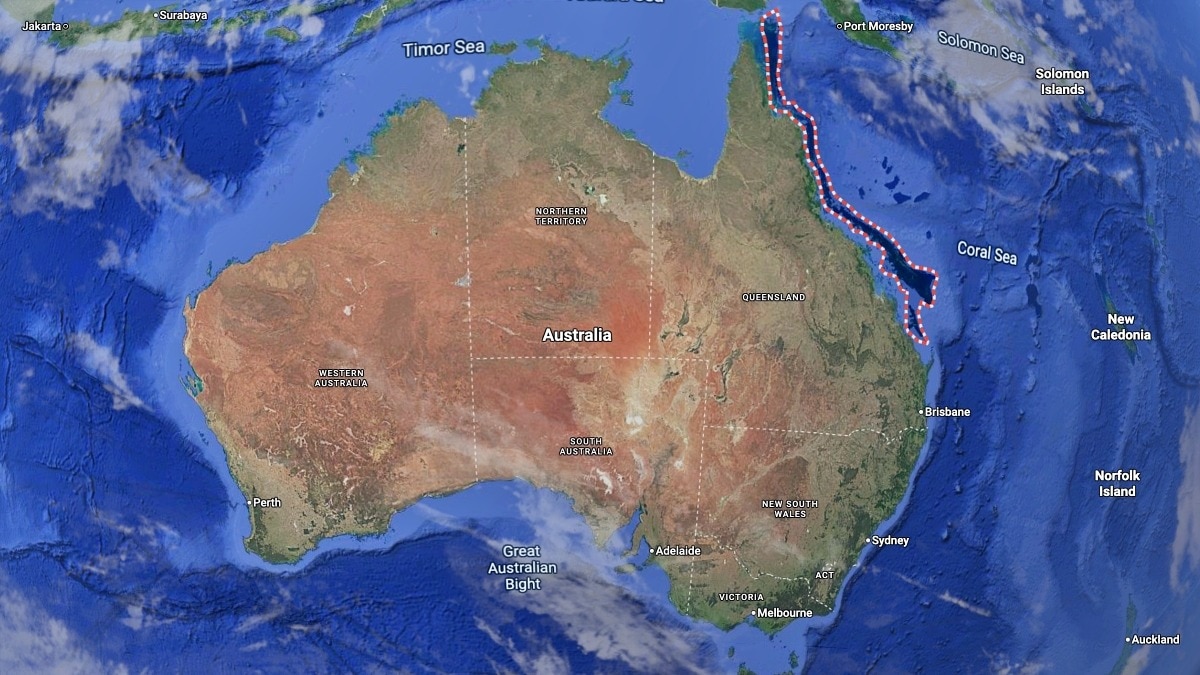
Australia's latest reef survey found late-summer monsoon conditions eased bleaching pressure on the Great Barrier Reef. The findings suggest temporary relief for corals, even as long-term risks from warming and other threats remain.The Great Barrier Reef as seen in satellite image on the coast of Australia. (Photo: Google Maps)The monsoon is often described as India’s lifeline, but its influence stretches far beyond South Asia.New findings from Australia suggest that late-summer monsoon activity may have given the Great Barrier Reef a crucial reprieve from coral bleaching, helping the world’s largest coral reef system begin recovering from recent climate-driven damage.According to the Australian Institute of Marine Science’s (AIMS) annual reef survey, coral cover across the Great Barrier Reef either increased slightly or remained broadly stable during the 2025-26 monitoring season.Researchers said unusually strong late-summer monsoon activity increased cloud cover and helped bring down sea-surface temperatures, potentially reducing the intensity and extent of coral bleaching. “The Reef experienced a summer of above average sea temperatures once again, but the late summer monsoon activity...likely limited the severity and extent of bleaching,” said Dr Mike Emslie, leader of AIMS’ Long-Term Monitoring Program.The findings offer a rare piece of good news after six mass bleaching events between 2016 and 2025, including major events in 2024 and 2025. In the Central region, coral cover rose from 28.6 per cent to 31.6 per cent. (Photo: Reuters) AIMS surveyed 121 reefs for the latest report. Coral cover in the Northern Great Barrier Reef increased from 30 per cent in 2025 to 35.1 per cent, a 16.7 per cent rise.In the Central region, coral cover rose from 28.6 per cent to 31.6 per cent, while the Southern region recorded a marginal decline from 26.9 per cent to 26.4 per cent, within the margin of error.Overall, 28 per cent of surveyed reefs showed an increase in coral cover, 56 per cent showed no significant change and 16 per cent recorded declines.However, scientists caution against calling this a full recovery. Bleaching may have prevented coral cover from increasing as much as it normally would in the absence of disturbances.Fast-growing Acropora corals, which are important habitat builders but highly sensitive to heat stress, were among the worst affected by the 2024 bleaching event. Researchers warn that reefs that appear to have recovered could lose that progress rapidly if another severe heatwave strikes.The Reef is also facing pressure from tropical cyclones, flooding and a growing outbreak of crown-of-thorns starfish.The latest findings therefore highlight both the power and limits of the monsoon.By increasing clouds and cooling ocean waters, late-season rains can provide corals with temporary relief from deadly heat stress.But scientists say long-term protection will depend on reducing global greenhouse-gas emissions alongside effective reef management and conservation.- EndsPublished By: Sibu Kumar TripathiPublished On: Aug 11, 2026 15:30 IST
Monsoon is not just India's lifeline. It's also saving the dying reefs
Full Article
Original Source
Read the full article at Indiatoday →KhanList aggregates and links to publicly available news content. We do not host full articles from third-party sources. Always verify important information with original sources.