
Iran's Supreme Leader, Ayatollah Mojtaba Khamenei, has ordered a sweeping overhaul of the country's intelligence system after a string of high-profile security breaches exposed how deeply foreign operatives had penetrated Iran's defences, including the targeting of senior officials, military commanders and sensitive sites.The announcement was made by Iranian Parliament Speaker Mohammad Baqer Ghalibaf, who said the government must move quickly to appoint a permanent intelligence minister once legislation restructuring the ministry clears the Guardian Council, the country's constitutional watchdog.Ghalibaf said on Sunday that parliament had initially waited for the government to submit its own bill on restructuring the intelligence apparatus. After delays, lawmakers took up the issue themselves and approved the general outline of the proposed legislation. The overhaul comes at a particularly sensitive moment for Iran, with the country facing continuing military pressure and questions over how deeply foreign intelligence networks have been able to penetrate its security system.INTELLIGENCE FAILURES UNDER FRESH SCRUTINYIran has experienced several high-profile security breaches in recent years, raising concerns about the effectiveness of its intelligence and counterintelligence machinery. The vulnerabilities were highlighted by the 2020 assassination of Iranian nuclear scientist Mohsen Fakhrizadeh and the killing of Hamas leader Ismail Haniyeh in Tehran in 2024. The problem became even more apparent during the 12-day war in June 2025, when Israeli operatives inside Iran helped facilitate attacks on air-defence systems, missile launchers and senior military commanders.Those incidents have placed the country's intelligence structure under renewed scrutiny, particularly over its ability to detect foreign operatives and prevent the targeting of high-value individuals and military assets. The leadership is now seeking to change the way the intelligence ministry is structured and who can be appointed to run it.LAWMAKERS MOVE TO BROADEN MINISTERIAL ELIGIBILITY The proposed legislation would also widen the pool of candidates eligible to become Iran's intelligence minister. According to Iranian state media, candidates would not necessarily have to be clerics. The proposed rules would allow non-clerical candidates with a master's degree, relevant expertise and experience in intelligence affairs, as well as at least 10 years of middle- or senior-management experience.Candidates with qualifications in ijtihad -- independent Islamic legal reasoning -- would also remain eligible.The move follows the death of Iran's previous intelligence minister, Esmail Khatib, who was killed in an Israeli strike on March 18 this year. No permanent successor has been appointed since his death. Khatib, a hardline cleric and politician, had previously worked in the office of former Supreme Leader Ayatollah Ali Khamenei before becoming intelligence minister in August 2021.Ali Khamenei, who was killed in US-Israeli strikes at the beginning of the Iran war, was Mojtaba Khamenei's father.Ghalibaf said the government should not delay filling the vacant post once the legislation receives approval from the Guardian Council.HORMUZ REMAINS A MAJOR FLASHPOINTThe war with the US continues to put pressure on Iran, including around the strategically vital Strait of Hormuz. Iran's navy has warned ships against following what it described as unauthorised routes through the waterway, rejecting US military assurances that vessels can pass safely.The warning followed an announcement by Iran's Islamic Revolutionary Guard Corps that two tankers had struck naval mines in the strait."Reassurances from the US military do not guarantee safe passage through unauthorised routes in the Strait of Hormuz. Ignoring maritime warnings could result in severe and irreversible losses," the navy said in a statement published by the Fars news agency."Vessel commanders must understand that promises made by CENTCOM officials cannot eliminate the danger posed by naval mines – a threat that could ultimately condemn their ships to sinking in the waters of the Strait of Hormuz."IRAN WILL NEGOTIATE, BUT NOT BOW: PEZESHKIANDespite the military confrontation, Iranian President Masoud Pezeshkian said Tehran was still seeking a way forward through negotiations. But he made clear that Iran would not accept terms it considers humiliating or capitulate under pressure."We are trying to move forward with the path of negotiations through logic, but we are not going to bow our heads in the face of aggression and whatever wrongdoing the enemies commit," Pezeshkian said in comments reported by the Tasnim news agency."We will not accept humiliation and will stand against force and bullying," he added.Tehran now faces the difficult task of fixing the security gaps exposed by repeated breaches while dealing with a wider conflict, mounting risks in the Strait of Hormuz and the possibility of negotiations.- EndsWith inputs from Reuters
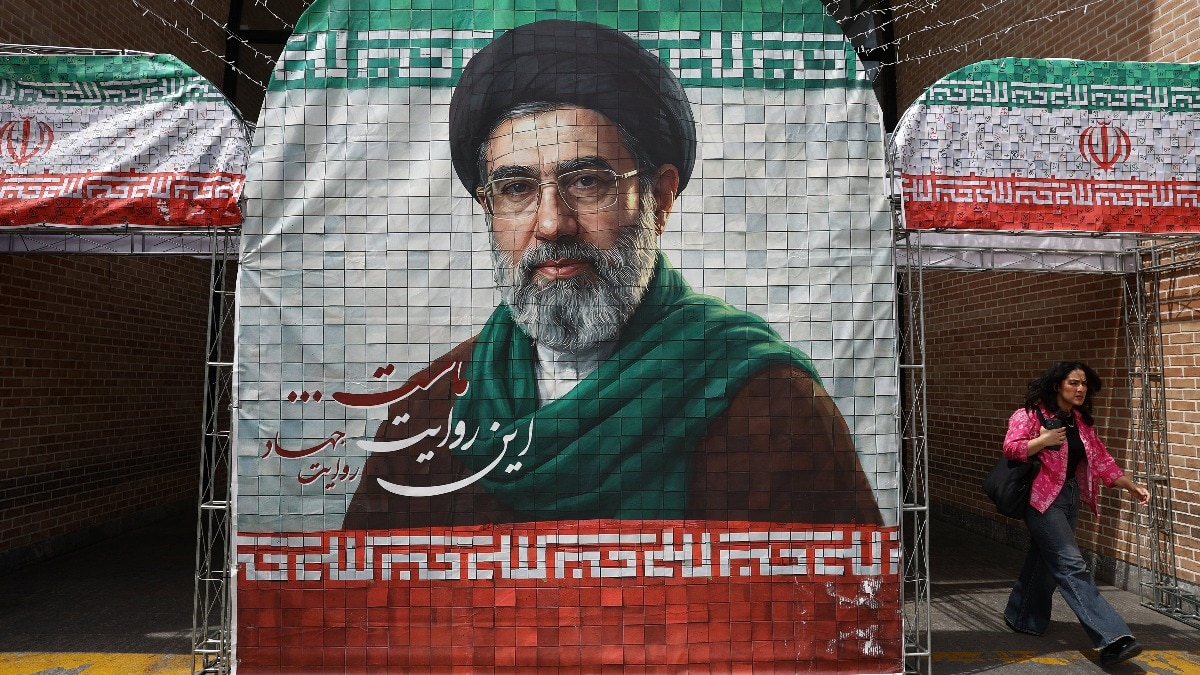
Mojtaba Khamenei orders Iran intelligence shake-up after years of security failures
Full Article
Original Source
Read the full article at Indiatoday →KhanList aggregates and links to publicly available news content. We do not host full articles from third-party sources. Always verify important information with original sources.