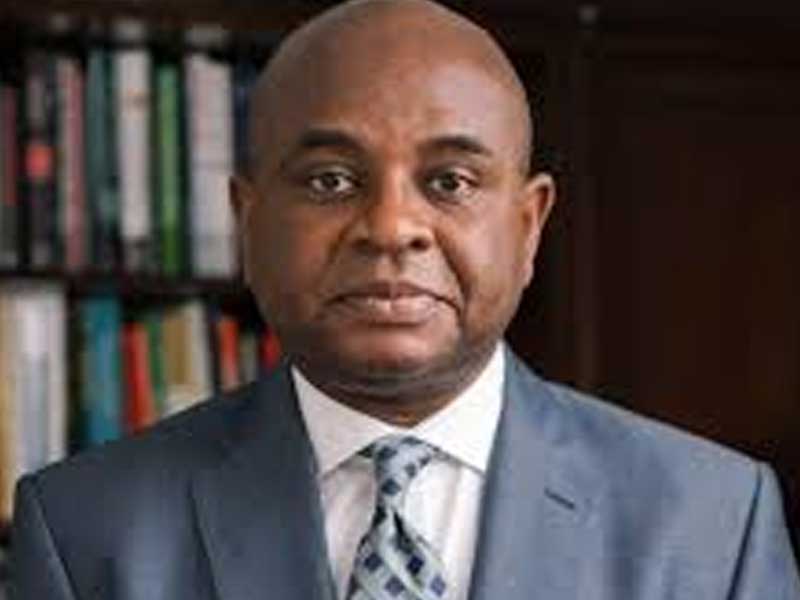
• Says AI, Trump’s ‘America First’ doctrine reshaping world order Former Deputy Governor of the Central Bank of Nigeria (CBN), Prof. Kingsley Moghalu, has warned that the world is entering an era of unprecedented uncertainty marked by geopolitical rivalry, technological disruption, economic nationalism, and climate pressures, urging governments and business leaders to rethink their strategies for survival. Speaking at a webinar hosted by the Stratus Global Alliance on the theme: “Understanding the World We Live In,” Moghalu said the post-World War II international order has fundamentally changed, creating heightened risks for countries, investors, and businesses. According to him, the world has become more interconnected than ever through trade, technology, finance and communication, yet it is also more divided than at any time in recent history. “We live in a moment of profound paradox. Never has the world been so interconnected through trade, technology, capital flows and instant communication. Yet never has the world felt more fractured,” he said. The political economist identified four major forces reshaping the global landscape: geopolitical shifts, technological disruption, economic recalibration, and demographic and climate change. He noted that the return of multipolar global politics, driven largely by strategic competition between the United States and China, has significantly altered international relations. “We’ve moved away from when America was the sole superpower after the Cold War. Today, we’re back to multipolarity, and this has created massively heightened geopolitical risks for countries and businesses,” he stated. Moghalu argued that President Donald Trump’s “America First” doctrine has accelerated the decline of multilateralism, weakened international institutions, and transformed the global trading system through tariffs and protectionist policies. He explained that global conflicts, particularly the wars involving Ukraine, Russia, Iran, Israel and the United States, have shifted warfare closer to the centre of global power, with direct implications for inflation, supply chains and investment decisions worldwide. On technology, Moghalu described artificial intelligence as both an opportunity and a disruptive force capable of reshaping labour markets and eliminating entire professions. “Artificial intelligence is driving fundamental shifts in the job market. Many job losses now are due to AI doing functions people used to do. It also raises difficult questions around ethics, governance and even warfare.” While acknowledging the fears surrounding AI, he advised organisations and workers to prepare strategically rather than panic. He further warned that geopolitical events are increasingly becoming drivers of inflation, citing disruptions caused by conflicts in the Middle East and Eastern Europe. “Geopolitics has become a direct pipeline transmitting inflation across countries. What happens in the Strait of Hormuz or Ukraine now affects the prices we all pay.” The former presidential candidate also highlighted demographic trends as a critical but often overlooked factor in future economic growth. According to him, ageing populations across Europe, North America and Asia contrast sharply with Africa’s rapidly expanding youthful population. He projected that by 2050, Africa would account for one billion working-age people and nearly 40 per cent of the global workforce. “If this workforce is properly skilled, Africa becomes the world’s next major market. But if not, it becomes a major risk. Governments and businesses must invest now in productivity and human capital,” he stressed. Moghalu argued that many assumptions underpinning globalisation have proved unrealistic, saying sovereignty and national interests have returned as dominant forces in international affairs. “Globalisation is real, but it is overrated. Sovereignty is back, and back with full force,” he declared. Drawing from theories of international relations, he maintained that the world is witnessing a retreat from aspirations of a global community towards a system where states increasingly pursue national interests over collective action. He questioned the notion of a universally rules-based international order, arguing that international law has often been applied selectively depending on the global balance of power. “There was never a truly universal rules-based international order. Power has always been central to international relations.” For business leaders, Moghalu recommended treating geopolitical risk as a core governance issue rather than an external factor.
Moghalu Urges Businesses to Embed Geopolitical Risk in Strategy
Full Article
Original Source
Read the full article at Thisdaylive →KhanList aggregates and links to publicly available news content. We do not host full articles from third-party sources. Always verify important information with original sources.