
British soldiers should be taught how to give badly wounded comrades a 'good death' if enemy drones prevent them from being rescued on the battlefield, military medical experts are proposing.Ministry of Defence (MoD) chiefs are being urged to extend palliative care training to ordinary soldiers so they can tend to seriously wounded comrades trapped by enemy fire and unable to be evacuated.Only medics can currently deliver end-of-life care on the battlefield – but drones have transformed modern warfare and the armed forces accept Britain has to adapt.Instead of injured personnel being airlifted to safety in Afghanistan and Iraq within the so-called golden-hour when surgery is most likely to save life, now soldiers face being pinned down for several hours.The proposals raise the prospect of soldiers administering powerful painkillers, such as morphine, to relieve the suffering of dying comrades if rescue operations prove impossible rather than merely to alleviate pain before rescue.The recommendations, published in the journal BMJ Military Health, come as defence medical chiefs have declared that training in end-of-life care is essential, acknowledging troops with survivable wounds could die because of delays.One senior Army officer told The Mail on Sunday: 'This issue is at the forefront of the minds of many commanders. Drones have changed the battlefield. Only medics can currently deliver end-of-life care on the battlefield – but drones have transformed modern warfare and the armed forces accept Britain has to adapt'How do we evacuate our wounded safely? In Ukraine, evacuation chains are often targeted and that raises the question of what to do with those who simply cannot be rescued.'It seems to make sense that we are trained in how to make the last moments of a dying comrade less traumatic.'But the prospect of ordinary soldiers providing end-of-life care raises serious questions about the risk of fatal mistakes, including wounded troops being wrongly assessed as beyond saving.In the article, Dr Charles Coombs, a clinician affiliated with the Royal Army Medical Services, called for military-wide palliative care training, legal safeguards for troops forced to make difficult decisions and psychological support for those caring for dying comrades.He said: 'The sheer volume of casualties, the tyranny on casualty evacuation lines, and the contested nature of a modern battlespace will mean that not every soldier can be saved.'For such patients, palliation, managing pain, mitigating distress and providing comfort in their final moments, becomes not merely an adjunct to care, but an essential moral duty.'The MoD's Defence Medical Research Strategy 2026-31, published in July, identifies the challenge of 'ensuring a good death on the battlefield'.It calls for the development of safer alternatives to opioid painkillers that could be administered by non-medical personnel and warns the persistent threat posed by drones could leave wounded soldiers stranded on the battlefield for hours.Separate MoD clinical guidance, entitled Care of the Dying Patient, makes provision for decisions to withdraw active treatment and acknowledges that assessments of survival may amount to a 'best guess'.It states that 'incorporating the management of the dying patient into training is a must'.The guidance also advises personnel to hold the hands of dying soldiers, reassure them that they are not alone and ask whether they wish to leave a final message for their loved ones.Dr Coombs said: 'Where the 'golden hour' once offered a reasonable expectation of survival, evacuation now frequently exceeds fifteen hours.'He added: 'The decision to palliate, and the implementation of palliative treatment, may fall to non-medical personnel. 'This reality frames the profound ethical challenge of how non-vocational providers can deliver a dignified death while grappling with their own moral load and potential legal vulnerability.'The proposals raise questions about whether soldiers without specialist medical training could inadvertently hasten the deaths of wounded comrades by making mistakes when administering powerful painkillers.An MoD spokesperson said: 'Keeping our people safe and providing the best possible medical care on military operations is our priority.'Our battlefield medical training is designed for the realities of modern warfare, including prolonged casualty care, with pain management forming part of our Tactical Combat Casualty Care framework.'We are also investing £50 million in equipment to improve battlefield care and survivability.'
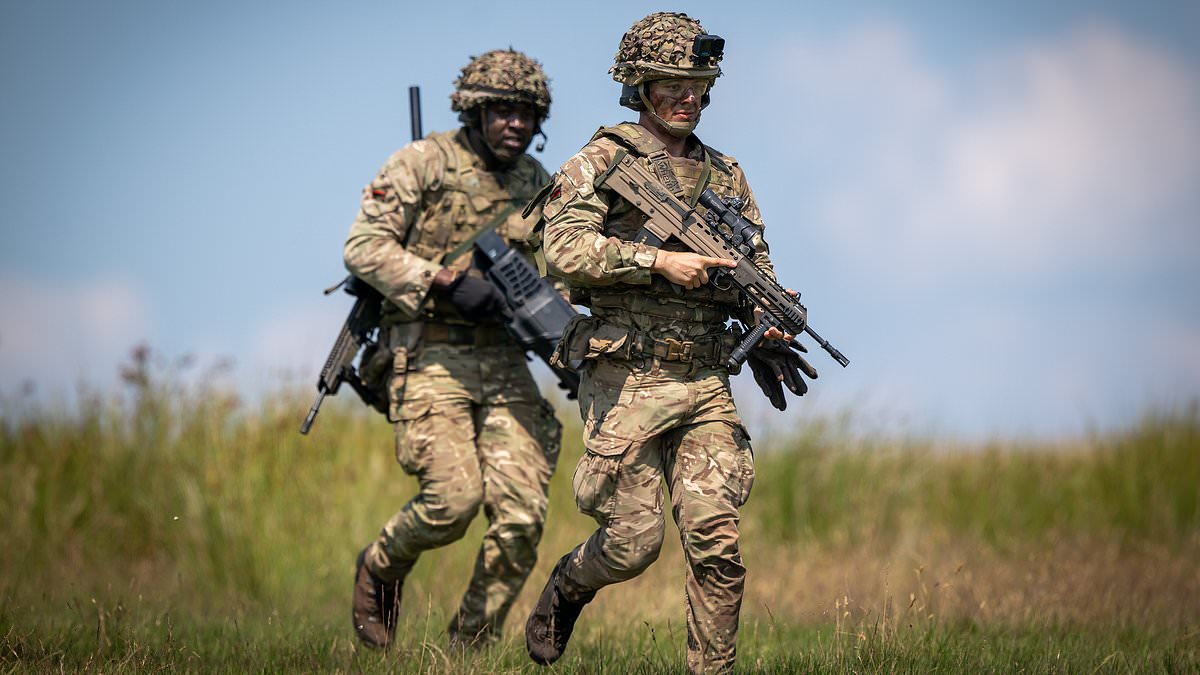
MoD is urged to teach soldiers how to give comrades 'a good death' if drones prevent them from being rescued
Full Article
Original Source
Read the full article at Dailymail →KhanList aggregates and links to publicly available news content. We do not host full articles from third-party sources. Always verify important information with original sources.