
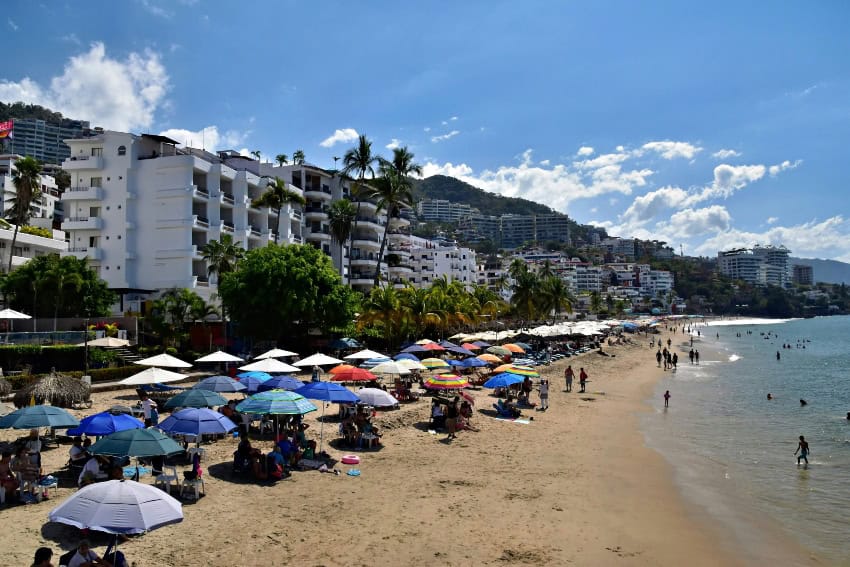
Let me be the first to officially welcome you to tourist season in Puerto Vallarta! It’s the time of year when local entertainment ramps up, traffic jams up, and the checkout lines at Costco pile up. But we may get a little help with traffic this season with the opening of the new Amado Nervo Bridge. It’s not just car traffic, but sea turtle traffic, too. Puerto Vallarta is in the thick of hatching season, when the newborn tortuguitas stumble their way from their nests to the sea by the hundreds, and you can help them on their journey. Helping sea turtle hatchlings on their perilous first journey to the sea is a noble endeavor. (Vallarta Adventures) And everyone is hoping for a more tranquil winter than last, when, on Feb. 22, members of the Jalisco New Generation cartel blocked traffic and burned cars and OXXO stores in the downtown area. The aftereffects of which have changed perceptions of safety here and abroad. Read on to learn about how the city is working to restore tourist confidence and attract new visitors, the opening of a new commuter bridge, and sea turtle season. Vallarta works to restore tourist confidence Puerto Vallarta is working to revive tourism and attract new visitors amidst a backdrop of increased public perception of insecurity. According to the National Urban Public Safety survey, Vallartenses’ perception of insecurity has more than doubled since last year, rising from 24.7% in September 2025 to 53.6% in September 2026. While significantly up since this time last year, locals’ perception of insecurity has actually decreased since June, when it peaked at 65.4%. Puerto Vallarta rated third-safest city in Mexico The survey measures public perception of insecurity and doesn’t reflect actual crime rates. Puerto Vallarta remains one of the safer places to travel compared to other tourist destinations, and experiences less theft and violent crime than most U.S. cities of the same size. Also, the U.S. State Department, known for being expeditious about issuing travel warnings, has no current restrictions on travel to Vallarta. But perception is everything, so the Vallarta tourism industry is working hard to win back traveler confidence and attract new visitors. This fall, representatives from the Puerto Vallarta Tourism Trust toured western states, hosting seminars for high-performing travel advisors in Arizona, Colorado and Utah, and welcomed tourism representatives from the U.S., Canada and other parts of Mexico to Vallarta. They even traveled to Poland, which will have direct weekly flights to Vallarta starting in December. Despite February’s unrest, Puerto Vallarta remains one of the top destinations for vacationers in the world and is among the Top 10 global destinations for the Thanksgiving holiday, according to a recent survey by Allianz Partners. And if the traffic and Costco lines are any indication, we’ll have a healthy tourist season this year. Amado Nervo Bridge opening The Amado Nervo Bridge is officially open and should help to ease local traffic congestion. (Gobierno de México) Here’s hoping a new commuter bridge between Banderas Bay and Puerto Vallarta will ease traffic on the busy Highway 200. The new Amado Nervo Bridge officially opened to cars on Oct. 28th. The bridge is located east of the main tourist corridor, connecting the towns of San Vicente and Ixtapa and surrounding communities, all of which previously had to use the 200 to get from one municipality to the next. Local transportation officials estimate the bridge will cut as much as 40 minutes from the commute and ease congestion on Highway 200, especially between Mezcales and the Puerto Vallarta airport. The bridge is two kilometers long with three lanes in each direction and a bike lane. It’s a bit out of the way of the normal tourist route, but will hopefully direct more local traffic eastward and make traveling along the 200 smoother. Turtles take to the sea Hundreds of thousands of baby sea turtles are making their journey to the sea along Puerto Vallarta’s beaches. November is one of the best months to see them during the height of hatching season. Mass nesting event brings more than 100,000 olive ridley sea turtles to Oaxaca’s Playa Escobilla In Vallarta, a collaborative network of local community groups, grassroots non-profits, university researchers, government agencies, and beachfront resorts runs sea turtle camps along the coast. These camps protect eggs and ensure as many hatchlings as possible reach the sea. When mother turtles come ashore at night to dig nests and lay their eggs, the next morning conservationists remove them and place the eggs into manmade nests at the camps. This helps protect the eggs from predators and poachers. Not all nests are moved; camps only have capacity to protect so many. But still, they manage to save and release more than 150,000 baby turtles each year. Turtle camps can be found at various spots along the coast of Banderas Bay, including the south end of Varadero beach in front of the Vidanta resort, Playa Holi in front of La Isla Mall, and Boca de Tomates turtle camp north of Bocanegra in the Marina. (Boca de Tomates took a beating with recent storms and could use support to rebuild.) Camps often invite the public to witness and help with baby turtle releases. There are few things more precious and inspiring in nature than watching a baby sea turtle stumble its way into the surf. Crowds cheer and gasp as the little guys earnestly follow their instincts into the water, only to be washed back onto the sand time and time again until they finally make it out. I highly recommend you try to see a release when you visit. Debbie Slobe is a writer and communications strategist based in Puerto Vallarta, Jalisco. She blogs at Mexpatmama.com and is a senior program director at Resource Media. Find her on Instagram and Facebook.
MND Local Puerto Vallarta: Tourists, traffic and turtles, oh my!
Full Article
Original Source
Read the full article at Mexiconewsdaily →KhanList aggregates and links to publicly available news content. We do not host full articles from third-party sources. Always verify important information with original sources.