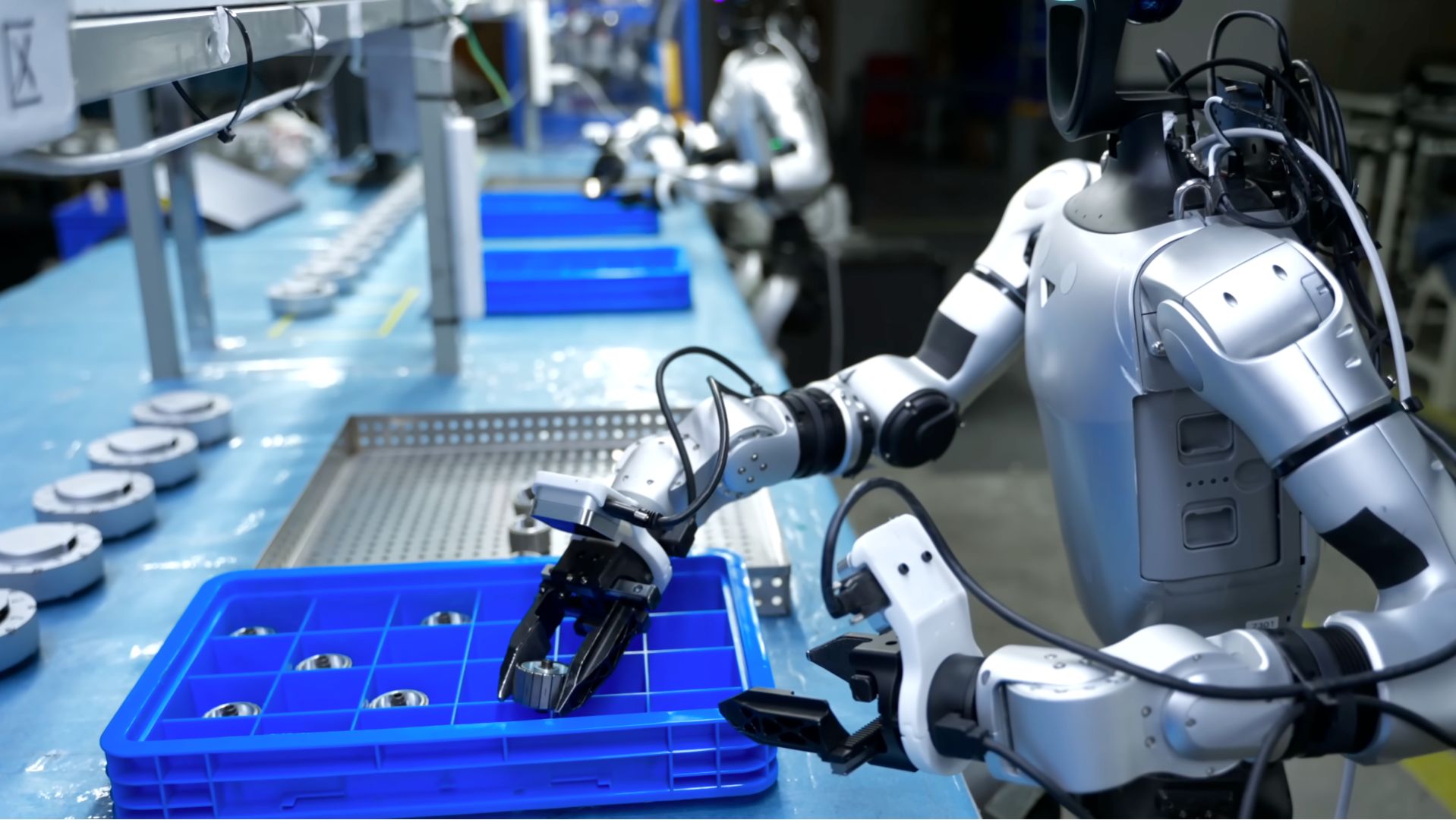
MIT researchers have developed a new technique that could help robots move faster, smoother, and more efficiently by enabling them to plan actions based on where they will be in the future. Called VLASH, the method allows robots to anticipate their next position and seamlessly transition between movements, reducing the pauses and jerky motions common in conventional systems. Researchers found the approach could double robot speeds in tasks such as pick-and-place and make robotic arms more responsive during dynamic activities including table tennis and Whack-a-Mole. According to the team, the technique requires no additional computational overhead and could improve the performance of the machines used in search-and-rescue and emergency response. VLASH speeds robots Generative AI systems known as vision-language-action (VLA) models are increasingly being used as the brains of robots, allowing machines to interpret their surroundings, understand instructions, and plan physical actions. However, the computational demands of VLA inference can cause delays that make robots slower and less fluid when responding to changes. Researchers at MIT have developed a new system called VLASH that addresses this problem by enabling robots to plan their next actions while they are still carrying out their current movements. A VLA model typically processes visual information captured by a robot’s cameras, combines it with instructions describing a task, and generates a chunk of actions for the robot to execute. Once those actions are completed, the system processes new observations before planning the next sequence. This repeated cycle can create pauses between movements, according to MIT. VLASH aims to eliminate that delay by predicting the robot’s future state. Instead of relying solely on the robot’s current position and environment, the system estimates where the robot will be after completing its current action sequence and uses that information to plan what comes next. According to the researchers, this approach helps prevent instability caused by planning from outdated observations. While a robot’s surroundings may change as it moves, its current position and planned movements provide enough information to estimate its near-future state. Robots learn faster The technique alone can accelerate reaction speeds by more than 30 times by removing the lag between action chunks. The researchers further increased performance through a method called action quantization, which generates larger chunks of movements that follow the same trajectory. Although action quantization slightly reduces accuracy, it allows robots to complete tasks two to three times faster overall. The team also developed a training-augmentation technique to ensure VLA models can effectively use future-state information. By reorganizing and reusing existing training data, the approach reduced training time by fivefold without adding computational overhead. In simulations, VLASH consistently produced faster robot movements while maintaining maneuvering accuracy. Tests on physical robots also showed improvements in pick-and-place, stacking, and sorting tasks. In one demonstration, a robot using VLASH sorted colored cubes into a box twice as fast as baseline systems while maintaining 90 percent accuracy, matching the best-performing conventional method. The system was also capable of handling highly dynamic activities, including table tennis and Whack-a-Mole, according to MIT News. The researchers say the technology could make robots more responsive and effective in fast-moving environments. Future work will explore combining VLASH with generative AI world models capable of predicting actual environmental observations, potentially expanding the system’s capabilities for more complex robotic applications.Recommended ArticlesGet the latest in engineering, tech, space & science - delivered daily to your inbox.Jijo is an automotive and business journalist based in India. Armed with a BA in History (Honors) from St. Stephen's College, Delhi University, and a PG diploma in Journalism from the Indian Institute of Mass Communication, Delhi, he has worked for news agencies, national newspapers, and automotive magazines. In his spare time, he likes to go off-roading, engage in political discourse, travel, and teach languages.
MIT’s new model cuts reaction delays by 30 times for faster robot movement
Full Article
Original Source
Read the full article at Interestingengineering →KhanList aggregates and links to publicly available news content. We do not host full articles from third-party sources. Always verify important information with original sources.