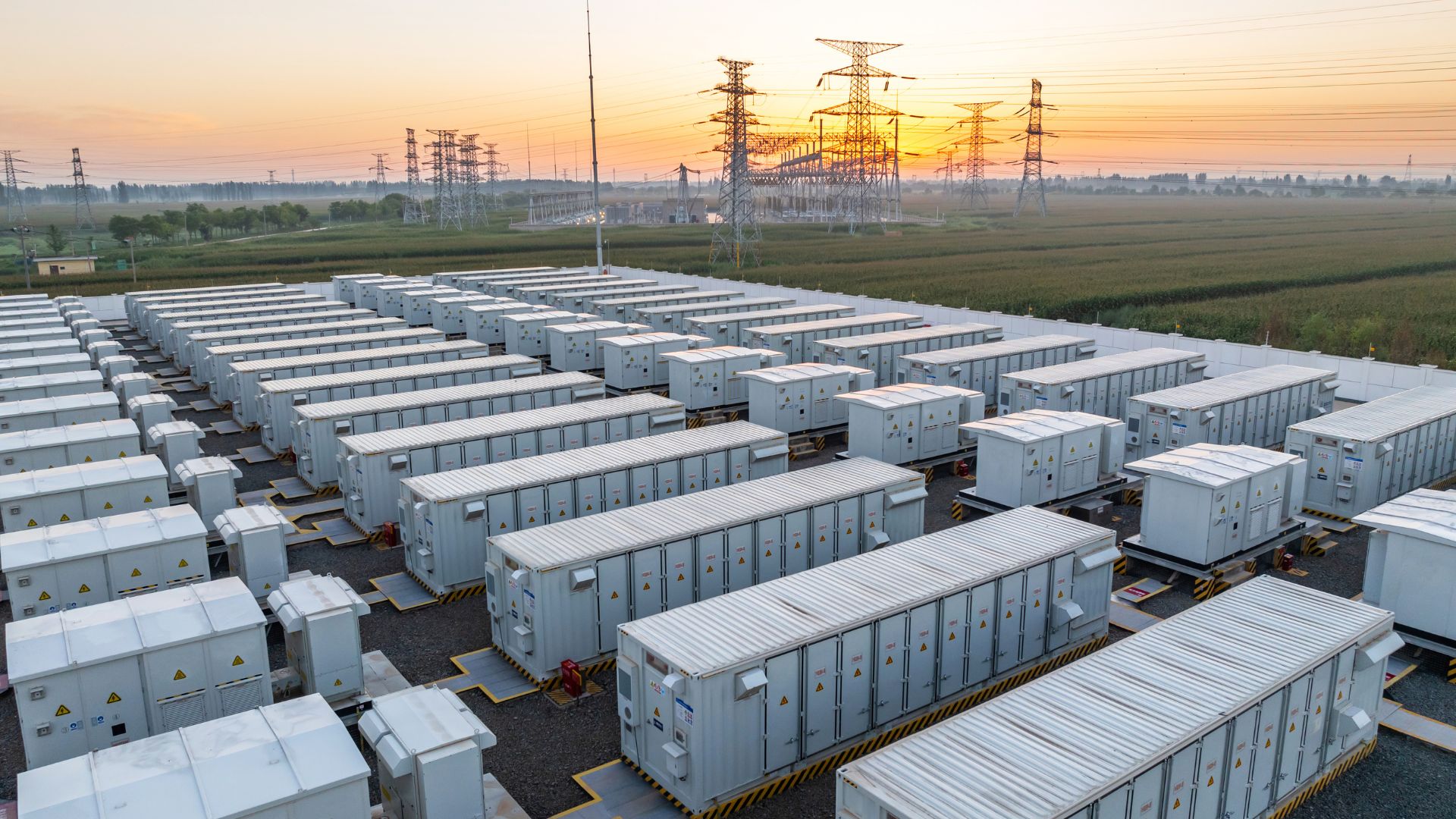
Battery energy storage system (representational image).Getty Images US researchers have created a machine-learning-guided method to design better electrolytes for sodium-metal batteries. The Massachusetts Institute of Technology (MIT) team’s work could help make this low-cost energy storage technology more viable for large-scale applications. The study addresses a key challenge: the highly reactive nature of sodium-metal batteries, which affects their stability and fast-charging ability. According to researchers, by using AI alongside experimental testing, they identified promising electrolyte formulations that could enable batteries based on abundant sodium instead of scarce materials like lithium, cobalt, and nickel. Smarter sodium batteries An MIT team has developed an AI-guided method for designing advanced electrolytes that could significantly improve sodium-metal batteries, bringing the low-cost energy storage technology closer to commercial use. The research focuses on one of the biggest technical barriers limiting sodium-metal batteries: the electrolyte. Alongside the anode and cathode, the electrolyte is one of the three essential battery components. It transports charged sodium ions between the electrodes during charging and discharging. However, conventional electrolytes often react with the electrodes, triggering unwanted chemical reactions that produce insulating byproducts, block ion movement, and shorten battery life. Sodium is about 1,000 times more abundant than lithium and, pound for pound, about one-hundredth the cost. The MIT team set out to engineer electrolytes that remain chemically stable while also enabling rapid ion transport. Achieving both has long been a challenge because improving conductivity typically comes at the expense of long-term stability. The researchers built on an earlier discovery involving a sulfonamide-based solvent called DMTMSA, which had shown exceptional chemical stability in lithium-metal batteries. They hypothesized that smaller molecules with similar chemical structures could deliver the same stability while allowing sodium ions to move more quickly through the electrolyte. According to the team, solvent size plays a critical role in ion mobility. Smaller solvent molecules form more compact shells around sodium ions, reducing resistance as the ions travel between the battery’s electrodes. Faster ion transport translates into quicker charging, higher power output, and improved overall battery performance. Intelligent electrolyte design To accelerate the search, the team developed a machine-learning-guided molecular design pipeline. Within 24 hours, the AI system generated approximately 100,000 candidate solvent molecules. These were computationally screened based on structural similarity to DMTMSA, electronic characteristics, and other chemical properties before being narrowed to 200 promising candidates. From this pool, researchers selected 27 representative molecules for laboratory evaluation under identical testing conditions. The experiments identified a standout performer: a compact solvent known as DMFSA. The molecule combined the smallest molecular size among the candidates with superior electrochemical performance, delivering both fast sodium-ion transport and strong stability against degradation at the battery electrodes. The work introduces a new strategy for electrolyte engineering that combines machine learning with molecular design principles. Instead of relying on conventional trial-and-error materials discovery, the AI-guided workflow rapidly generates, filters, and prioritizes promising candidates for experimental validation, dramatically reducing development time. The researchers have already launched the next phase of the project, using DMFSA as the new starting point to discover even smaller and more efficient solvent molecules. Beyond sodium-metal batteries, the team believes the design framework could be applied to a broad range of next-generation battery chemistries. By optimizing solvent size and molecular similarity through AI-driven screening, the approach could accelerate the development of safer, faster-charging, and longer-lasting energy storage systems for electric vehicles, grid-scale storage, and other high-performance applications. “Because the concept is broadly applicable, its impact could extend well beyond sodium batteries and influence the design of a wide range of future energy storage technologies,” said Jinhyuk Lee, an associate professor of materials engineering at McGill University, in a statement.Recommended ArticlesGet the latest in engineering, tech, space & science - delivered daily to your inbox.Jijo is an automotive and business journalist based in India. Armed with a BA in History (Honors) from St. Stephen's College, Delhi University, and a PG diploma in Journalism from the Indian Institute of Mass Communication, Delhi, he has worked for news agencies, national newspapers, and automotive magazines. In his spare time, he likes to go off-roading, engage in political discourse, travel, and teach languages.
MIT: Machine learning speeds electrolyte search for better sodium-metal batteries
Full Article
Original Source
Read the full article at Interestingengineering →KhanList aggregates and links to publicly available news content. We do not host full articles from third-party sources. Always verify important information with original sources.