
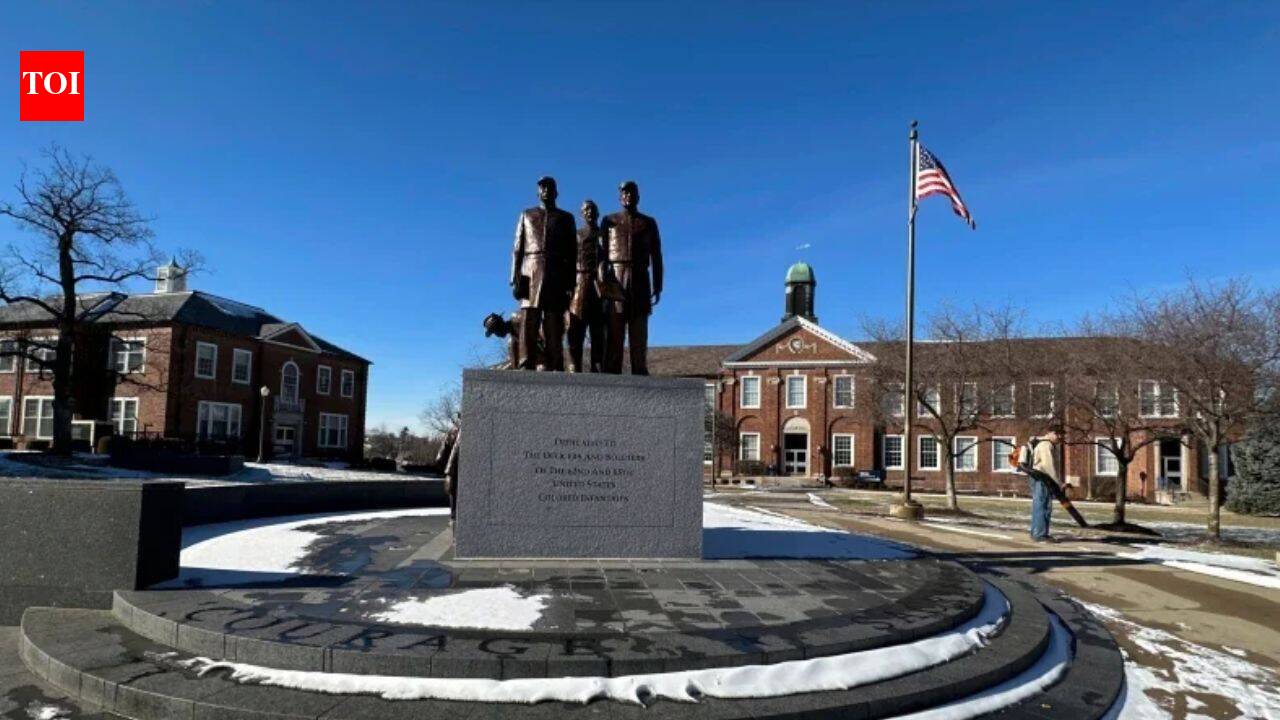
A statue sits on the campus of Lincoln University.A Missouri appeals court has upheld a jury's finding that Lincoln University subjected a former employee to a racially hostile work environment, while overturning the damages awarded on her separate constructive discharge claim and ordering a fresh trial limited to those damages.The Missouri Court of Appeals, Western District, issued its ruling on November 17 in the case involving Sheila Gassner, a former university employee who alleged that she was discriminated against because she was white. The court affirmed the judgment in her favour on the hostile work environment claim but reversed the actual and punitive damages awarded for constructive discharge.The case has been sent back to the circuit court for a new trial on damages related to the constructive discharge claim. The appeals court also granted Gassner's request for attorney fees incurred during the appeal.Employee alleged excessive workload, unequal payGassner joined Lincoln University in 1989 and became director of design and construction in 1999. In November 2013, after the university terminated its director of buildings and grounds, its president and chief of staff asked her to take over those responsibilities in addition to her existing duties.She was reassigned as executive director for facilities and planning, effectively overseeing two departments. Her salary was increased to $79,000, just 1.8 per cent more than what she had earned in her earlier position.According to the court ruling, her workload nearly doubled, forcing her to work between 70 and 80 hours a week. She also had to manage more than 40 employees and handle round-the-clock emergency responsibilities.Gassner repeatedly raised concerns about her workload and compensation. However, university officials allegedly told her that a budget crisis prevented them from increasing her salary or providing additional staff.During the same period, the university created three executive positions and appointed African-American men without advertising the vacancies. Several African-American employees also received salary increases ranging from 12.5% to 44.5%, despite some having fewer responsibilities and working fewer hours than Gassner.The university's former human resources director testified that funds were available through the president's contingency fund and that the explanation about a budget crisis was inaccurate.Gassner resigned in June 2018, saying her working conditions had become intolerable. She subsequently filed a discrimination complaint and sued the university under the Missouri Human Rights Act.Appeals court reverses part of damages awardA jury ruled in Gassner's favour in December 2024, awarding her $131,000 in actual damages and $500,000 in punitive damages for the hostile work environment claim.For the constructive discharge claim, the jury awarded her $110,000 in back pay, $30,000 in non-economic damages and $500,000 in punitive damages. The trial court later reduced the punitive damages on this claim to $170,000.The university challenged the verdict, arguing, among other things, that Gassner's claims were time-barred and that the jury had been incorrectly instructed on damages.The appeals court rejected the university's arguments concerning the time limits, finding that Gassner had presented evidence of a continuing pattern of alleged discrimination. It also upheld the trial court's decision to exclude an unsigned draft of her resignation letter, ruling that it was protected by attorney-client privilege.However, the court found an error in the instructions given to the jury on the university's defence that Gassner had failed to mitigate her losses by seeking other employment.The trial court had required the university to establish additional conditions beyond those prescribed under Missouri's standard jury instruction. This placed a higher evidentiary burden on the university, the appeals court said.The judges noted that the jury had awarded Gassner the full $110,000 in back pay sought by her lawyer, even though she had not pursued certain employment opportunities after leaving the university.Consequently, the court reversed the actual damages award on the constructive discharge claim. Since actual damages must be awarded before punitive damages can be granted, it also overturned the $170,000 punitive damages award on that claim.The court ordered a new trial limited to damages for constructive discharge, with the jury to receive the correct instructions on failure to mitigate damages.
Missouri woman's $631k hostile workplace award upheld; exit damages face retrial
Full Article
Original Source
Read the full article at Timesofindia →KhanList aggregates and links to publicly available news content. We do not host full articles from third-party sources. Always verify important information with original sources.