
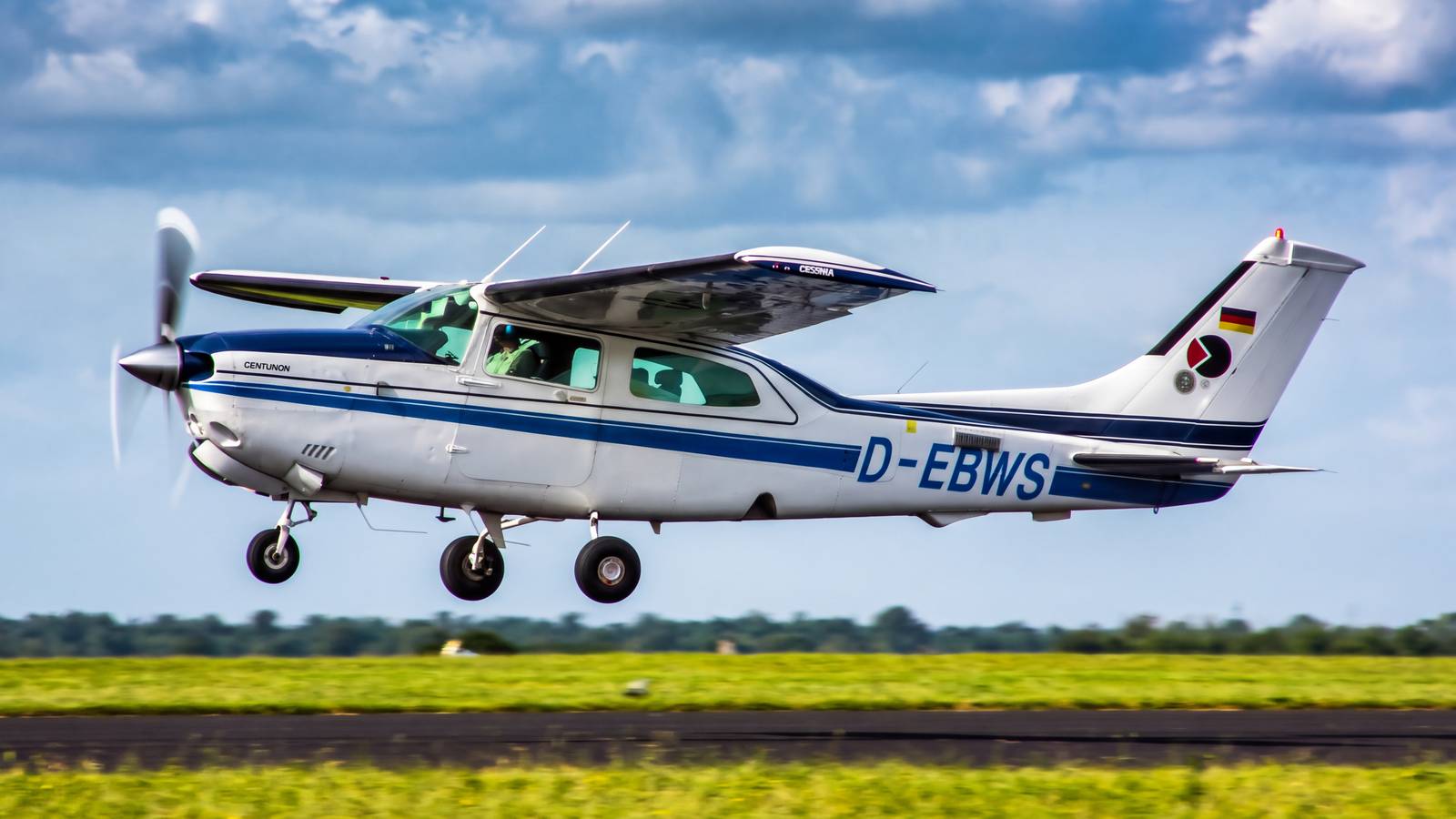
Published Nov 25, 2026, 11:30 AM EST Louis is a military historian and the staff writer for History of War magazine, a leading military history monthly. He also has an interest in private and commercial aviation. A Cessna 210 Centurion six-seat light aircraft has crashed into the Gulf of Mexico between Pascagoula, Mississippi, and Horn Island after descending at a rate of 10,000 feet (3,050 m) per minute. All six passengers tragically died in the crash, including four adults and two boys, aged eight and 10. The Federal Aviation Administration and National Transportation Safety Board (NTSB) have started an investigation into the accident. The NTSB will lead this work and provide updates as more information becomes available. The Cessna's Final Flight The Cessna involved in the crash took off from New Orleans at 2:00 PM local time and was bound for Fort Myers, Florida, with the tail number N29002. At 3:45 PM, the regional air traffic control tower in Mobile, Alabama reported that it had lost contact with the aircraft. WVUE, a New Orleans news station, has reported that those onboard were traveling back home after enjoying a fishing trip in Venice, Louisiana. Coast Guard responders began a search of the waters over which the aircraft had been flying. They found only three life jackets, an unoccupied life raft, and the plane's floating cabin. Divers then went into the Gulf of Mexico and recovered the bodies of all of those onboard. Commander Trevor Blount is the coordinator for the Coast Guard's search and rescue operations in the Mobile area. He said that the situation is heartbreaking. "We are grateful for the strong inter-agency coordination that enabled us to swiftly locate those aboard the aircraft and provide closure to their families," he said. The Investigation Is Ongoing The FAA and NTSB have started their investigation into the accident. Some information has already started to emerge. For example, the Coast Guard has said the aircraft was falling at a rate of 10,000 feet (3,050 m) per minute when it crashed. The FAA's database shows that the aircraft is registered to EAB Services, who are based in Cape Coral, Florida. It was active for the past week, safely completing a few trips. This included Fort Myers to Buras, Louisiana on November 21, and Fort Myers to East Rutherfordton, North Carolina (outbound and return) on November 19. A preliminary report will be available shortly on the authority's Preliminary Accident and Incident Notices webpage. The table below shows the number of Cessnas involved in accidents and incidents over eight days that had them according to this page: Date Accidents and incidents November 12 5 November 16 6 November 17 4 November 18 1 November 20 4 November 23 3 November 24 2 November 25 1 Simple Flying has contacted the FAA, who confirmed the following, although it gave the caveat that the information may be subject to change when more information emerges: "A Cessna 210 crashed southwest of Pascagoula, Mississippi, around 3:30 p.m. local time on Tuesday, Nov. 24. Six people were on board. The FAA and the National Transportation Safety Board (NTSB) will investigate. The NTSB will lead the investigation and provide any updates." The Crash Comes Days After An Unresponsive Cessna Incident Cessna accidents and incidents made headlines again on November 22. An Air Canada Boeing 737 MAX 8 received a Traffic Collision Avoidance System (TCAS) alert due to an unresponsive Cessna in high proximity to it. The 737 MAX was climbing out of Palm Springs International Airport (PSP) and bound for Vancouver International Airport (YVR). The pilots received a resolution advisory at approximately 11,400 feet (3,500 m) to climb an additional 600 feet (183 m), allowing the two planes to reach a safe amount of separation. Luckily, the two aircraft were kept apart from each other. However, the Cessna's identity and the minimum distance that separated the two aircraft remains unclear. The Air Canada jet safely completed its journey to Vancouver, which took two hours and 40 minutes.
Mississippi Cessna 210 Crash Kills 6 After 10,000-Foot/Minute Descent
Full Article
Original Source
Read the full article at Simpleflying →KhanList aggregates and links to publicly available news content. We do not host full articles from third-party sources. Always verify important information with original sources.