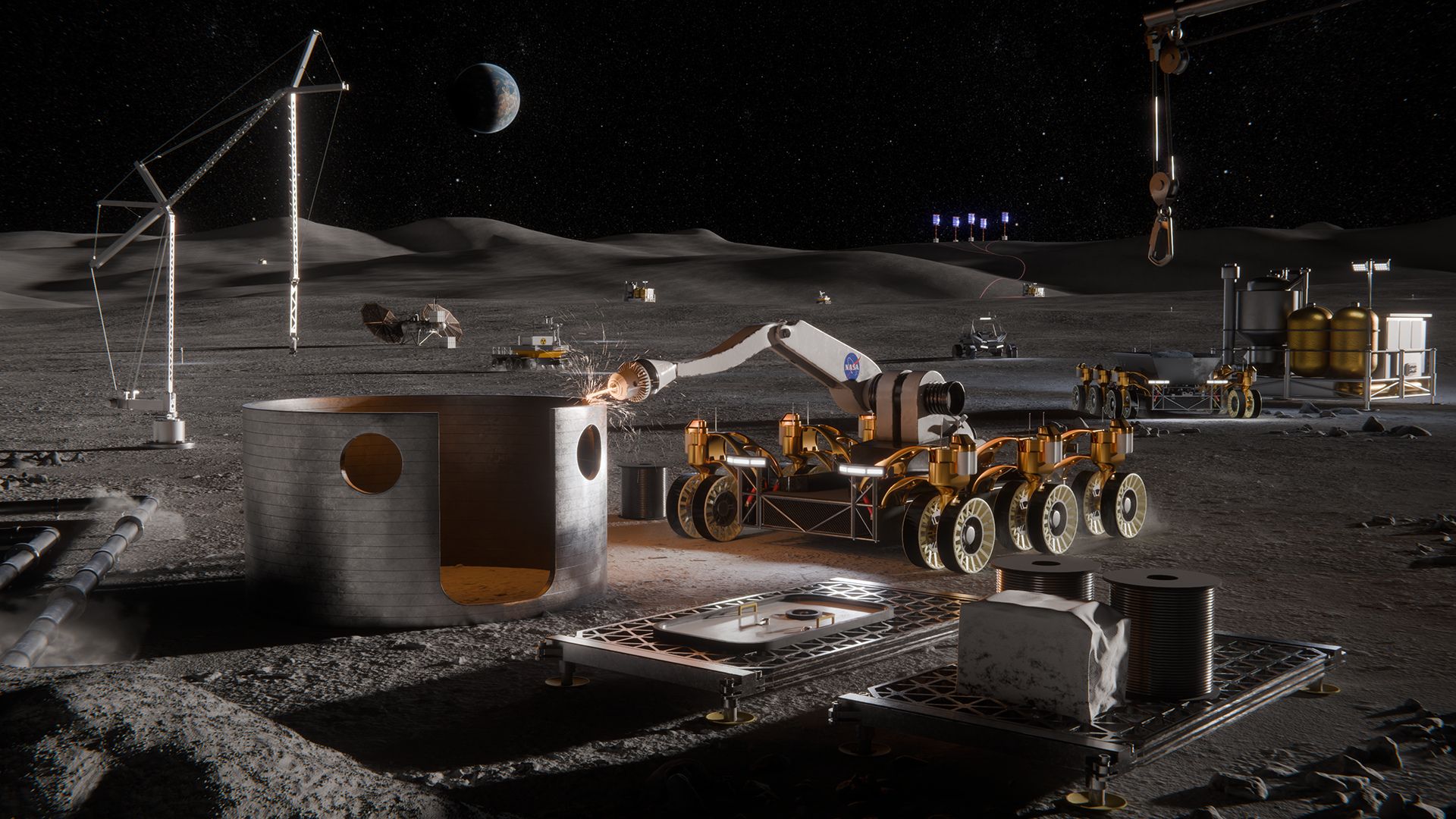
Before permanent lunar bases become possible, someone has to level the ground. Preparing the Moon for a sustained human presence will require far more than rockets and habitats. Future missions will also depend on heavy machinery capable of clearing terrain, stabilizing landing areas, and performing construction work without constant human control. That challenge is driving a deeper partnership between lunar resources company Interlune and industrial equipment manufacturer Vermeer Corporation. The companies have expanded their collaboration to develop construction systems for future Moon Base missions, with a mission-ready lunar site-preparation tool now targeted for 2028. The effort aligns with NASA’s long-term plans to establish permanent infrastructure on the Moon. It also reflects growing commercial interest in building the equipment needed before large-scale exploration and resource extraction can begin. Heavy equipment heads Moonward Interlune and Vermeer will develop an autonomous tool designed to prepare the lunar surface for construction activities. Engineers plan to integrate the system with a lunar rover before testing it on Earth and later demonstrating it on the Moon. The Interlune-Vermeer excavator prototype unveiled in 2025. Credit – Interlune Unlike traditional construction equipment, the machine must operate in an environment covered with abrasive dust, exposed to extreme temperature swings, and separated from Earth by communication delays. Those conditions demand highly autonomous systems that can perform excavation and site preparation with limited human input. The companies first worked together on a full-scale prototype lunar excavator unveiled in May 2025. That project served as an engineering proof of concept. Their expanded partnership now shifts attention toward hardware intended for operational missions. Interlune co-founder and CEO Rob Meyerson said dependable excavation and autonomous mobility will form the backbone of permanent lunar infrastructure. He added that the companies are now focused on scalable systems capable of supporting future Moon Base construction and harvesting lunar resources. Engineering beyond Earth Vermeer has spent nearly eight decades developing industrial equipment for demanding construction sites. Interlune specializes in robotic systems, space infrastructure and operations in the lunar environment, giving the partnership expertise across both terrestrial engineering and space technology. Engineers expect the equipment to perform some of the earliest construction work on the Moon. Preparing stable surfaces for landing pads, transport routes and future facilities will become increasingly important as mission activity grows. Vermeer President and CEO Jason Andringa said the company views the Moon as its most demanding job site yet. He said Vermeer plans to work with Interlune, NASA and other partners to help supply the infrastructure required for future lunar settlements. Foundation for future missions The partners expect to deliver a mission-ready site-preparation system by 2028, matching NASA’s broader Moon Base timeline. Success could influence how future missions approach extraterrestrial construction. Equipment developed for the Moon may eventually support resource extraction, infrastructure projects, and exploration efforts on Mars and other destinations. As governments and private companies increase their lunar ambitions, autonomous construction equipment is emerging as a critical piece of the broader space economy. The ability to reshape the lunar surface before astronauts arrive could determine how quickly permanent outposts become reality. Recommended ArticlesGet the latest in engineering, tech, space & science - delivered daily to your inbox.Aamir is a seasoned tech journalist with experience at Exhibit Magazine, Republic World, and PR Newswire. With a deep love for all things tech and science, he has spent years decoding the latest innovations and exploring how they shape industries, lifestyles, and the future of humanity.
Mission-ready Moon excavation system targets 2028 for NASA’s lunar base construction
Full Article
Original Source
Read the full article at Interestingengineering →KhanList aggregates and links to publicly available news content. We do not host full articles from third-party sources. Always verify important information with original sources.