
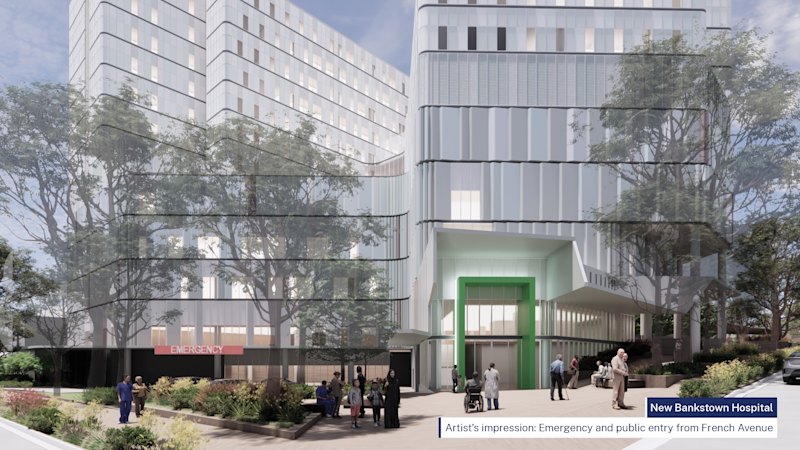
November 12, 2026 — 4:33pmThe NSW government’s multibillion-dollar hospital-building program is systematically locking in budgets before the true costs are known, forcing them to slash medical services, downgrade facilities, and leave entire hospital floors empty to stay on budget.An Audit Office report found NSW Health could not demonstrate that its capital investment prioritised what future patients needed most, favouring expensive hospital construction over community care hubs, outpatient clinics, and preventative digital services.The concept design for the new Bankstown Hospital, which outlines the proposed layout and key features of the $2 billion health facility. NSW GovernmentNSW Auditor-General Bola Oyetunji found hospital building budgets are routinely approved long before preliminary or full business cases are developed.Under a structured cost-cutting exercise called “value management”, Health Infrastructure NSW and local health districts must then scale back the projects by deleting planned inpatient wards, operating theatres, medical imaging and laboratories, or “cold shelling” – leaving hospital spaces without power, plumbing, ceilings, or clinical fitouts.The NSW government has allocated $11.9 billion to health capital expenditure between 2026-27 and 2029-30, but the audit found recurrent funding for staffing and running hospital expansions was rarely addressed until roughly 12 months before opening, risking hospitals operating at diminished capacity from day one.In 2025-26, the cost of bridging the operational funding gap for newly opened facilities was $90.5 million, the report, published on Thursday, found.At Bathurst Hospital, more than 15 per cent of the originally planned scope was removed to keep within its $200 million budget, including a day surgery inpatient unit and pharmacy, and an inpatient mental health unit was salvaged via an emergency draw on contingency reserves.At Manning Hospital in Taree, an entire 1600-square-metre fourth floor was built as an empty shell. The 28-bed inpatient ward has been shelved until future funding can be secured.NSW Health does not monitor the number of unfinished shells that exist across the state, according to the report.The $558 million Albury Wodonga Regional Hospital redevelopment was subject to $63.7 million in cuts, including an abandoned helipad, and cold-shelling operating theatres and paediatric units.The report found the redevelopment’s complex cross-border co-funding agreement – in which Victoria manages the hospital’s operations – meant NSW had limited oversight.NSW’s 20-Year Health Infrastructure Strategy warned the pace of acute hospital construction was financially unsustainable, with too little spent on non-hospital infrastructure and maintaining existing facilities.The audit also found accountability was weak, with post-completion reviews almost non-existent. Of the 49 health capital projects completed between 2022 and 2024, only two evaluation reports were completed, and neither published.The audit report makes six recommendations to be implemented by November 2027. NSW Health accepted four, and two in principle.NSW Health Secretary Susan Pearce said, in her formal response to the audit, she was pleased the report acknowledged the improvements since the 2020 audit, including the development of the 20-Year Health Infrastructure Strategy and strengthening of capital planning processes and strategic frameworks.“Our focus is on improving service capacity, access and quality of care, and delivering better health outcomes for patients,” Pearce said.Australian Medical Association NSW president Dr Fred Betros said doctors would support a mechanism to ensure hospital builds incorporated appropriate workforce budgeting at the outset.“A hospital without the staff to fill it is just a useless build,” he said.The AMA NSW is advocating for an extra 1000 specialists across NSW’s hospitals the next four years to meet patient demand, and expanding the rest of the workforce in step.In April 2025, a Special Commission of Inquiry exposed systemic weaknesses in health service planning, prompting the NSW government to accept key recommendations requiring major hospital builds and upgrades to be grounded in verified population health needs rather than premature budget commitments.Start the day with a summary of the day’s most important and interesting stories, analysis and insights. Sign up for our Morning Edition newsletter.More:HospitalsHealthHealthcareInfrastructureNSW budgetNSW GovernmentFrom our partners
Missing operating theatres and wards with no ceilings: How NSW’s hospital builds stay under budget
Full Article
Original Source
Read the full article at Smh →KhanList aggregates and links to publicly available news content. We do not host full articles from third-party sources. Always verify important information with original sources.