
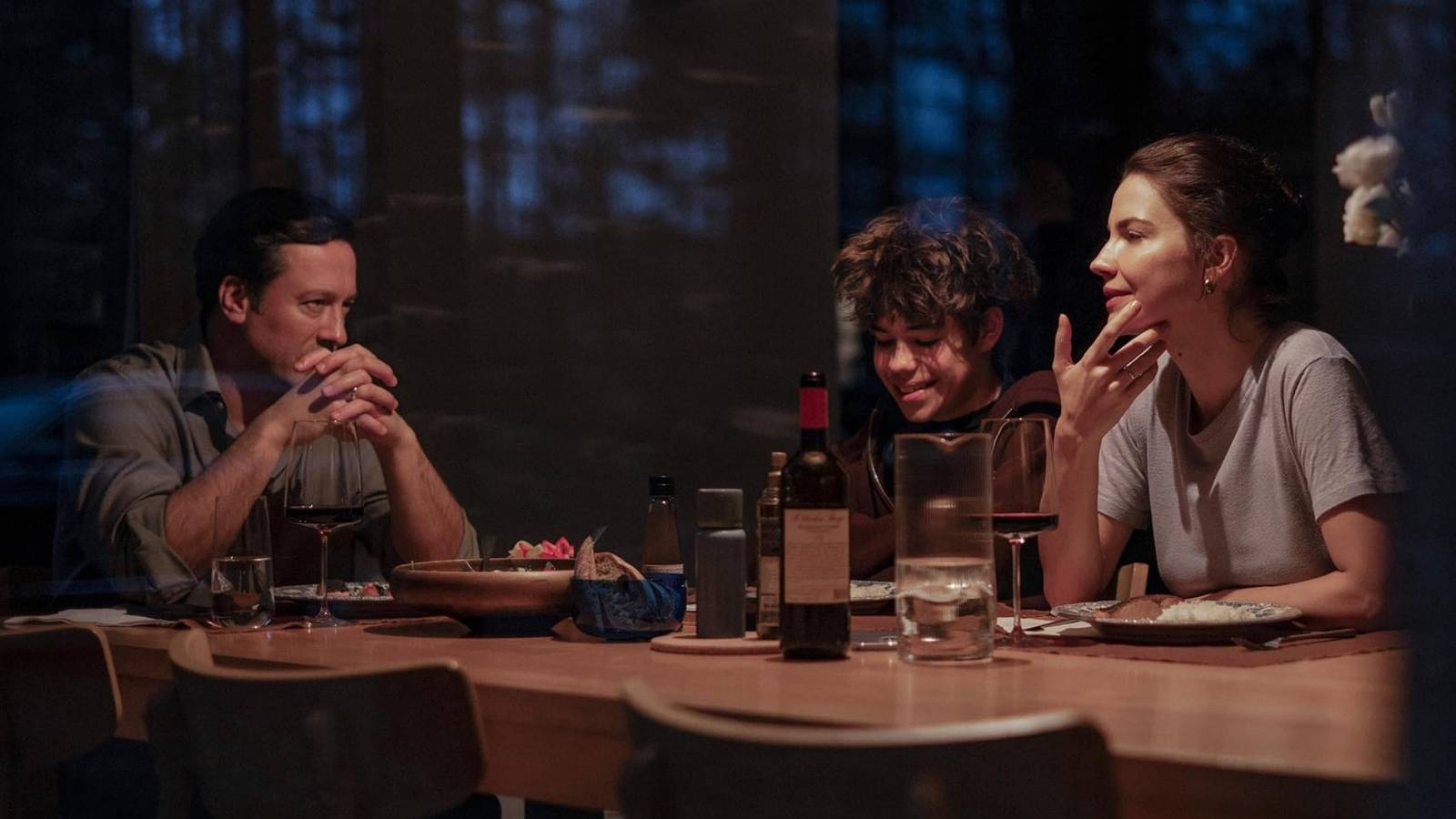
Andrey Zvyagintsev's Minotaur goes beyond political commentary, offering audiences a brutal perspective on the ways that war can bring violence home. Published Oct 27, 2026, 11:01 AM EDT Liz Declan is a Lead Writer for ScreenRant, primarily covering movies. She is a massive fan of Star Wars, the MCU, and Supernatural. In addition to writing, Liz loves attending and covering conventions and interviewing actors. Find her on TikTok and Instagram @va.va.vera If you went into Andrey Zvyagintsev's 2026 film Minotaur with no prior knowledge, the first ten minutes or so might have you thinking it's a slice-of-life story, centered on family members Gleb (Dmitriy Mazurov), Galina (Iris Lebedeva), and Seryozha (Boris Kudrin). As central as this father, mother, and son remain throughout the narrative, though, and as much as it almost feels like a domestic drama at times, Minotaur goes far beyond just observations about this family. Instead, it simultaneously explores life in Vladimir Putin's Russia – but not necessarily in the way you might expect. The Russia-Ukraine war is the constant backdrop of Minotaur, it's true, but the movie isn't a war story in the conventional sense. Rather than following soldiers, or even exploring what this war means for everyday people, Minotaur's protagonist, Gleb, is a wealthy CEO who is tasked with selecting some of his own workers to be drafted, all while he remains (at the very least) fairly distant from the cold realities of that assignment. That isn't to say the war isn't affecting Gleb and his family. On the contrary, part of what Minotaur does so masterfully is depict how the violence and cruelty of this environment can make its way into the home, even when it may seem like the wealthy elite can remain apart from it. It does so not by commenting directly upon the war and its ramifications – including what Gleb has been asked to do – but rather by focusing on the micro, in the form of this family's increasingly complicated and ultimately pretty horrifying dynamics. Minotaur's Microcosm Mostly Works What works particularly well about Minotaur's approach to the interwoven narratives of Gleb's roles as husband and father and his (somewhat) tangential involvement with the war is that the movie does not treat this family unit like an allegory for the conflict between Russia and Ukraine. Yet, it's still clear throughout that both aspects of the movie are inexorably linked. At the beginning of the film, for example, Gleb seems like someone audiences can not only like but also relate to, and he actually has some genuine laugh lines early on. However, as he gets pulled deeper and deeper into the war effort, specifically because of this mandate to turn over a number of his own workers to be conscripted, viewers watch him go from someone arguably fairly likable to someone actively being corrupted by war and all the politics that come with it. With that corruption, even if it's clearly coming from external pressure at first, Gleb is also increasingly bringing violence into his own home. In that sense, Minotaur's familial narrative arc is really closer to a microcosm of what war does to a society – and most of the time, this approach completely works. It would be all too easy for a movie set against the backdrop of a real-life war to feel like it is beating audiences over the head with commentary, but Minotaur never comes across that way (even when meetings are being held directly below portraits of Putin). This is due, in large part, to the absolutely stellar performances. Mazurov and Lebedeva are obvious standouts, and it's easy to get so lost in their scenes that you actually forget, momentarily, about the horrific circumstances surrounding the story arc about their marriage – before that, too, becomes something much darker. Minotaur is a bold and innovative exploration of love and war. Even beyond the performances, Minotaur deserves credit for striking the right balance between the micro and the macro, with scenes depicting marital arguments often feeling just as weighty as those in which Gleb is, effectively, being asked to consider who to send to their possible deaths. The formula isn't perfect, though. There are some tonal inconsistencies that make certain scenes not quite land in the way that they should have. My theater, for example, was laughing throughout a sequence that is almost certainly intended to horrify audiences, seemingly because the scene just before is sillier in tone. In a movie that is about such serious subject matter and leans heavily into realism, there are also some moments that require suspension of disbelief, which likewise felt a bit out of place. All in all, however, Minotaur is a bold and innovative exploration of love and war, and of how the cruelty and brutality of the latter can bleed into all areas of one's life, whether they realize it or not. Minotaur screened at the 2026 Philadelphia Film Festival, and releases in select US theaters on Friday, November 20. Release Date November 20, 2026 Runtime 135 minutes Director Andrey Zvyagintsev Writers Andrey Zvyagintsev, Simon Liashenko Producers Andrey Zvyagintsev, Charles Gillibert, Elisha Karmitz, Nathanaël Karmitz Cast
Minotaur Review: A Brilliantly Acted, Sobering Look At Love & War
Full Article
Original Source
Read the full article at Screenrant →KhanList aggregates and links to publicly available news content. We do not host full articles from third-party sources. Always verify important information with original sources.