
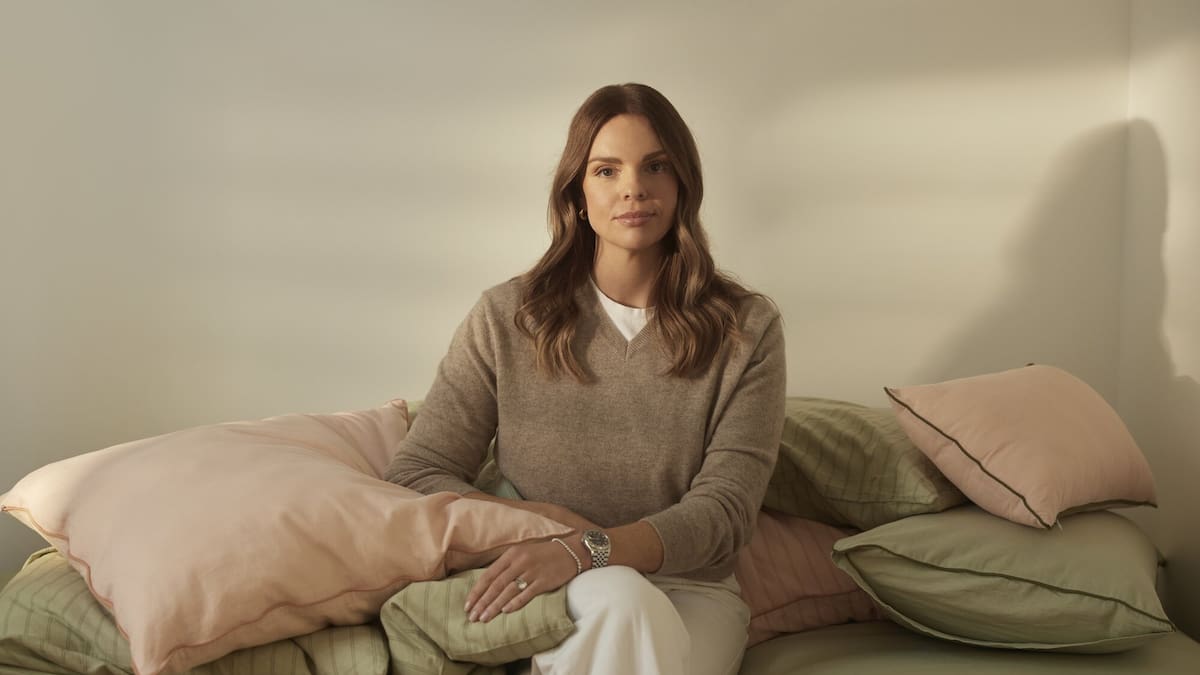
When her toddler’s chronic sleep struggles and eczema led back to his bedding, Mel Moss set out to discover why standard sheets were failing young children. Two years of textile research later, her quest inspired her new business. Like many exhausted parents navigating the early years of toddlerhood, Her son, Louis, had been a dream sleeper as an infant, consistently sleeping through the night by 5 months old. But as he grew, a persistent battle with eczema began to chip away at his sleep, leaving him with inflamed skin from his fitted sleep suit. Wanting to eliminate the friction and trapped heat, Moss and her husband decided to transition 2-year-old Louis into a toddler bed. She began researching what was the best bedding for her son, looking into everything from breathability to temperature regulation for skin conditions. She decided to try natural linen, celebrated for its moisture-wicking and hypoallergenic properties and invested more than $400 on premium, stone-washed linen sheets. She expected a seamless transition. Instead, the moment Louis climbed into bed, he refused to lie down, and said, “Mummy, itchy.” She offered him assurance. “I was like, ‘Louis, these are the same sheets mummy and daddy have. They’re not itchy, they’re really nice sheets,’” she recalls. “But he refused to lay down in them.” Auckland mother Mel Moss founded bedding business Mino after her son's sleep issues and eczema led her down a research rabbit hole and two years of development.Confused, Moss swapped the luxury sheets for old standard sheets and took her question to her husband, who agreed the linen felt soft to adult hands. The discrepancy sent her down a research rabbit hole. She discovered research citing a fundamental biological difference: children have thinner skin and a higher concentration of skin sensory receptors than adults, making them hyper-aware of tactile friction.A subsequent visit to a friend’s house provided another piece of the puzzle. Moss’s friend had recently redecorated her twin boys’ shared bedroom, allowing them to choose duvet covers featuring bright characters from the popular cartoon Bluey. “They went from being so zen after a bath to jumping on their beds, fighting over who was going to be Bluey and who was Bingo,” Moss says. Her friend admitted that since introducing the character bedding, bedtime had turned into a nightly wrestling match. “That was the moment I realised,” Moss says. “Louis had a tactile sensory reaction to his bedding, and these boys had a visual sensory reaction. As parents, we put so much pressure on ourselves to create the perfect sleep environment and then we throw kids into bedding that hasn’t been thought about from a sleep perspective at all.” Driven to find a solution, Moss searched for children’s bedding brands designed specifically around sleep science, only to realise the market was dominated by aesthetic trends and synthetic blends. With a background in advertising, but having no experience in textiles or manufacturing - she set out to learn the industry from the ground up. Through a mutual connection, she met a veteran textile expert who had spent 50 years in the industry. He agreed to mentor her, putting her through an intensive crash course on fabric construction and fibre performance. “To be honest, it kind of annoyed me at first because I just wanted to get straight into making things,” Moss says, with a laugh. “But what I learned about fabric completely changed what I ended up creating.” One of her biggest revelations was the widespread misunderstanding of thread count. “Thread count is one of the biggest myths in the bedding industry,” Moss explains. “High thread counts, often marketed at 800 to 1000+, are frequently created by manipulating artificially thin or multi-ply threads, which tightly traps heat and restricts airflow. “For optimal sleep, a thread count between 150 and 350 allows natural fibres to breathe properly.” Looking for a way to create bedding that offered thermoregulation without the scratchiness that bothered Louis’ sensitive skin, her expert suggested blending natural fibres. The result was the concept for a custom linen-cotton blend that combined the structure, breathability and moisture-wicking properties of flax linen with the softness of pure cotton. Because off-the-shelf fabrics didn’t meet her requirements, Moss had to engineer her own fabric from scratch. In August 2024, she attended one of the world’s largest textile trade shows in China, but the journey was anything but smooth. Mino founder Mel Moss in Shanghai with son Louis and husband Guy.Arriving in Shanghai amid heavy downpours, Moss found herself soaked, struggling with language barriers and trying to navigate a convention complex spanning 12 multi-level halls packed with thousands of exhibitors. “I’m not a crier, but I sat there completely overwhelmed thinking, ‘What am I doing here?’” she says. Finally managing to get inside, a chance encounter with a mill representative led her to a state-of-the-art facility. Impressed by their advanced technology and strict safety standards, Moss partnered with the mill to begin weaving custom loom samples. Mino founder Mel Moss at a textile fair in Shanghai.Refusing to compromise on safety, she made sure every part of her product - from yarn to button to dye – is entirely free from harmful levels of toxic chemicals, so she could reach the highest certification. After two years of rigorous testing, custom tech-pack designs and trial runs, her business, Minó, was born. “As soon as I saw the first designs and that everything had come together, it was pretty amazing,” she adds. At the heart of the collection is what Moss calls “the Minó Method”, a science-backed approach that supports better sleep through breathable fabrics, calming colours and sensory-conscious design. Instead of bright, stimulating prints, it uses soft nature-inspired tones to help create a more restful sleep environment. To support sensory wellbeing, physical irritants such as scratchy tags or zippers are eliminated in favour of low-friction, buttery-soft textures that keep sensitive skin calm. Mino children's bedding includes pockets for their favourite toys or keepsakes, to help them feel safe as they drift off. The design addresses emotional balance by incorporating comforting details such as hidden pockets on duvets where children can tuck away a favourite toy or security object to feel safe as they drift off. When the samples finally arrived at Moss’ home, the ultimate test rested with Louis. “He touched the fabric, ran his hands over it and loved it straight away,” Moss says. “The samples went straight onto his bed, and he still sleeps on those exact sheets today.” While Minó was created for children, Moss notes that these core principles of textile selection and sensory awareness apply to adult sleep quality as well. Adults often experience poor sleep and night sweats for the same reasons children do but tend to ignore the physical cues. When shopping for new sheets, Mel advises prioritising 100% natural fibres such as pure cotton, linen or high-quality linen blends, steering clear of synthetic fabrics or poly-blends. She also cautions against buying bedding marketed as wrinkle-resistant, as these finishes often rely on formaldehyde-releasing chemical treatments that reduce breathability and irritate sensitive skin. Looking for verified, independent safety certifications such as Oeko-Tex Standard 100 (which Mino has achieved) or Global Organic Textile Standard (Gots) ensures that fabrics haven’t been processed with toxic dyes or harsh finishing chemicals. For Moss’ family, the result of her quest is transformative. Once Louis started sleeping in a breathable, low-sensory environment, his chronic eczema flare-ups vanished, and night-waking became a thing of the past. “As a mother, you feel terrible looking back, realising that something in his environment was aggravating his skin,” says Moss. “But once his sleep was restored, the energy in our whole home changed. Bedtime went from being a battleground to a gentle, grounding ritual. When you start prioritising how a bed feels over how it looks, everything shifts.” Auckland mother Mel Moss founded bedding business Mino after her son's sleep issues and eczema led her down a research rabbit hole and two years of development. Photo / SuppliedMel Moss’ five tips for better sleep Manage your in-bed microclimateRoom temperature matters (aim for 18-20C), but the microclimate under your duvet is even more critical. Pair natural-fibre bedding with breathable, natural sleepwear to prevent moisture and heat from becoming trapped against the skin. Dim lights 45 minutes before bedExposure to overhead lighting suppresses melatonin release. Dim the lights throughout the house before sleep to signal to the nervous system that it is time to wind down. Remove visual noiseKeep bedrooms free from overstimulating visual clutter like bright primary colours and busy patterns in your direct line of sight. Muted, nature-inspired colours help lower cognitive load and promote relaxation. Eliminate micro-tactile distractionsCheck sleepwear and sheets for subtle physical irritants such as scratchy tags and seams or noisy synthetic fabrics that keep the sensory nervous system subtly on guard. Establish consistent sleep anchorsIncorporate predictable cues into your evening routine. Sensory anchors such as a consistent bedtime scent, a grounding wind-down ritual, or a tech-free wind-down help cue the brain for sleep, whether at home or travelling. More on home & design
Mino Founder Mel Moss On How Her Son’s Sleep Problems Led To A New Bedding Business
Full Article
Original Source
Read the full article at Nzherald →KhanList aggregates and links to publicly available news content. We do not host full articles from third-party sources. Always verify important information with original sources.