
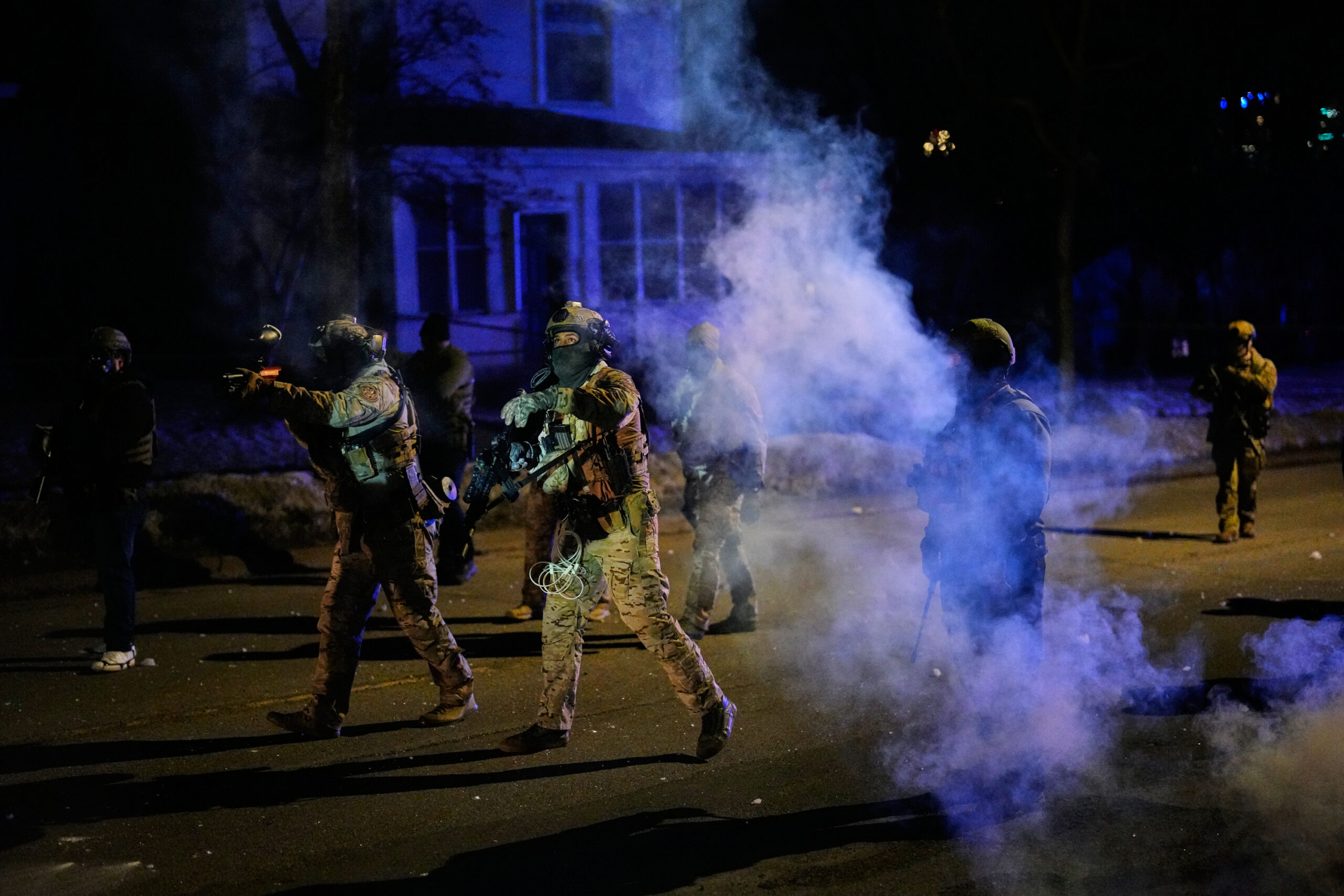
Districts claim attendance dropped by around a third during the height of Operation Metro Surge due to increased ICE enforcement at schools.ST. PAUL, Minn. (CN) — Two Minnesota school districts and a major teachers’ union battled with the Trump administration in court Thursday over the limits of U.S. Immigration and Customs Enforcement on and around school grounds.Arguing to reinstate established sensitive area protections, the Fridley and Duluth Public School Districts claim current Homeland Security guidance disrupted learning, spread fear and drove sharp attendance drops during and in the wake of Operation Metro Surge.“Students were afraid to go to school. You can’t teach students who don’t go to school,” the districts’ attorney, Sean Ouellette, said — feet away from a crowd of teachers in the gallery, several of whom became emotional throughout the hearing.While ICE agents previously conducted limited operations in sensitive locations — including schools, hospitals and places of worship — the districts say enforcement at bus stops, parking lots and on school grounds has since become a norm.“I can’t conceive of a reason why DHS would need to use school parking lots that are only open to authorized visitors as a staging area for immigration enforcement,” Ouellette said. “This is not New York; it’s not like you don’t have places to park.”U.S. District Judge Laura Provinzino presided over the hearing on cross-motions for summary judgment, and appeared torn over how much weight to give the disputed policy amid broader fear in Minneapolis last winter.“It’s hard to untangle Operation Metro Surge from the consequences of that,” the Joe Biden appointee said — echoing concerns that led her to deny the districts’ preliminary injunction in May.The districts, alongside Education Minnesota, brought the initial suit in February over the policy shift affording immigration officers significant autonomy to conduct enforcement in and around schools — which became a flashpoint in the Twin Cities.One incident that garnered national attention took place at Roosevelt High School in Minneapolis, where federal agents tackled and handcuffed staff, tear-gassed students and sprayed another chemical at a group after someone threw a snowball at an officer.In what has become a boilerplate defense, the Trump administration claims the surge’s ending renders the suit unnecessary, noting the time before and after — when the memo was still in effect — saw little increase in sensitive area enforcement.“If the government had chosen to just not bother doing a new memo, there’s just nothing in the record to suggest that these enforcement actions at sensitive locations wouldn’t have occurred,” Justice Department attorney Jessica Lundberg said.Despite her concerns, Provinzino wasn’t ready to fully concede that point to the government.“It is troubling to see a 21-times increase in ICE enforcement in these sensitive locations, especially when the Mayorkas memo did direct DHS to limit enforcement in these locations,” she said, referencing a Biden-era policy set out by former DHS Secretary Alejandro Mayorkas, who called sensitive location limits “fundamental.”Mayorkas’ guidance did recognize “exigent” circumstances under which enforcement must take place, including during national security threats or risk of death, violence or physical harm.The second Trump administration’s day-one memorandum rescinded that guidance — along with a 30-year expected practice — and instructed federal officers to exercise discretion with a “healthy dose of common sense.”The districts argue the one-page memorandum offered no real explanation for abandoning the long-held approach, which was designed to encourage people to use essential services without fear of immigration enforcement.“When you get rid of that constraint, common sense says agents are going to be more likely to conduct enforcement actions,” Ouellette said. “Restoring that memo would redress that because it puts limits back in place.”The government, meanwhile, claims both prior and current ICE guidance are mere policy recommendations, and that no such instructions have ever limited an agent’s statutory authority or ability to exercise discretion.“There has been increased enforcement action that plaintiffs and students, parents and teachers have found very concerning, and that has affected their decision-making,” Lundberg said. “A change in the memo will not change that.”She added that neither memo imposes any right on any member of the public.“It does not confer any rights on immigrants that if you go to these sensitive locations that you are protected from enforcement,” she said.The districts note in court documents that arrests at sensitive areas jumped from 55 over the last two years of the first Trump administration to over 1,400 from January 2025 to April 2026 alone.That jump coincided with widespread absences — including a third of the districts’ students staying home — and saw parents, teachers and staff arrested alongside children on school grounds and at bus stops.Since Provinzino’s preliminary injunction ruling, both the Fourth Circuit and the D.C. Circuit ruled in favor of sensitive area protections against ICE arrests on religious grounds.Subscribe to our free newslettersOur weekly newsletter Closing Arguments offers the latest about ongoing trials, major litigation and rulings in courthouses around the U.S. and the world, while the monthly Under the Lights dishes the legal dirt from Hollywood, sports, Big Tech and the arts.Additional Reads
Minnesota school districts clash with feds over future of ICE enforcement
Full Article
Original Source
Read the full article at Courthousenews →KhanList aggregates and links to publicly available news content. We do not host full articles from third-party sources. Always verify important information with original sources.