
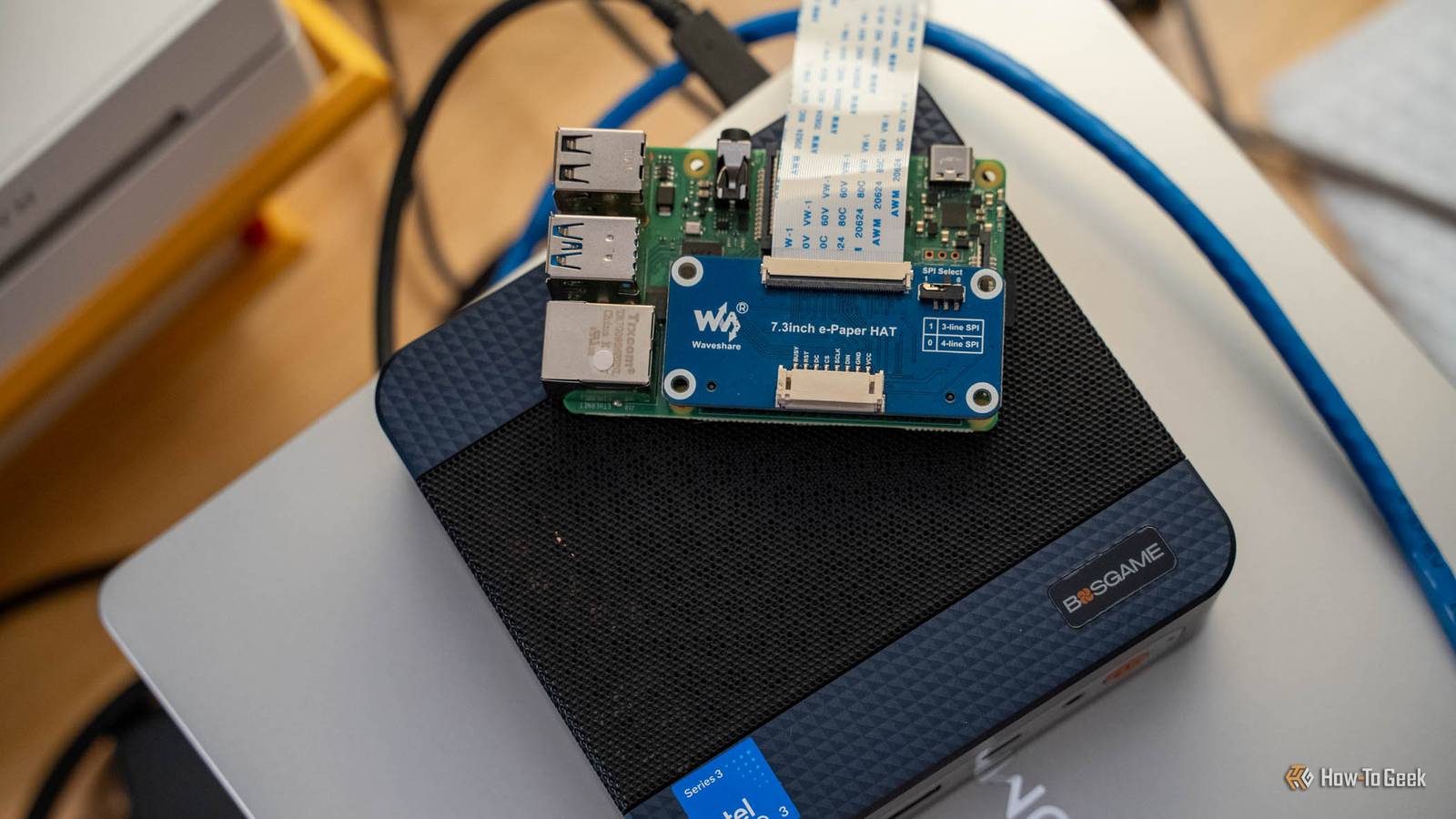
Published Nov 26, 2026, 12:01 PM EST Patrick Campanale has been in the tech space for well over a decade, specializing in PC/gaming news and reviews, as well as maker-focused products to build small businesses. With a start in technology back in 2010 surrounding the Palm/webOS ecosystem, Patrick spent his formative years developing mobile applications as well as blogging for various publications, eventually leading to starting his own website in 2014. After running a technology blog for a few years, he stepped out of that role and into the world of high-end custom PC manufacturing and building, with a focus on YouTube video production and overclocking. Then, in 2017, Patrick joined the 9to5Toys team as an editor/writer/reviewer with over 14,000 articles being published during his time there, ranging from deals and roundups to in-depth reviews on the latest technology, video games, 3D printers, and more. In his free time, Patrick loves to create projects from wood using various robots and methods, including leveraging the technologies of CNCs and lasers. If Patrick isn't working on a computer or playing video games, he's likely in his 2-car garage workshop creating something unique. In addition to all this, Patrick is also the media director at his local church where he feels God has called him to serve, and he loves every minute of it. Raspberry Pis used to be all about affordability, and now a Pi can cost the same as a mini PC. So, why should you still buy a Pi? Well, it has unique features that mini PCs still can’t fully replicate. The I/O on Raspberry Pis offers way more capabilities than just USB on a mini PC. The thing is, mini PCs and Raspberry Pis aren’t even in the same realm when it comes to I/O. Here are two things that the Raspberry Pi simply does better than any mini PC out there, and why a mini PC still can’t replace a Pi. Wire a sensor to the board and it just works My favorite part of the Raspberry Pi is its GPIO (general purpose input/output) pins. These pins carry signals like 3.3V power, SPI, I2C, UART, PWM, and PCM. Having GPIO pins natively on the board means that things like sensors, lights, buttons, and much more can be connected directly to the Pi and work natively. I’ve used these pins for projects like hooking up LEDs and range sensors to show how far away something was. I’ve also used the I2C connection for hooking up things like tiny OLED displays for showing stats and other information. The thing is, these components simply can’t be hooked up to a mini PC natively like they can a Raspberry Pi, and it’s one of the main standout features that a Pi offers. Something I love about the Raspberry Pi is that the GPIO headers are already soldered onto the board from the factory. There are some Pi models that come with headers that have to be soldered separately, but the main Pi versions, like the Pi 3, 4, and 5, all come with the 40-pin GPIO header pre-soldered so it's ready to use right out of the package. Not having to solder the headers makes it easier to get started with projects as soon as your Raspberry Pi arrives. Also, it means that you're not wondering if you got a good solder joint or not, which is something I've struggled with on my ESP32 when trying to solder header pins there. HATs turn a Pi into a different machine in minutes They’re easy to use and super versatile The Pi is also capable of using something called a HAT, or hardware attached on top. HATs are typically little connectors that plug directly into the GPIO header, but instead of just connecting to a single pin, it connects to all 40 pins. Now, the wiring inside of the HAT likely doesn’t connect to every one of the 40 pins, but it does slide over them all to make connecting it easier. Some HATs, like the M.2 HAT+ or the PoE HAT also plug into the main board in other ways through ribbon cables or other connectors. A HAT can fundamentally change how a Raspberry Pi functions. For instance, the aforementioned PoE HAT is designed to make the Pi powered over Ethernet. That means you can send just one wire to the Pi from your network switch and deliver both wired internet and power. The relay HATs make it easy to connect devices that need to be controlled through relays. This would be the ideal solution for making a garage door opener smart, if your garage door opener supports just shorting two wires together to trigger the wall button. Simply attach a relay HAT to a Raspberry Pi Zero 2 W and you now have a wireless way to control your garage door opener. Mini PCs can technically gain GPIO pins, but it’s never seamless Every workaround hides a microcontroller or loses features It’s technically possible to add GPIO pins to a mini PC, but it’s not really good. The FT232H adapter, for example, costs just $15. Sounds great, right? Well, it only has 12 pins and runs just one I2C or SPI bus at a time, and it doesn’t support PWM, UART, or ADC. It’s also not super fast. The Radxa X4 has 40 pins, and is based on the Intel N100, but the GPIO is driven by a RP2040. That’s right, a Raspberry Pi. At the end of the day, to get good GPIO support, you need a microcontroller, not a full-blown PC. So, adding GPIO to a PC simply adds a microcontroller to the PC. You should just skip the extra hop and run whatever GPIO devices you have either directly on a microcontroller like an Arduino, Raspberry Pi RP2040, or ESP32, or just run them on a single-board computer like the Raspberry Pi itself. Mini PCs run my homelab servers, and Raspberry Pis run my hardware projects My homelab has gone through many iterations. I started out with just one server, added three Raspberry Pis, then replaced the Raspberry Pis with mini PCs. Now, mini PCs run my servers, and Raspberry Pis run the hardware around my smart home, like e-ink displays or other similar projects.
Mini PCs still can't replace the Raspberry Pi's best feature
Full Article
Original Source
Read the full article at Howtogeek →KhanList aggregates and links to publicly available news content. We do not host full articles from third-party sources. Always verify important information with original sources.