
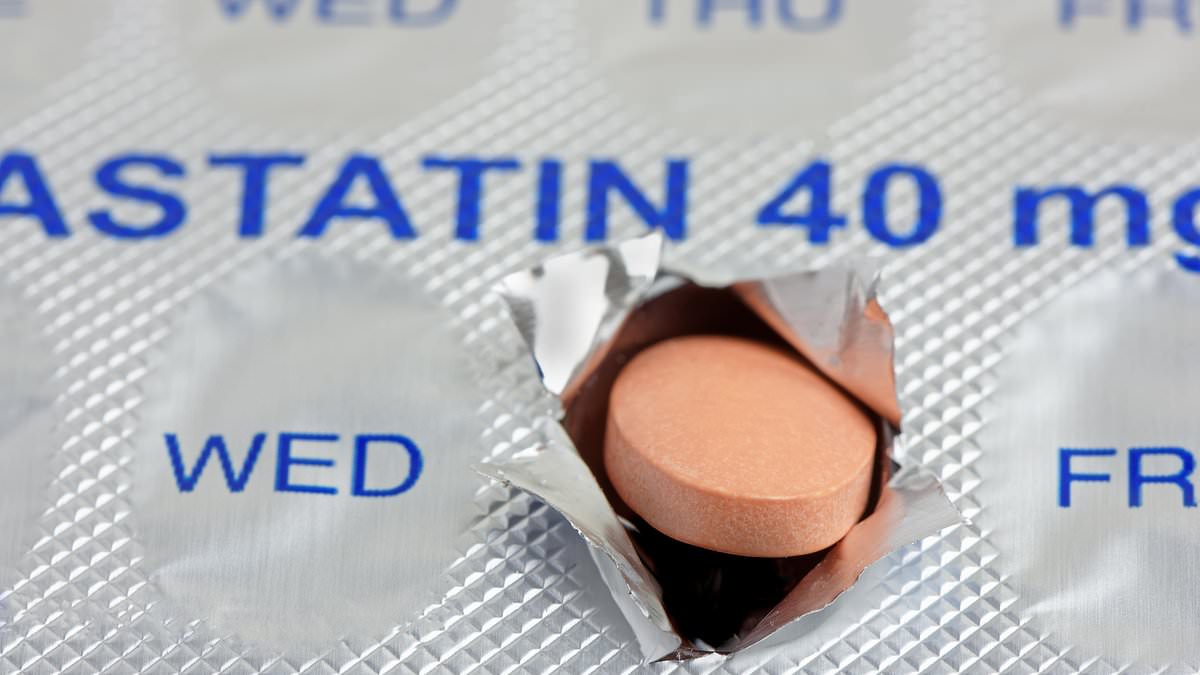
Millions of pensioners who take statins to ward off heart attack and stroke may be able to come off the pills without increasing their risk of death, research suggests.Experts at the University of California found that adults aged 70 and over with no history of heart disease generally fared no worse after stopping the cholesterol-lowering drugs than those who continued taking them.More than eight million adults in the UK are prescribed the life-saving medication, around 2.5 million of whom are over 70.Statins are one of the most commonly prescribed drugs in Britain, with even modest reductions in so-called ‘bad’ or LDL cholesterol shown to cut the risk of heart attack and stroke by a quarter.Hailed as 'wonder drugs', they are given to patients at risk of cardiovascular disease (CVD) – a group of conditions that affect the heart and blood vessels – when lifestyle changes have not worked. Current NHS guidance recommends statins as a long-term treatment for the majority of patients, to help keep the risk as low as possible as a person ages.However, they are not right for everyone.Patients taking statins are warned the pills may cause problems including memory loss, depression, sleep disturbances, muscle pain, nausea, fatigue and headaches - raising questions over whether older adults without a history of heart disease need to remain on them for life.Previous studies have found no difference in mortality, and have even suggested quality of life improved after stopping statins. Millions of Britons over 70 who take statins may be able to stop the drugs without increasing their risk of death, researchers have suggested The new trial conducted across Switzerland, France and the Netherlands - and presented at the American Heart Association’s Scientific Sessions in Chicago - involved 1,880 adults aged 70 and over who took statins and had at least two chronic health conditions.Half of participants were instructed to stop taking the drugs, while the remainder continued taking their statins as normal.Researchers then monitored them for heart attack, stroke and death, as well as quality of life, muscle pain, falls and muscle wasting, known as sarcopenia.After two years, they found little difference in the overall risk of heart attack, stroke or death between those who stopped taking statins and those who continued treatment.There were also no significant differences in quality of life, muscle pain symptoms, falls or sarcopenia.However, researchers observed a small increase in cardiovascular events among patients who stopped treatment.For every 40 patients who stopped taking statins, there was one additional heart attack, stroke or death during the study period.Overall, 119 patients who stopped taking statins suffered a heart attack, stroke or died, compared to 87 who continued taking statins as normal. Deaths were also slightly more common among those who stopped taking statins, affecting 9.8 per cent of participants compared with 8 per cent of those who continued treatment. Dr Rita Redberg, cardiologist and the study’s lead author said: ‘This small increased risk of cardiovascular events means that we cannot make a general recommendation about stopping statins in this patient population.‘But there should be shared decision-making between the patient and the healthcare professional to know if this could be an appropriate option.‘In general, discontinuation is safe for most people who are in this age group who have not suffered a previous heart event.’The researchers stressed that patients should not stop taking statins without first discussing the decision with their doctor.Professor Naveed Sattar, an expert in cardiometabolic medicine at the University of Glasgow who was not involved in the current study, welcomed the findings but said the slight increase in deaths cannot be ignored.‘For an average 77-year-old without prior heart disease who is already taking a statin, the risk of a cardiovascular event may increase modestly after treatment,’ he said.‘While the absolute excess risk appears small, it is likely real. I wouldn't advise my relatives to stop taking statins based off this study alone. ‘There was also no difference in reported side effects between groups. Therefore, if patients are happy to continue taking a statin, and given that statins are inexpensive, there appears to be little reason to stop treatment.’He said the focus should be less on stopping statins and more on finding the best ways to reduce cardiovascular risk, including tackling excess weight.
Millions of over-70s may not need to stay on statins for life, experts say
Full Article
Original Source
Read the full article at Dailymail →KhanList aggregates and links to publicly available news content. We do not host full articles from third-party sources. Always verify important information with original sources.