
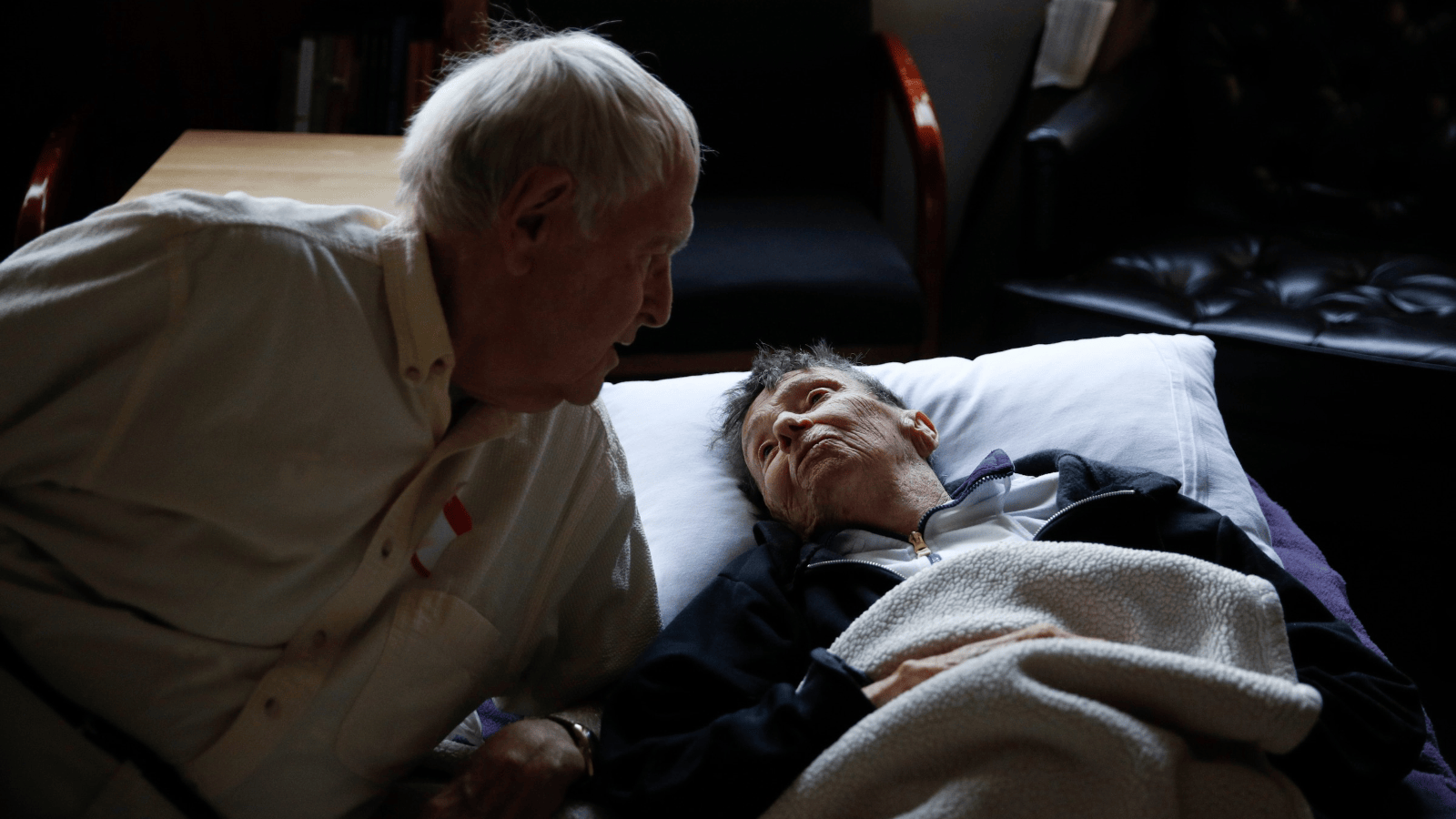
Wildfire evacuees at a church doubling as an evacuation shelter. The vast majority of those who died in the Northern California wildfires of 2017 were in their 70s and 80s. (Image credit: AP Photo / Jae C. Hong, File) Editor’s note: If you purchase a book through the link on this page, a portion of the proceeds funds our journalism. Transcript: In the U.S., millions of older adults live alone in single-family homes, which are often bigger than they need and far from friends and neighbors. Danielle Arigoni, author of the book “Climate Resilience for an Aging Nation,” says when extreme weather hits, these seniors are especially vulnerable. Arigoni: “A great number of older adults, by virtue of their living situations, are disconnected and not supported by people around them in ways that would help them to get the information they need, to get the support they need.” For example, seniors may need people to check on their safety when it’s hot or to help them evacuate during a storm or fire. Arigoni says communities can reduce seniors’ isolation by developing affordable multifamily housing or allowing property owners to build accessory dwelling units like in-law apartments. This provides seniors with places to live where they can get help from their neighbors, access public transit, and spend less on utilities. Then, during heat waves, for example, they can take steps to stay safe. Arigoni: “Whether that’s turning on the AC in their home long enough to keep it cool … or whether that’s getting themselves to a cooling center or a place where they can be taken care of.” So building more dense, affordable housing can help protect seniors from extreme weather. Reporting credit: Sarah Kennedy / ChavoBart Digital Media
Millions of older adults face extreme weather alone
Full Article
Original Source
Read the full article at Yaleclimateconnections →KhanList aggregates and links to publicly available news content. We do not host full articles from third-party sources. Always verify important information with original sources.