
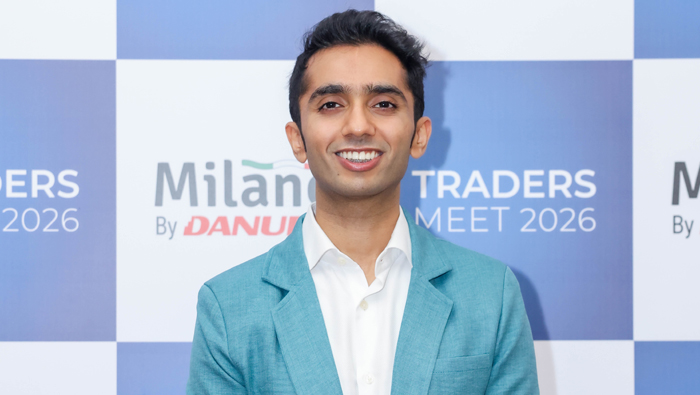
Muscat: Reiterating his strong ties with the Sultanate, Anis Sajan, Vice Chairman of the Danube Group, said Oman has emerged as a key market for Milano by Danube. He attributed the company’s strong presence in the country to its long-standing relationships with local traders and dealers. He said though Danube had cemented its presence in the market, Oman gave it wings to fly high.In an exlusive interview with times of Oman, Sahil Sajan, Director of Milano by Danube,said Oman continues to be an important market for Milano by Danube, with the company seeing strong demand across sanitaryware, electrical products, hardware and furniture fittings despite rising freight costs, longer shipping times and geopolitical disruptions.“Customers want reliable quality products which gives them peace of mind. Milano brand comes with 7 years unconditional warranty and Milano by Danube has never compromised on quality and ensured gets high-quality products at a reasonable price, Sahil said. Sahil said Oman has a special place in the company’s business and in his family’s history, describing the Sultanate as a “second home”.“My father started the business more than 20 years ago, and Milano and Danube have grown significantly in Oman. I have been working with Milano for more than six years, and I have seen how much the market has evolved,” he said.According to Sahil, the Omani market has become increasingly competitive, particularly following the Covid-19 pandemic. The changing business environment has made it important for brands to differentiate themselves not only through pricing but also through product availability, service and delivery.“The way the market has evolved, especially after Covid, you can see how important it is to be different from your competitors,” he said.Freight costs put pressure on businessOne of the biggest challenges facing the company has been the disruption to global shipping routes and the sharp increase in freight costs.“There have been a lot of challenges, especially because of the global supply chains. There was a time when we used to pay $1,000 or $2,000. Then it went to $5,000-$6,000. Now, if you want your goods, you may have to pay more than $10,000-$12,000,” he said.In addition to higher freight charges, companies are also facing additional war-related costs when clearing goods at ports.Despite these pressures, Milano has continued importing products rather than reducing shipments.“We still take our shipments by paying double the freight. There are also war charges when you clear your goods at the port. But that does not mean we stop our supply,” Sahil said.He said maintaining supplies was particularly important because construction and development projects were continuing and customers could not afford lengthy delays.“We want to be there for our customers because projects are still going on, and we never want to delay any of our shipments,” he added.Longer delivery timesThe disruption to shipping has also significantly changed the company’s inventory and supply-chain planning.Sahil said shipments that previously arrived within around 30-35 days now require a minimum of 65-70 days, with some taking even longer.“The material is taking more than two months, two and a half months. Before, I used to get the material in maybe 30 to 35 days. Now you take a minimum of 65 to 70 days,” he said.The longer transit time means that companies have to plan inventory much further in advance.For Milano, maintaining adequate stock has become one of the most important ways of protecting its business and ensuring customers receive products when required.“Milano has always kept a good amount of stock on a regular basis, and that is why Milano is still moving on, having success and a bit of growth in all the markets,” Sahil said.He said reducing inventory in the current environment could result in customers turning to competitors.“If we keep less stock and a customer wants something, we will be out of the race, because competition has not stopped,” he said.Managing prices amid rising costsThe increase in logistics expenses has also created pressure on product pricing, although Sahil said the company does not automatically pass every increase on to customers.The final price depends on factors such as existing inventory, the cost of new shipments and the company’s overall operating expenses.“If you are bringing new material at an old cost, you can average it out whenever you bring in high-cost material,” he explained.However, shortages and higher overheads have sometimes made price increases unavoidable.“Milano and Danube have grown so much that there have been a lot of overheads. There have been situations where I have faced shortages and had to increase my cost because I have overheads to pay,” he said.Strong brand recognitionDespite the uncertainty, Sahil said he was not overly concerned about continuing to import products because Milano has established itself as a well-known household brand across the GCC.“Milano is a household brand, especially in the GCC. It is famous in the UAE, Oman, Bahrain and Qatar,” he said.However, he acknowledged that maintaining the brand’s reputation also comes with considerable responsibility.“I still have to live up to the brand expectations. I have to deliver the material on time,” he said.Milano’s product portfolio includes sanitaryware, electrical products and hardware, all of which have been affected to varying degrees by supply-chain disruptions.Sahil said the company had lost some business when products were not available on time, highlighting the importance of inventory management in the current environment.“There was still a lot of demand, and when I didn't have material on time, I did miss out on some business,” he said.Omani dealers play a major roleSahil attributed a significant part of Milano’s success in Oman to local traders and dealers, many of whom have worked with the brand for years.He recalled hearing Milano being compared to top brands in sanitaryware, which he said, reflected the strong recognition the company has developed among traders and customers.“These traders are the ones who supported Milano for many years, since the time my dad came to Oman 15 to 20 years ago,” he said.His father developed a team of dealers and business partners, many of whom continue to work with the company today.Since Sahil joined, the company has also added new dealers as it seeks to expand its presence.He said Milano now has more than 300-400 dealers in Oman, particularly across Muscat and other parts of the country.“You see Milano boards in a lot of different shops of traders in different areas — Al Khuwair, Barka, Sur, Maabela, Wadi Kabir and different areas. You will see Milano in almost every shop,” he said.Dealers’ meet aimed at strengthening networkAgainst this backdrop, the company’s latest dealers’ meet is aimed at strengthening relationships with its trading partners and providing them with new products and promotional offers.Sahil said the event provides an opportunity to meet customers directly, understand their concerns and introduce products to the market.“By the grace of God, Milano has more than 300-400 dealers in Oman. This is a chance for me to interact with all the customers,” he said.He also said promotional offers were particularly important in Oman because the market can be price-sensitive.“We don't want to stop giving offers to our customers. Oman can sometimes be termed a price-sensitive market, so we don't want to lose our customers,” he said.The dealers’ meet also allows customers to examine Milano’s wider product portfolio and identify opportunities beyond its traditional sanitaryware business.Sohar gains importanceThe Port of Sohar has gained importance in Milano’s logistics strategy as global shipping routes face disruption.Sahil said the company had increasingly seen shipments arriving through Sohar, which has helped improve the availability of goods in Oman.The company’s main warehouse is in the UAE, while it also has a warehouse in the Barka area.“Our mother warehouse is in the UAE, and we also have a warehouse in Barka. At this particular period, I have been hearing that goods have landed at Sohar Port. It has been very useful,” he said.The proximity of Sohar to the UAE also makes it a practical option for the company’s Oman operations.Targeting 20% growthSahil said Milano is targeting approximately 20% growth, with timely supply, competitive pricing and expansion into project business among the main drivers.“We want to make our dealer network bigger. We are targeting projects,” he said.While the company remains grateful for its strong trader network, he said future growth would increasingly depend on securing projects.“One thing is the trader business, which we are so grateful for. But secondly, we have to target more and more projects,” he said.Hospitality and other development projects are expected to provide significant opportunities as Oman continues to expand its infrastructure and tourism sectors.Sahil said Oman’s growth trajectory reminded him of the UAE’s expansion following the pandemic.“Oman has been growing in the past few years, like how the UAE grew after Covid. Oman is also getting there, and they have done a very good job,” he said.Family considering further investmentSahil also indicated that his family could look at increasing its personal and business ties with Oman.He said discussions had already taken place about acquiring property in the Sultanate, potentially for long holidays or future investment.“We would definitely love to get that investor visa and maybe get a wonderful house here,” he said.Water heaters remain a key productLooking ahead, Sahil said water heaters would be one of the key products attracting attention at the dealers’ meet.“The water heater is the most talked-about thing in our sanitaryware business, especially in our market. Customers are always keeping an eye on what the water heater prices are for Milano,” he said.The company also has a wide range of mixers, showers and WCs, with its WC products already well known in Oman.However, Sahil said Milano wants to create greater awareness about its electrical switches, hardware and furniture fittings.“Sanitaryware is already famous, but hardware and electrical — I still feel customers are not fully aware of the product range we have,” he said.Counterfeit products remain a concernCounterfeit products remain another challenge for the brand.Sahil said the company had taken action, particularly in the UAE, while fake Milano products have also been identified in some African markets.Although he said he had not heard of significant counterfeit activity in Oman over the past two years, he remained concerned about the broader problem.“If your brand is like Gucci, you will see some fake products in the market. You have to face it and conquer it,” he said.He warned that counterfeit products could ultimately damage the reputation of the genuine brand because consumers may purchase poor-quality imitations at lower prices and subsequently blame the original brand for their experience.“If people fall for these fake products, they are buying a very poor-quality product. They may buy another one six months later and think Milano is poor quality. I don't want customers to fall for that,” he said.Despite the challenges posed by freight costs, longer delivery times, geopolitical uncertainty and counterfeit products, Sahil remains optimistic about the Omani market.He said demand for Milano products remains strong across both the trading and project segments, and the company’s focus over the coming months will be on maintaining stock, ensuring timely deliveries, expanding its dealer base and strengthening its presence in projects.“For me, the next four months are about getting back and increasing the business as much as possible,” he said.
'Milano by Danube got its wings in Oman'
Full Article
Original Source
Read the full article at Timesofoman →KhanList aggregates and links to publicly available news content. We do not host full articles from third-party sources. Always verify important information with original sources.