
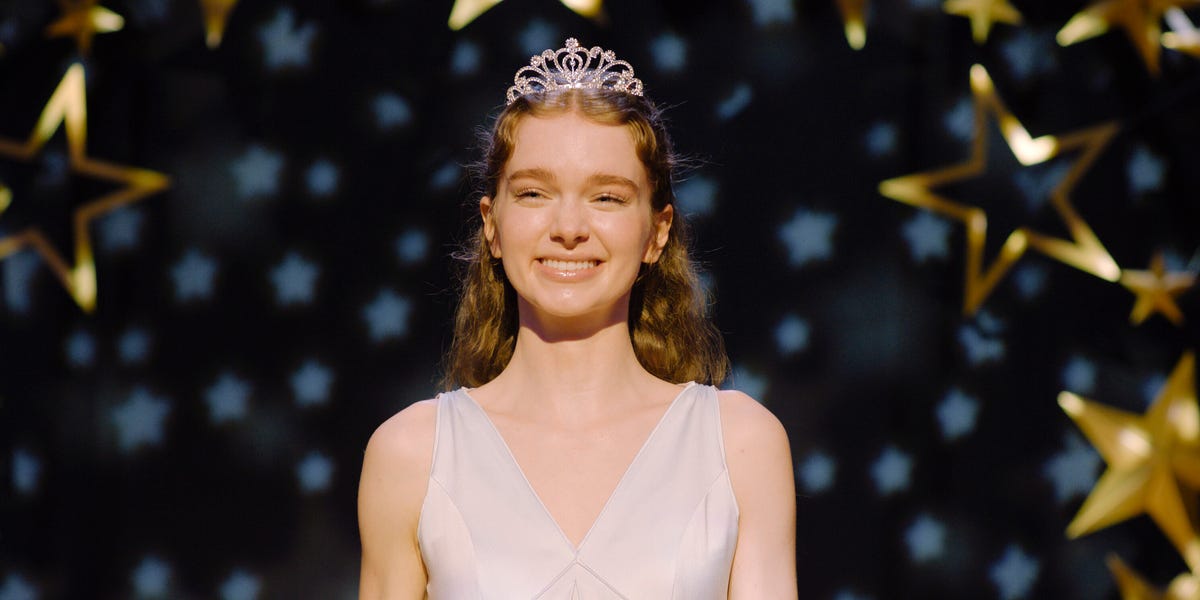
4 min readLet me start by saying I haven’t read Carrie. My decade-long project of reading Stephen King has thus far taken me through Pet Sematary, ‘Salem’s Lot, The Gunslinger, and his novellas, but not yet Carrie. Frankly, I don’t know if I have it in me to read about the bullying of a teenage girl. Call it triggering or whatever, but I feel deeply—in an almost psychic empath way—the embarrassment of a young person suffering at the pleasure of their peers. From all I’ve gleaned about Carrie via osmosis (the first time on a random episode of The Nanny), it sounds like Chinese water torture. I know teens are mean. I used to be one. I can’t go through that. Not again.But as a fan of Mike Flanagan, it was just too easy to press “play” on Carrie, his latest TV show and his first for Prime Video. Yet another live-action adaptation of King’s king-making 1974 novel, the series retells the book’s story (as much as I can gather, anyway) with all the appropriate touches of modernity. Yes, there’s a social media angle. And yes, the fanaticism that sheltered Carrie White (played by a cherubic, dainty Summer H. Howell) is rooted in doomsday isolationism and right-wing panic against the secular tyranny of state-sanctioned education. There is also a tastefully harrowing sequence mired in the grim normalcy of shooter drills, which even the authority figures have about as much faith in its effectiveness as “duck and cover.”But Flanagan pulls off a tiny miracle in his Carrie. It is more than a splash of fresh paint on a vintage ride. Carrie is again an alarmingly real story about the horrors of growing up, splayed across eight enthralling episodes of YA horror. It is a show with perspective: even the best of us will sacrifice parts of ourselves to fit in, and even sincerity has ulterior motives. While I’m vaguely aware the book portrayed Carrie differently than Flanagan—I’m told she was a judgy zealot, and a walking buzzkill—I don’t think the changes are so egregious. Sure, it follows a conventional path, of ravaged naivety and justified wrath, but that story just makes sense. It isn’t a faux pas to be legible.Just as it was in 1974, Carrie in 2026 is about a bullied girl who exacts revenge on her ruthless classmates using her supernatural powers. Brian De Palma basically nailed it fifty years ago with his immortal adaptation, so much so that most other attempts have been pallid. So it’s easy to wonder if there’s a “need” for Carrie now; even the president of the United States bullies as a hobby. There’s almost no new ground to break, and other media tackle the plight of teens and their vicious social order with more urgency and, dare I say it, relevancy. (I will take any chance, including now, to remind people of the brilliance of American Vandal.)Which is why Carrie is that much more impressive. We’re talking about a tight production full of (mostly) fresh faces, save for a few Flanagan favorites like Samantha Sloyan and Rahul Kohli and genre regulars Amber Midthunder and Matthew Lillard. Summer H. Howell, cute as a button, is a softer character than Sissy Spacek or even Chloë Grace Moretz (who led the 2013 remake). She typifies a waifish innocence necessary to make Flanagan’s vision work, and why every instance of mockery toward her cuts deep and her turn to darkness feels tragic.Courtesy of PrimeMuch as Summer H. Howell (center) shines as Carrie, Siena Agudong (right) and Alison Thornton (left) play equally critical roles as her tormentors plagued with their own insecurities.But just as important are her fellow students, namely Siena Agudong as Sue and Alison Thornton as Chris. They’re best friends bound for Duke who don’t simply mock Carrie for kicks. They each have their own baggage and hopes and shame and sources of anguish, which afford them dimensions beyond their archetypes as Mean Girls extras. Just as Howell is in sync as the show’s heart, Agudong and Thornton share duties as the soul. You can never know which version of Chris (the more traditional “villain” of the two) you’re actually watching until it’s too late.Carrie isn’t quite Flanagan at his A-game—B-plus, maybe—but it’s an insightful and entertaining morality play whose simple message and basic “hurt people hurt people” outlook is enriched by the depth of its characters. Flanagan’s striking scares are largely absent (although, if I may, I think he peaked with Midnight Mass in that department), but what’s here instead is a portrait of a girl in crisis, and how powerless we can be to stop it from happening again. There’s a reason why adult artists remain obsessed with the worlds of teenagers. It is the perfect microcosm for the cruelties of the wider world. There are always lambs for wolves to devour. It’s a miracle any of us ever made it out alive.
Mike Flanagan’s Carrie Isn’t Just Another Useless Adaptation
Full Article
Original Source
Read the full article at Esquire →KhanList aggregates and links to publicly available news content. We do not host full articles from third-party sources. Always verify important information with original sources.