
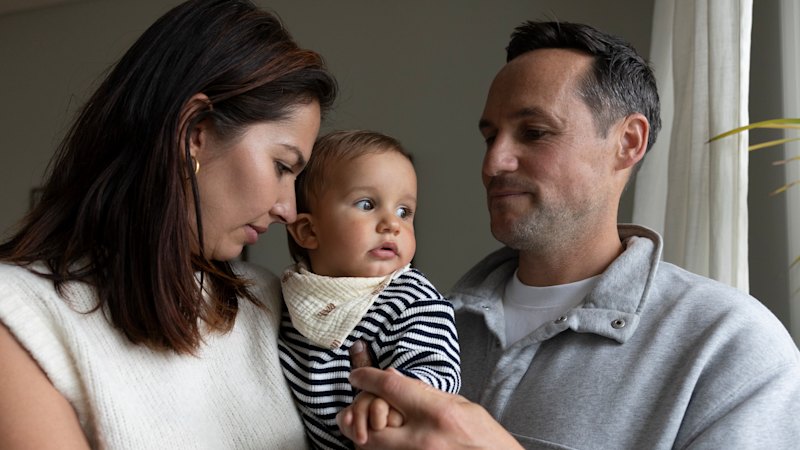
November 21, 2026 — 5:00amMidwifery groups have slammed an upcoming rule change, which they say will severely reduce women’s access to home births and push them towards potentially dangerous free births outside the medical system.The warning comes ahead of the January 1 expiry of the 17-year exemption that allowed private midwives to attend home births without professional indemnity insurance (PII).The sector has cautioned that the regulatory change will lead to a widespread shortage of home birth midwives at a time when demand is surging, with some birthing mothers more likely to turn to unqualified doulas than to hospital care.Maria Golushko and Joel Seddon with their son, Leo, who was born at home in their Bondi apartment.Janie BarrettMaria Golushko sought a home birth for continuity of care during her pregnancy after she missed out on a place in her local hospital’s Midwifery Group Practice program, in which a midwife cares for an expectant mother throughout her pregnancy, labour, birth and the early weeks at home.“You need a deep, personal relationship with someone you can trust to feel fully safe: it’s not a relationship with a dentist,” she said.Golushko said the relationship she built with her private midwife became so strong that the birth of her son, Leo, in her Bondi apartment, became a transformational, stress-free experience.“It has become the most empowering thing that I’ve ever gone through,” she said, and was frustrated at the prospect of losing that choice for future pregnancies.“If elective caesarean was under threat of being taken away, I would be [just] as appalled,” she said. “I see this as a reproductive rights issue.”Home births in Australia require two midwives, often referred to as a primary and secondary midwife. Many secondary midwives work in hospitals and attend private home births sporadically on their days off.A spokesperson for the Department of Health, Disability and Ageing said all health practitioners were required to hold PII, and that home birth midwives only had an exemption as there was no suitable product available. The spokesperson said the Australian government addressed the gap last year by expanding an insurance scheme to cover eligible midwives.But Australian College of Midwives chief midwife Kelley Lennon said this product was “not fit for purpose” because only endorsed midwives, who make up just five per cent of the workforce, were eligible.Endorsement requires additional training but allows midwives to access Medicare benefits, prescribe medications and order diagnostic tests. It is not mandatory to provide home birth care.“The vast majority of midwives will be unable to access insurance and therefore unable to provide home birth care, despite being appropriately qualified,” Lennon said.“This profession is not asking for special treatment. We are asking for a workable insurance product that reflects contemporary midwifery practice, supports informed choice, and protects access to safe, evidence-based maternity care.”In metro areas, primary midwives will have to second for each other, which will mean reducing their caseloads and increasing their prices, Homebirth Australia co-ordinator Katelyn Commerford said.“In regional and rural areas, we’re wiping it out entirely as an option for many women,” Commerford said.“The government can tell us this is about safety as much as they want but … this is not going to result in safer care.”Homebirth Australia Coordinator Katelyn CommerfordThis week, the deputy coroner heard of four deaths within the Northern Rivers region, a hotspot for the small but growing trend of “free births” or “sovereign births”, outside of the medical system.The Lismore inquest was told of birthing mothers who turned away from doctors and midwives and instead placed their trust in unqualified doulas and birth keepers such as Sita Kali, who was involved in the birth of two of the babies who died.Kali cut the umbilical cord of one newborn without first clamping it, the court heard, with the resulting blood loss potentially fatal for a small baby.Another case involved a mother who had a “very strong desire” to home birth but was unable to access her local hospital’s program. When her baby displayed signs of laboured breathing, Kali told the mother that holding him close to her chest would help, the inquest heard. The baby lived for less than 24 hours.Commerford said a Homebirth Australia survey of over 600 consumers who were planning or considering a home birth found close to 60 per cent would consider free birth if home birth was not an option. More than one in three (35 per cent) said free birth would most likely be their only choice.“The government can tell us this is about safety as much as they want, but we’ve really clearly expressed to them that this is not going to result in safer care,” Commerford said.A spokesperson for the Nursing and Midwifery Board of Australia said PII protects the public from financial and safety risks resulting from a negligent act, error or omission in a practitioner’s conduct.The board is currently reviewing registration standards for endorsed midwives, the spokesperson said, including the current requirement of 5000 clinical hours.Maria Golushko said her home birth was a transformational experience.Janie BarrettJo Hunter, an endorsed midwife who has delivered about 850 babies at home, said she doesn’t know what she’ll do if the regulations go through. Her services are booked out until July 2027.Hunter has a pool of secondary midwives whom she rotates based on availability. With some of them only attending a few home births a year, paying thousands of dollars annually for insurance won’t be worth it, and she fears they will leave the sector. Rallies on the issue were planned across the country on Saturday, with more than 11,000 people registered to attend.The Morning Edition newsletter is our guide to the day’s most important and interesting stories, analysis and insights. Sign up here.From our partners
Midwives fear upcoming rule change will push more women to unqualified doulas
Full Article
Original Source
Read the full article at Smh →KhanList aggregates and links to publicly available news content. We do not host full articles from third-party sources. Always verify important information with original sources.