
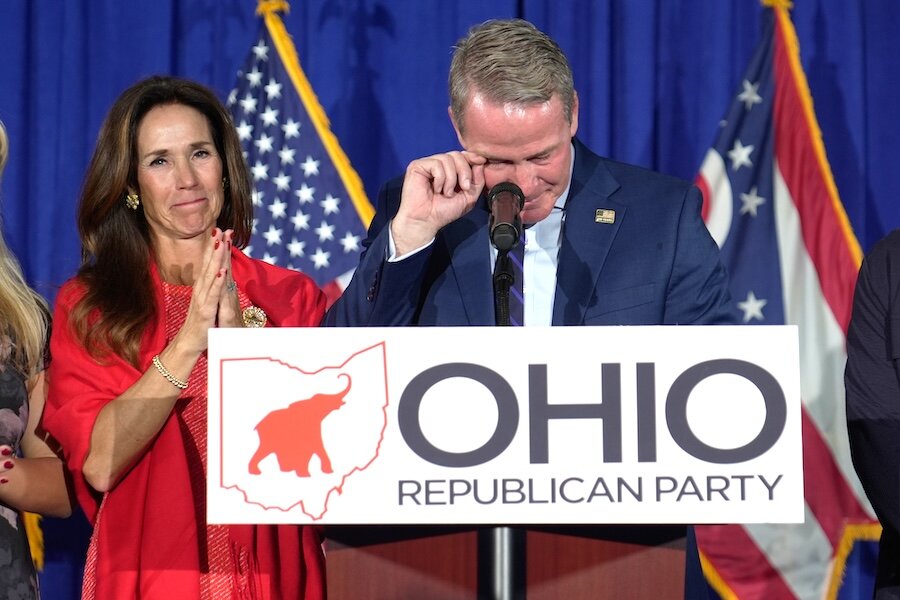
Perhaps the best result of America’s midterm elections was that President Donald Trump quickly accepted the results, contrary to his usual tendency to claim he always wins. On Tuesday night, he told The New York Times that he is “absolutely willing” to honor the Democrats’ taking control of Congress.“We’ll ... look forward to working with them,” he said.The Republican Party in general was indeed humbled in a surprisingly high number of electoral contests, whether for Congress or statehouses. In their concession speeches, several losing GOP candidates took the time to express a measure of decency and civility about their defeat. “It’s important to win with humility and gratitude and lose with grace and dignity,” said Ohio Sen. Jon Husted, a Republican who lost his seat to Sherrod Brown, a Democrat. “No matter whether you’re a Democrat or a Republican, I want you to succeed.”Max Engling, a Republican who didn’t win his bid to be Indiana’s secretary of state, said he was “humbled to be able to even run in this race.”Perhaps such contrition is in order given the rising dislike of current politics by so many voters. A September poll by The Wall Street Journal found nearly 60% of registered voters have unfavorable views of both parties. That consensus was reflected in bipartisan rejection of certain proposals, such as Mr. Trump’s offer to send $5,000 checks to all adults and an idea by New York City Mayor Zohran Mamdani to open food stores run by the government. This anti-party sentiment, along with each party’s intense internal divisions over policies, could bring a political realignment in the United States, or at least better cooperation in Washington.“The ideal posture for a small-d democrat – one committed to seeing our democracy succeed – would be to consider good-faith reasons why their party may lose,” wrote Seth Warner, a political scientist at the University of Connecticut, in The Connecticut Mirror. “Research shows that intellectual humility can be a valuable bulwark against polarized politics.”In his own analysis of national surveys of voters between 1996 and 2024, he found a sharp rise in “wishful thinking” that one’s preferred party would win – leading to greater desire for the other side to lose.To counter this growing animosity, he stated, political movements need to be self-improving, and democratic transitions stable and peaceful. Deepen your worldviewwith Monitor Highlights.Politics with respectGet political stories with respectful analysis.There‘s a world of new ideas in everyBooks newsletter.There‘s more to life, enrich yours withCulture & Learning weekly.Follow humanity‘s discoveries withScience & Nature stories in your inbox.Gain a spiritual perspectivefrom the stories in your inbox.Want to understand the deeper impact of critical events? Learn the Monitor‘s insight.Already a subscriber? Log in to hide ads. “With more modest expectations, and ideas about how our own side can improve,” he wrote, “we can help make democracy self-improving no matter how the results turn out.”That’s why it is important to notice when the losing side in an election not only accepts defeat, but also honestly reflects on what could be done better. ALREADY A SUBSCRIBER? LoginReal news can be honest, hopeful, credible, constructive.The Christian Science Monitor was founded in 1908 to lift the standard of journalism and uplift humanity. We aim to “speak the truth in love.” Our goal is not to tell you what to think, but to give you the essential knowledge and understanding to come to your own intelligent conclusions. Join us in this mission by subscribing.
Midterm elections that chasten
Full Article
Original Source
Read the full article at Csmonitor →KhanList aggregates and links to publicly available news content. We do not host full articles from third-party sources. Always verify important information with original sources.