
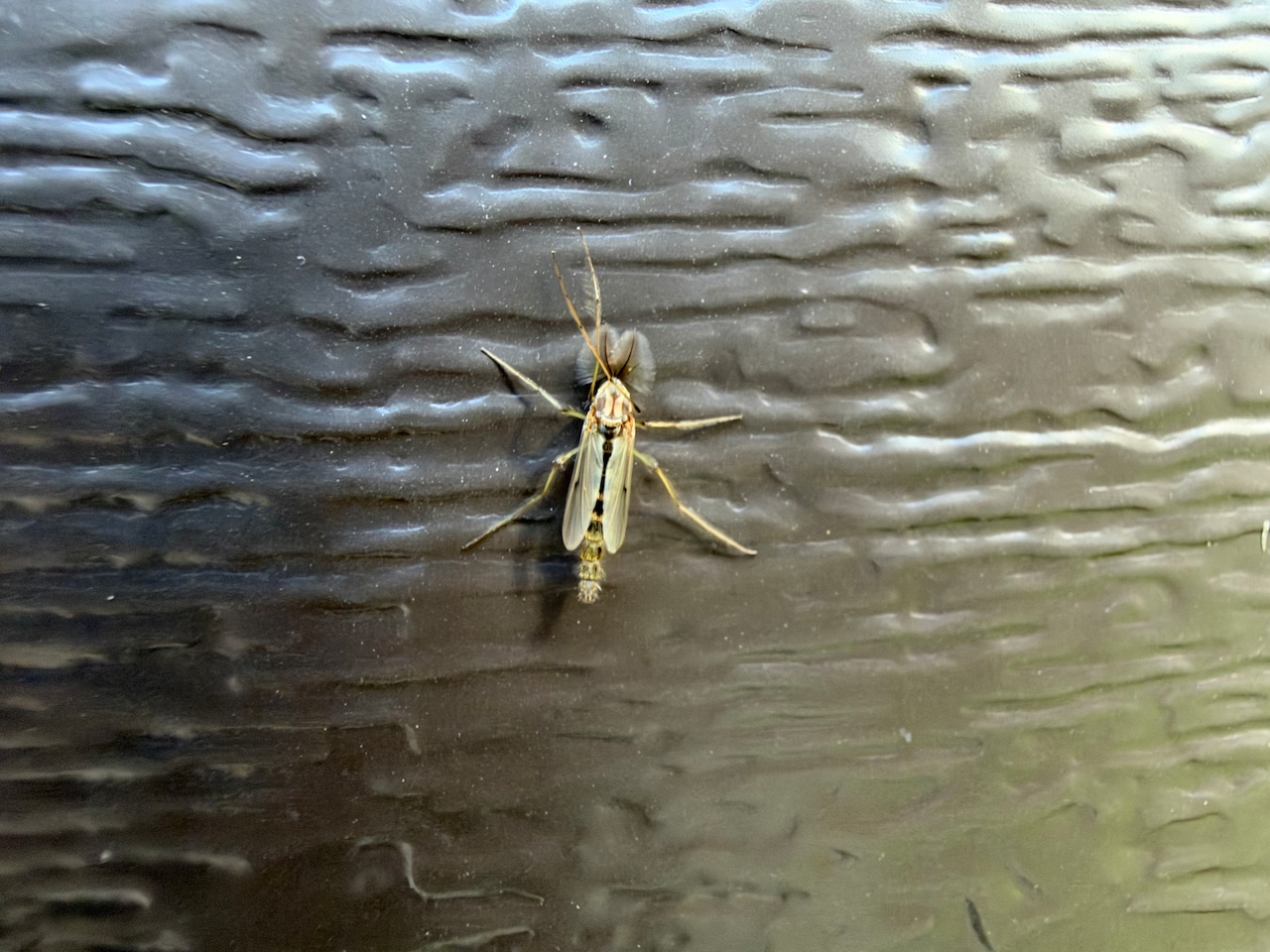
WeatherA midge rests on a garage door in Rocky River on Monday, Oct. 5, 2026. The nonbiting insects have been abundant around Lake Erie lately, and hatches could continue throughout October.Ryan Cohick, cleveland.comCLEVELAND, Ohio — Northeast Ohio’s midges are back in force, and Cleveland’s playoff crowd may have some uninvited company Monday evening.The tiny, nonbiting flies have been abundant around Lake Erie lately, and more hatches could follow throughout October, according to Travis Hartman, Lake Erie fisheries program administrator for the Ohio Department of Natural Resources.For Cleveland baseball fans, the swarms bring back memories of an October evening when the insects became an unexpected part of the action. In 2007, midges surrounded Yankees reliever Joba Chamberlain during a playoff game, helping Cleveland turn a one-run deficit into an extra-inning victory.Monday marks 19 years since that infamous “bug game,” and postseason baseball is back at Progressive Field. The Guardians host the White Sox at 5 p.m. in Game 2 of the American League Division Series.Hartman thinks the insects could make another appearance.“I would be surprised if there aren’t midges around the stadium this evening,” he said.Northeast Ohio’s week starts sunny but chilly, with patchy frost possible Monday nightNortheast Ohio Monday weather forecast: More sunshineCleveland forecast: Sunny Sunday, with a cooler start to the workweekCleveland’s sunsets are getting earlier — and Monday marks a fall milestoneWhy midges have reemergedNorth winds have pushed the insects toward the shoreline and surrounding communities, making their presence more noticeable, Hartman said. He described the recent abundance as typical of October in recent years.Midges are often associated with late spring and early summer, but their emergence is not limited to those months.“Midges commonly hatch throughout the open water season,” Hartman said. “If the lake is not ice covered, hatches are possible.”The insects, known scientifically as chironomids, spend most of their lives as larvae, including in sediment on the lake bottom, before eventually emerging as adults.Water temperature helps explain their seasonal activity. In an Instagram Reel posted last week, WKYC Channel 3 meteorologist Mark Johnson described how water temperatures around the low 60s near the lake bottom can support fall hatches.“The hatching of these little pesky bugs is all temperature dependent,” Johnson said.Bottom-water temperatures Monday morning were estimated to be in the 60s along much of Ohio’s nearshore waters, with colder water farther offshore, according to the National Oceanic and Atmospheric Administration.Hartman also pointed to conditions within the sediment itself. Midge abundance is directly related to oxygen levels there, he said, describing frequent hatches as an indicator of improved water quality and sufficient oxygen for the insects before they emerge.How long the swarms could lastIndividual adult midges have brief lives, spending only a few days mating before they die. But that doesn’t mean the region’s swarms will disappear within a few days.“These hatches could continue throughout October and are possible until we get closer to ice forming on the lake,” Hartman said.For people encountering them on walks or around their homes, the insects are primarily a nuisance. They don’t bite, and they provide food for fish, birds and other wildlife.A familiar postseason nuisanceA Yankees trainer applies bug spray to pitcher Joba Chamberlain’s uniform during the eighth inning of Game 2 of the American League Division Series on Oct. 5, 2007, at Jacobs Field in Cleveland. Midges swarmed the field during the Indians’ 2-1, 11-inning victory.John Kuntz, The Plain DealerThe 2007 ALDS game produced a memorable sight: insects clinging to Chamberlain’s neck while attempts to fend them off with bug spray offered little relief.With the Yankees protecting a 1-0 lead in the eighth inning, Chamberlain threw two wild pitches, the second allowing Grady Sizemore to score the tying run. Travis Hafner’s single in the 11th eventually gave the Indians a 2-1 victory.The weather helped set the stage. Joe Keiper, then an insect expert at the Cleveland Museum of Natural History, said at the time that unusually warm temperatures had “kind of juiced up the life cycle,” producing an extra round of midges. He suspected the insects were drawn to the bright lights at Jacobs Field, now Progressive Field.For Monday’s game, Hartman pointed to forecasts calling for northwest winds to ease during the evening. That would allow the lake to calm while a lighter breeze continues toward the Ohio shoreline — a setup he expects could bring midges around the stadium again.Ryan Cohick is keeping an eye on the sky as a weather reporter with cleveland.com and The Plain Dealer, Northeast Ohio's premier news and information source. Cohick has a Bachelor of Arts in English,...This article was produced with assistance from AI tools and reviewed by Cleveland.com staff.
Midges are back in Northeast Ohio — and could crash the Guardians’ playoff game
Full Article
Original Source
Read the full article at Cleveland →KhanList aggregates and links to publicly available news content. We do not host full articles from third-party sources. Always verify important information with original sources.