
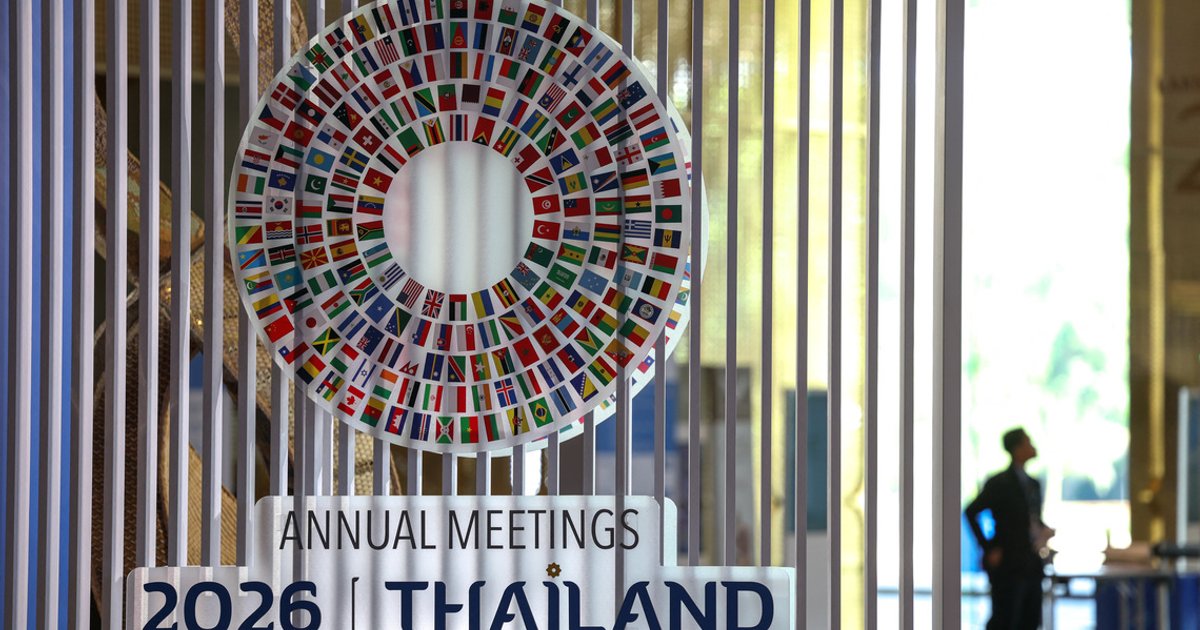
BANGKOK – Finance officials from around the world will gather in Thailand this week under the shadow of a widening war in the Middle East, the biggest energy supply shock ever and rising interest rates that together pose daunting risks to already-sluggish global economic growth.The US-Israeli-led war with Iran, now in its eighth month, and the inflation and hardship it has caused, will dominate the agenda and sideline conversations during the annual meetings of the International Monetary Fund and World Bank, being held outside of Washington for the first time in three years.Notably absent will be US Treasury Secretary Scott Bessent, who dispatched two senior officials in his stead while he handled some “domestic engagements”, a US official said.His decision to skip the high-profile gathering and a meeting of the Group of 20 major economies, which the US leads in 2026, may frustrate counterparts amid rising tensions over the Iran war, Ukraine’s battle against Russia’s invasion and the US move to impose sanctions on the International Criminal Court.World Bank President Ajay Banga told Reuters that while global growth had held up better than feared when Iran closed the Strait of Hormuz, shutting off some 20% of the world’s oil, pressures were building again.Soaring prices for diesel, rising fertiliser prices and a looming “super” El Nino weather effect that experts say could lead to 450,000 heat-related deaths are all hitting at once.Group of Seven countries have agreed to release 100 million barrels of diesel and crude oil from emergency reserves under pressure from US President Donald Trump, who is keen to see lower gasoline prices before November elections that could see his Republican Party lose control of Congress.Trump on Oct 9 announced a deal with Russia that would provide even more diesel to global markets and a temporary waiver of US sanctions designed to deprive Moscow of revenues for its war on Ukraine. The move drew swift criticism from Ukrainian President Volodymyr Zelenskiy.More than one billion barrels of oil have been released mainly from onshore commercial inventories since the start of the war on Feb 28, but industry executives say the amount of oil in storage that is accessible to the global market is running low, making the market more fragile and fuelling pressure on prices.Banga said the Bank was not revising down its global forecasts at the moment, but was keeping a close eye on developments.“The real thing is not just El Nino by itself; it’s the combination... What’s happening to fertiliser prices? What’s happening to energy costs? What’s happening to debt? It’s that put together that creates its own challenges,” he said.“And I think that will call upon all of us to be far more careful on what we prepare for in the coming months.”Rising debtIMF Managing Director Kristalina Georgieva issued a similar warning in her traditional curtain-raiser speech previewing the meetings, telling the audience: “Winter is coming.”The IMF has signalled little change in its forecast for 3% global growth in 2026 and may edge its forecast for 2027 slightly higher. But some countries will see downgrades, including Ukraine, now in its fifth year of war against Russia’s invasion, and Gulf countries hit by Iranian strikes and sharply reduced energy exports.IMF research released on Oct 6 showed that sharp spikes in food and energy prices are an increasingly common source of crises that drive inflation expectations higher for longer, worsen poverty and threaten economic stability.One huge headache for policymakers is the growing public debt burden that is sapping growth and adding inflationary pressures. The IMF says public debt is at the highest level since World War II and will exceed 100% of GDP before 2030.Advanced economies, led by the United States, have the highest debt-to-GDP ratios, but emerging markets and low-income countries are particularly vulnerable, given a perfect storm of challenges: Capital outflows in search of higher US rates, El Nino, and lack of investment in AI, which has mitigated negative supply shocks in the US and other rich countries.Emerging market concernsDeveloping countries are particularly vulnerable given high public debt levels that will have to be renegotiated at higher interest rates. Interest payments already exceed 10% of revenue in developing countries on average.Early in the Covid-19 crisis, G-20 leaders announced a suspension of debt service payments for the poorest countries, but there is little appetite for such action now, according to diplomats from G-20 countries, who said high debt levels and political pressures posed bigger hurdles this time.Many lower-income countries are worried about new IMF recommendations for loan programmes that call for fewer, but deeper reforms as a condition for approving lending, a change that many fear will lead to painful austerity measures.“Countries are already cutting their expenditures because their debt payments are going high and because of the IMF conditionality,” said Iolanda Fresnillo, who works on debt justice for Eurodad. “We fear that this review of conditionality policy is just going to make things worse.”Kenya, she said, had avoided a debt restructuring by cutting public expenditures and trying to raise taxes, but the changes sparked significant protests, especially by the young.The IMF risked losing credibility unless it acknowledged the severity of the crisis facing many developing countries.“As long as they continue with the governance structure that they have, they are becoming less and less relevant,” she said.Security and financeFlight routes to Bangkok often route through the Middle East, posing immediate security challenges to the 10,000-plus travellers descending on Thailand’s bustling capital city of nine million residents following recent attacks on Saudi airports.The last off-site annual meetings of the IMF and World Bank took place in Morocco just days after militants led by Hamas killed 1,200 people in Israel, followed by Israel’s bombardment of Gaza that killed more than 74,000 people and devastated cities throughout the Palestinian area.Three years later, the linkage between national security and international finance is clear, although finance officials at the time had dismissed the Hamas attack as not being an economic issue, said Josh Lipsky, vice president of international economics at the Atlantic Council.“Obviously there have been massive global ramifications,” he said. “What we’re currently experiencing with Iran and the closure of the Strait of Hormuz has a direct connection with what happened three years ago.”Policymakers needed to become more agile in responding to geopolitical crises in an increasingly interconnected world, Lipsky said. “They have to be proactive and they have to recognise that they don’t live in the world they used to.” REUTERS
Middle East war, high debt levels to dominate IMF-World Bank meetings in Bangkok
Full Article
Original Source
Read the full article at Straitstimes →KhanList aggregates and links to publicly available news content. We do not host full articles from third-party sources. Always verify important information with original sources.