
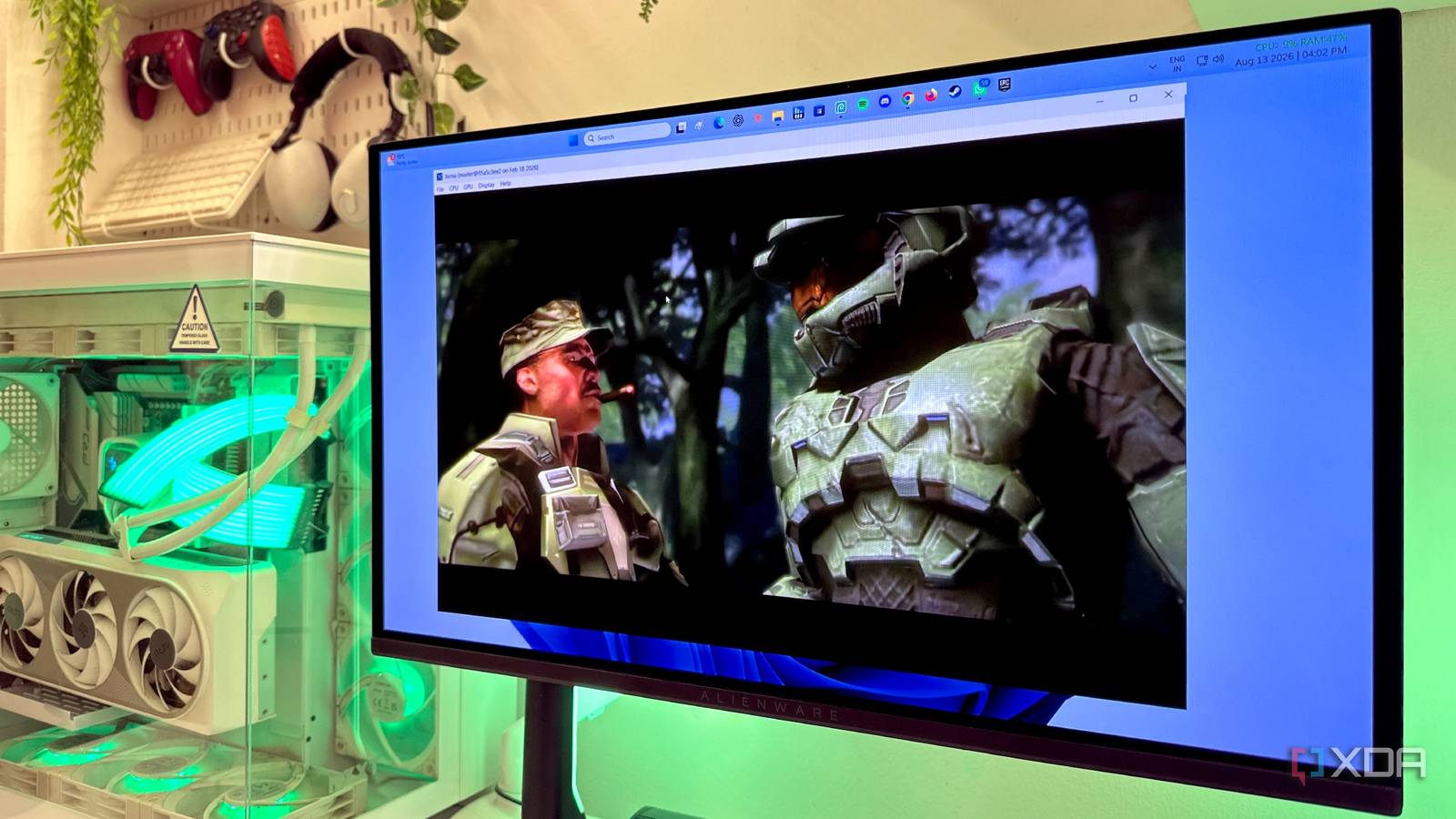
Published Aug 20, 2026, 6:00 PM EDT Gaming has been Samarveer’s greatest passion, and the Literature graduate in him takes immense joy in dissecting games for their themes, messages, and impact. Samarveer holds a deep appreciation of gaming, and considers the platform to be the most immersive and impactful across all media. He can be found engaging with gaming communities online, always ready to debate the finer points of ray tracing or itching to write an 8-page collegiate thesis on any game that impacts him emotionally. It's finally happening — Microsoft is bringing official Xbox 360 emulation to PC, and considering how long I've been waiting for this, I should probably be more excited. Instead, I can't shake the feeling that Microsoft is arriving remarkably late to a party that the PC emulation scene has been throwing for over a decade. Xenia has already spent years turning Microsoft's legendary console into a capable gaming platform, but that doesn't make Microsoft's effort pointless. An official emulator could make Xbox 360 games dramatically more accessible, but there's a very real chance that it will arrive with limitations that the community simply doesn't have. Microsoft's got a lot of catching up to do here, and I don't quite see it winning. Microsoft is finally bringing Xbox 360 emulation to PC And Xenia has had a 13-year head start Microsoft’s plan is straightforward: Xbox 360 games will join the backward-compatibility push coming to PCs and handhelds, with developers able to opt individual titles in and control pricing and Game Pass availability. The rollout is expected across 2027 and 2028, rather than delivering the 360 library. For players, that should mean buying or accessing a supported 360 game through Microsoft's ecosystem, launching it on a Windows device, and letting Microsoft handle the emulation. The catch, however, is that the term "supported" here matters the most. Microsoft still needs individual games to make the jump, rather than flipping a switch for the catalog. By contrast, the Xenia emulator's development began all the way back in 2013, meaning Microsoft is arriving roughly 13 years after the community started building Xbox 360 emulation for Windows. Xenia remains actively developed, so Microsoft's "solution" here is to walk into a scene that has already spent years solving the hard part. Official doesn't quite mean complete Microsoft may build the emulator, but it can't rebuild the entire ecosystem The easiest way to understand Microsoft's problem is to follow the process a game would actually have to go through. First, a developer will have to opt in its Xbox 360 title to the PC program and set its price. Then, Microsoft would make that game compatible with its emulator, add it to the Xbox app, and the publisher decides how it is sold or whether it enters Game Pass. Only then will the player get to click, download, and play that Xbox 360 game on their Windows PC or handheld. This doesn't sound at all painless, and even less so when you remember just how many 360 games have disappeared from storefronts. Delisted games, expired licenses, defunct publishers, licensed music, and online services have all turned perfectly emulatable games into commercial headaches for developers, publishers, and Microsoft combined. No matter how polished it might be, an emulator cannot solve a licensing problem. Games I grew up playing on this console, like All Zombies Must Die, Quantum of Solace, or Driver: San Francisco are never coming back to the official Xbox 360 library, which is where Xenia has my back. Xenia has no such storefront to maintain. Its developers can work on compatibility, graphics fixes and game-specific improvements without waiting for Microsoft or a publisher to decide whether a particular title deserves another life. The project's own documentation already supports multiple rendering paths and extensive configuration. This also means that Microsoft's version of the Xbox 360 emulator could very well be technically excellent yet feel oddly restrictive. If I cannot run a game because Microsoft never opted in, the fact that the emulator exists doesn't really help me much at all. Xenia, meanwhile, has spent years making the underlying hardware increasingly understandable to PC gamers. While official emulation can make playing Xbox 360 games easier, it can't make the entire Xbox 360 library available. Bringing Xbox 360 emulation to PC isn't quite the same as bringing Xbox 360 games to PC, after all. The community, on the other hand, has already built around that limitation in a way a commercial platform simply cannot. If you're downloading the Xenia emulator for Xbox 360, Xenia Master is the stable branch, while Canary brings faster updates, patches, and broader compatibility. A game doesn't need Microsoft's permission to survive Xenia has one undeniable advantage that Microsoft simply cannot engineer away, and that is preservation. Preservation does not require a publisher to opt in, after all. If you own an Xbox 360 game, you can dump it from your console, transfer the resulting files to your PC, and load them into Xenia. Its own documentation even provides the process, including moving the game from USB storage and launching the appropriate executable. That matters because Microsoft's emulator will inevitably be tied to what Microsoft and publishers are willing to support. A delisted game, expired license, or forgotten third-party title won't become playable all of a sudden just by way of Microsoft creating a functioning official 360 emulator. Thankfully, Xenia doesn't need a storefront listing to preserve a game. Instead, all it needs is someone willing to improve compatibility. The process is refreshingly simple: preserve your own game dump, check Xenia's compatibility information, load the title, and troubleshoot if necessary. It's certainly not all glamorous, sure, but preservation rarely is, and it isn't supposed to be, either. Microsoft can resurrect the games it chooses, but Xenia can keep working on games that Microsoft never gets around to resurrecting. Xenia The strange thing about coming second Microsoft has spent years deciding which parts of its history deserve a second life, while people outside that ecosystem have treated the entire library as something worth keeping alive. The former's approach is clearly more of a product strategy, while the latter's is sheer stubbornness. As these games get older, that distinction matters more than ever. We're heading into an all-digital future, and there's clearly no stopping it — hardware dies, and storefronts disappear at the whims of the powers that be, making perfectly good games harder to access and experience. Microsoft can make the official route cleaner and considerably more polished, as it should, but when the corporate roadmap eventually moves on, projects like Xenia are the reason the road itself remains there.
Microsoft's Xbox 360 emulator is arriving 13 years late, and Xenia already proved it doesn't matter
Full Article
Original Source
Read the full article at Xda-developers →KhanList aggregates and links to publicly available news content. We do not host full articles from third-party sources. Always verify important information with original sources.