
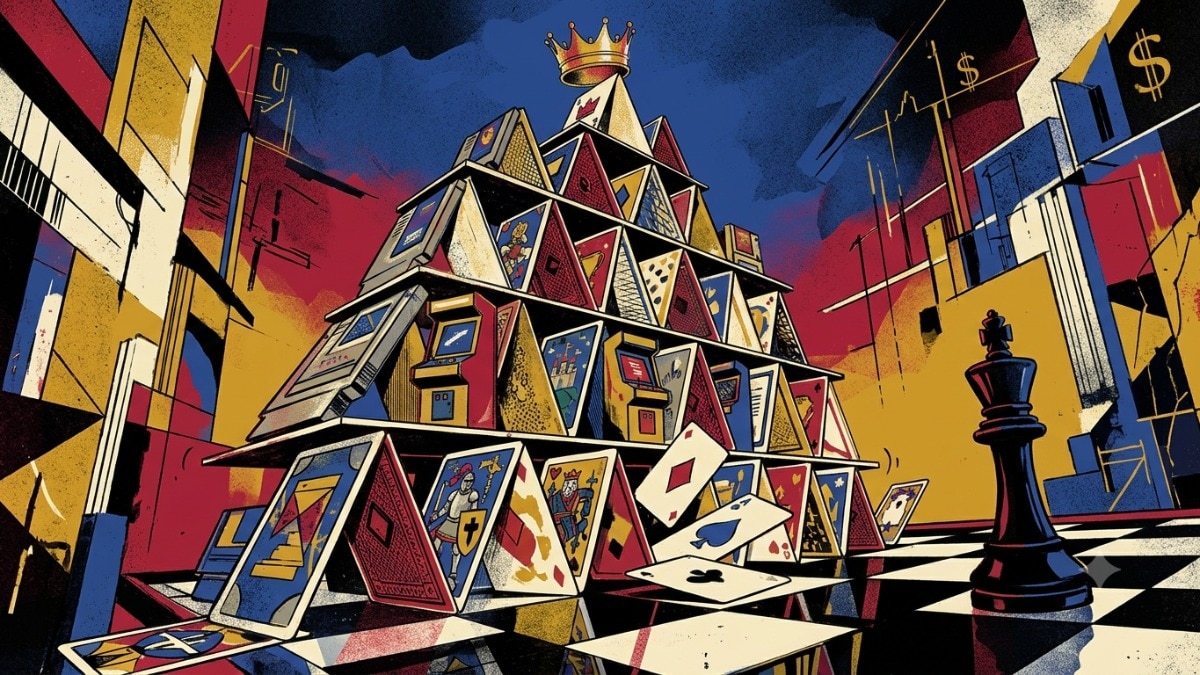
Microsoft spent $68.7 billion to acquire Activision Blizzard and expand its gaming empire with the likes of Call of Duty, Warcraft, and more. Yet Xbox is facing job cuts and restructuring, while eligible employees are included in a new voluntary buyout programme. The story explains why a promising business bet can lose momentum, how buyouts work and what Microsoft's gaming reset means.Microsoft spent $68.7 billion to acquire Activision Blizzard and expand its gaming empire. Yet Xbox is facing job cuts and restructuring, while eligible employees are included in a new voluntary buyout programme. (AI-generated image)New Delhi,Oct 27, 2026 20:28 ISTIn business, spending billions to enter a booming industry can look like a winning move. But what happens when the industry changes, costs rise and the money coming in does not grow as expected?Microsoft's gaming business offers a lesson in that dilemma. The company spent $68.7 billion to acquire Activision Blizzard, adding some of the world's biggest video game franchises to the portfolio of its own gaming brand Xbox, such as Call of Duty, Warcraft, and Candy Crush.Yet Xbox employees are now caught up in Microsoft's latest cost-cutting drive.On October 26, Microsoft announced a voluntary buyout programme covering around 60,000 employees, with eligible staff across Xbox, Windows, Copilot and other divisions in India, the US, the UK and Canada able to consider the offer. This follows earlier job cuts and restructuring in Microsoft's gaming business. The contrast is striking: why is a company that spent billions to expand its gaming empire now encouraging employees to leave?MICROSOFT'S BIG BET ON GAMINGWhen Microsoft launched its first Xbox console in 2001, it was taking on established players such as Sony and Nintendo. Over time, it built franchises such as Halo and Forza Motorsport, expanded into PC gaming and launched Game Pass, a subscription service that lets players access a library of games for a recurring fee.Then came a much bigger bet.In January 2022, Microsoft announced a $68.7 billion deal to acquire Activision Blizzard. Completed in October 2023, the acquisition brought franchises such as Call of Duty, Warcraft, Diablo and Candy Crush into its gaming business. It was the biggest acquisition in gaming history. (AI-generated image) The logic was simple. More popular games could attract more players, bring in subscription revenue and give Microsoft a stronger position across consoles, PCs and mobile devices.It was a way to buy scale rather than build every franchise from scratch. But buying a successful business is not the same as guaranteeing that it will keep growing.WHEN A GOOD BUSINESS IDEA STOPS ADDING UPThe problem with big investments is that the world does not stand still after a deal is signed.A gaming company may spend years developing expensive titles, expecting enough players to buy them or subscribe to its services. But players' habits change, rival platforms compete for their attention, and a game that costs hundreds of millions to make may not become a hit.Hardware creates another challenge. Console makers must balance manufacturing costs, selling prices and the number of people willing to buy their devices. Subscription services, meanwhile, need to keep attracting and retaining paying users. (AI-generated image) In July 2026, Xbox announced a major restructuring, including plans to reduce around 3,200 roles during the financial year. It pointed to investments that had not grown as quickly as expected, a smaller console user base than rival platforms, a high cost structure and rising hardware costs.Xbox also said that, excluding Activision Blizzard King, it had spent more than $20 billion over five years on content, platforms and subsidising hardware, while annual revenue had fallen by nearly $500 million over that period.The message was not that gaming had stopped making money. It was that the business was not generating the growth Xbox wanted from its spending.WHAT BUYOUTS AND RESTRUCTURING ACTUALLY MEANWhen a company decides its existing structure costs too much, it has several options. It can stop projects, close studios, combine teams, reduce hiring or cut jobs.A voluntary buyout is another route. Eligible employees are offered a financial package if they agree to leave the company. The package may include severance pay and other benefits, depending on the terms.The employee gets a choice, while the company can reduce its workforce without asking every eligible person to leave. A buyout offer is not the same as a layoff, and it does not mean everyone who receives the offer will accept it. (AI-generated image) For Xbox employees, however, the latest offer comes after earlier cuts and changes to the gaming business. That makes it part of a wider effort to reshape Microsoft's workforce and spending.So Microsoft is not necessarily walking away from gaming. It is trying to make the business work with a different cost structure.A BOOMING INDUSTRY DOES NOT GUARANTEE SUCCESSThe global gaming market remains enormous. Research firm Newzoo estimated that the industry generated $201.6 billion in revenue in 2025 and forecast $213.9 billion for 2026.So why the pressure?Because a growing market does not make every company a winner. Revenue is the money a business earns, not the profit it keeps after paying for development, employees, hardware, marketing and acquisitions.Microsoft's larger gaming portfolio gives it valuable franchises and access to audiences across platforms. But those assets must generate enough revenue and profit to justify the money spent acquiring and running them.The Activision Blizzard deal is therefore too big to label a failure simply because Xbox is cutting jobs. Its long-term value will depend on how successfully Microsoft uses those games and studios to build a sustainable business. (AI-generated image) THE REAL LESSON FROM MICROSOFT'S GAMING BETMicrosoft's Xbox journey shows why even a promising business strategy can need a rethink. A company can buy popular brands, enter new markets and expand rapidly, only to discover that competition, customer behaviour and operating costs have changed the original calculation.That is when restructuring begins. Management tries to bring spending, staffing and business priorities back in line with what it believes the market can support.For employees, the consequences are immediate, whether through layoffs or a decision to accept a buyout.For Microsoft, the bigger test is whether its vast gaming portfolio can deliver the growth it expected when it made its multibillion-dollar bet.The gaming industry is still growing. The question is whether Microsoft's investment can grow profitably with it.- Ends
Microsoft spent $69 billion on gaming. Why is Xbox cutting jobs now?
Full Article
Original Source
Read the full article at Indiatoday →KhanList aggregates and links to publicly available news content. We do not host full articles from third-party sources. Always verify important information with original sources.