
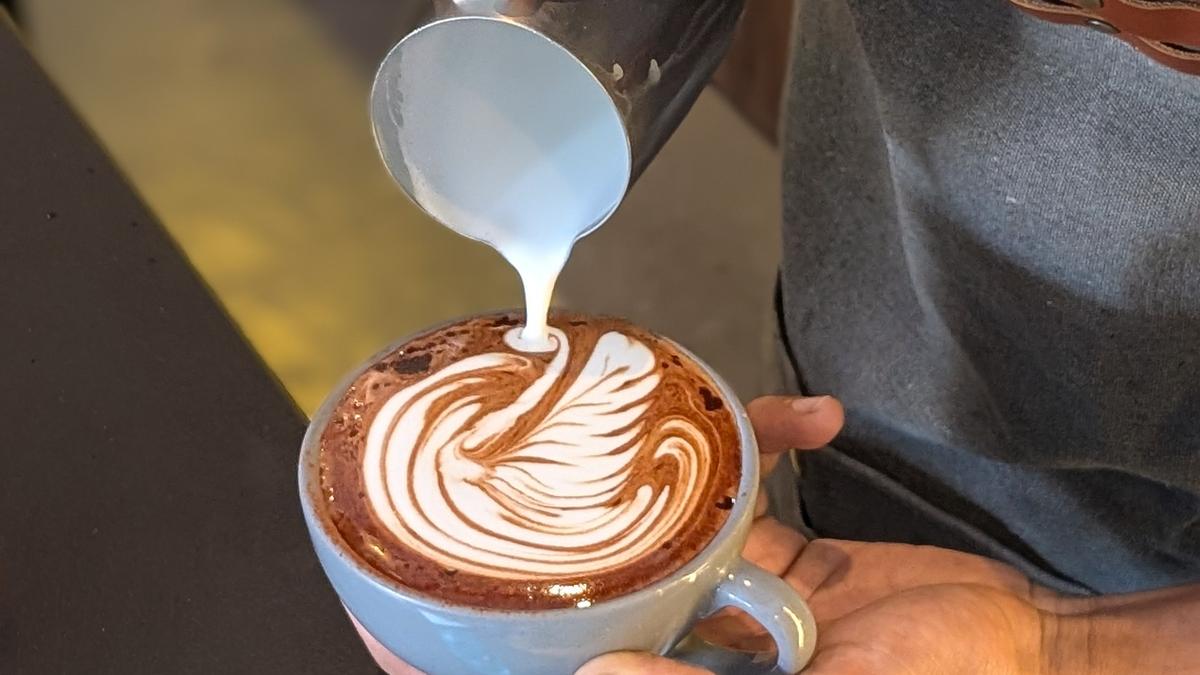
At Blue Tokai’s Play Bar, in Jubilee Hills, I am introduced to sensory cups — a set of three, each designed for a different purpose: aroma, body, and flavour. The cups are meant to help coffee connoisseurs explore some of India’s microlots.Microlots are small, intentionally separated batches of coffee. They are set apart not because they are flawed, but because of their unique growing conditions, processing methods, and distinct flavour profiles. Unlike commercial blends, these coffees are not a mix of beans from multiple regions or harvest days.Microlot is a third-wave coffee term — part of a movement that treats coffee like fine wine, with a focus on high-quality beans, single-origin sourcing, lighter roasts that highlight flavour, and direct relationships with farmers. Key details to look out for while purchasing microlot coffee include elevation, processing technique, cultivar, farm name, region, farm size, and producer name.How is it different from single-origin coffee? The Strabucks Reserve, first reserve outlet in South India | Photo Credit: Prabalika M Borah Ashok Patre of Ratnagiri Estate, a 117-hectare, Rainforest Alliance-certified coffee plantation nestled in the Western Ghats near Bababudangiri, Karnataka, which produces one of the largest numbers of microlots in India, explains, “It is the treatment of the coffee beans right after they are harvested. Special processes like fermentation and washing either add or enhance certain flavours in the coffee, setting it apart from commercially harvested beans.”Ashok first experimented with fermentation in 2015 using honey. The results, he says, were something of a eureka moment for the estate. “We found some sweetness in the coffee, though it wasn’t very pronounced. Friends from Costa Rica, Colombia and El Salvador suggested I try anaerobic fermentation, where freshly picked coffee cherries ferment in airtight tanks. They told me it would not only enhance sweetness but also add more complexity to the cup. In 2016, I built my first stainless steel fermenters,” he says. Visitors checks varieties of coffees during the India International Coffee Festival (IICF) 2026 | Photo Credit: ALLEN EGENUSE J Ratnagiri Estate coffees are typically characterised by white floral aromas, citrus notes, honey-like sweetness and a lingering finish. Its processed microlots can also develop pronounced berry, wine-like and exotic floral notes, a reflection of both the estate’s terroir and its processing techniques.The microlot drinkersAs someone deeply involved in the coffee business, Ashok is well aware of who gravitates towards microlots. "Usually people aged 35 and above," he says, adding that price is a significant factor. Think of microlots as limited-edition coffee. They command a premium because production is so small that you may never get another batch.A relentless experimenter himself, Ashok believes microlots also demand a different kind of consumer. "Younger people often prefer milk-based beverages like lattes and cappuccinos. With microlots, it's not just about the cost of the coffee. They also require the right brewing equipment and technique. A proper brew is what allows the coffee's terroir to truly express itself."The growing interest in specialty coffee is reflected in Starbucks' expansion of its Reserve programme. Earlier this year, the company opened its first Starbucks Reserve store in Hyderabad, its first in South India."Starbucks Reserve microlot whole bean coffee is priced at ₹2,400 across Starbucks stores in India," says Vibhor Mishra, Coffee Ambassador, Starbucks China, Asia Pacific, and Regional Director, Operations, Starbucks India. "Beverage pricing, however, may vary across store formats, locations and the specific Starbucks Reserve coffee and brewing experience being offered." A barsta at work | Photo Credit: Dinesh Kakollu On consumer demand, Mishra says the response to microlots has been encouraging. "We've seen strong customer interest across all our Starbucks Reserve microlot offerings from around the world. Each microlot is produced in very limited quantities and is available only for a limited time. Since preferences vary based on origin and tasting notes, we curate a diverse range of flavour profiles to appeal to different palates."The current offering is the Starbucks Reserve Colombia Granos de Esperanza, with tasting notes of red apple and roasted almonds. "Every manual brewing method brings out a different expression of the coffee," Mishra says. "I'd recommend trying it as a Chemex brew, which best highlights its clarity, balance and nuanced flavour profile."What it does to the coffee March Tormo of Marc’s Coffee | Photo Credit: Dinesh Kakollu Indian coffees, which are typically known for their bold, nutty, and chocolatey profiles, often lack the natural sweetness associated with Kenyan or Ethiopian coffees. However, fermentation-led processing methods are changing that, bringing out more complex notes such as berries, tropical fruits, pineapple, dried fruits, prunes, and sweet dates.Sooraj Toopali of Toops Coffee in Banjara Hills says his first encounter with microlots happened a couple of years ago at Delhi café Quick Brown Fox Coffee. “The distinctive flavour profile of an Arabica Naturals microlot from Moganad Estate in the Shevroy Hills got me interested,” he says. “I was already invested in single-origin coffee, but microlots go a step further. They come from a single section of land, a limited varietal, or a highly controlled harvest selection where the farmer intentionally invests time and effort to develop a small crop with unique flavours.”By “develop a small crop”, Sooraj clarifies, he does not mean anything artificial or lab-grown. “It refers to special treatments like extended fermentation or processing in pressurised tanks that lock in specific bacteria for flavour,” he explains. Microlot are often chosen for manual brews | Photo Credit: Dinesh Kakollu At Blue Tokai’s Play Bar, the microlot beans are frozen at -14 to -20 degrees at peak flavour and preserved in temperature-controlled storage. The rotating selection, curated by the roasting team, introduces something new each month. Some coffees are fermented with farm-grown cultures, aged in wine barrels, sourced from emerging coffee-growing regions like Meghalaya, or co-processed by smallholder farms.After tasting a few microlots myself, I began to understand the fascination around them. Microlots feel like the limited-edition releases of the coffee world — not just varying in flavour, but also in scale and rarity.Marc Tormo of Marc’s Coffee in Auroville says some of the most memorable coffees he has discovered are the ones growing in the wild. “When coffee grows within Nature, alongside support crops, the flavours become incredibly unique,” he says. “Sometimes they are so distinct that it is difficult to replicate them in the next harvest, and we want to leave it that way.”Accoridng to Ashok Popular microlots currently include Ratnagiri Estate Thermal Shock Dark Room Naturals Arabica, Kerehaklu Culture Washed Arabica, Kerehaklu Washed Peaberry Arabica, Salawara Mosto Yeast Fermented Washed Arabica, and Gungegiri Oxygen-Phased Naturals Arabica.Among the rarer offerings is The Typica Project by Yetu Coffee, in Chennai which Archana Abraham, head of marketing and brand experiene of Yetu describes as “a conversation between two landscapes.” The project brings together Kent varietals from the Nilgiris and Coorg, processing them through an intensive 20-day slow-dry cycle designed to unlock the bean’s full potential. “Different altitudes, different climates, perfectly unified in the cup,” she says. The coffee carries tasting notes of green grape acidity and dark berries.Yetu’s Akane Dark Roast Blend, meanwhile, combines beans from Valparai, Nagaland, and Coorg.Process makes it a microlotFor a coffee to qualify as a microlot, several variables come into play — one of the most crucial being processing time. Rohan Kuriyan of Balanoor Plantation, in Coorg explains that the duration of fermentation often determines the final flavour notes in the cup. “Depending on the flavour profile we are aiming for, the processing can vary between 16, 18, or even 24 hours,” he says.One of Balanoor’s more customised experiments is its banana leaf fermentation process, developed for a select buyer. Does that mean the coffee tastes like bananas? Not exactly. “Coffee processed with a particular fruit or spice does not directly mirror that flavour,” explains Rohan. “The final taste depends on how the coffee’s mucilage reacts during fermentation. Interestingly, even the same beans can develop very different flavour profiles depending on the roasting process.”Ashok adds that microbes also play a significant role in shaping the final cup. “A lot depends on which microbes are used and in what combinations. Sometimes we use two or three together. There’s still a lot of guesswork involved, but I’m currently building a data log around it. It’s a work in progress,” he says.
Microlot coffee: The limited-edition world of India’s specialty coffee
Full Article
Original Source
Read the full article at Thehindu →KhanList aggregates and links to publicly available news content. We do not host full articles from third-party sources. Always verify important information with original sources.