
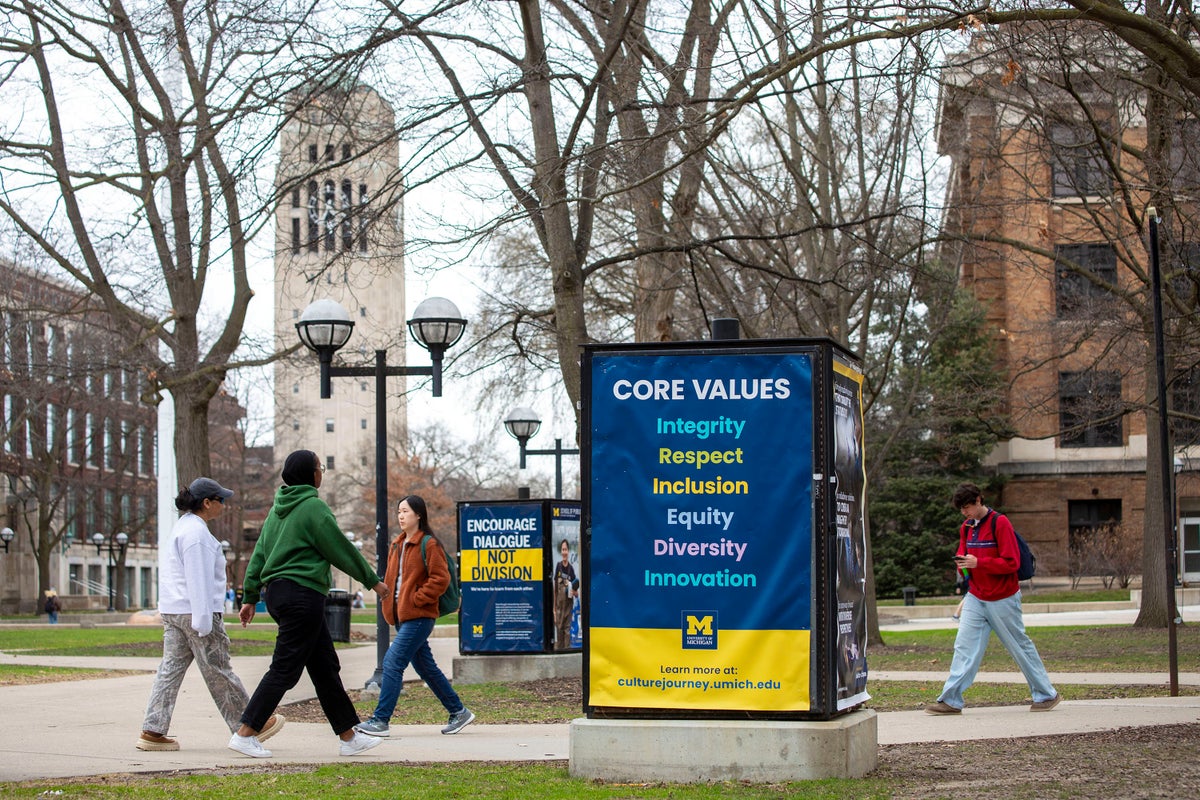
The University of Michigan has paused a controversial policy that would have hidden freshmen’s first-semester letter grades, just weeks after announcing the initiative as a way to support new students’ mental health.The pilot, announced in August, was scheduled to begin in fall 2027 for first-year students in the College of Literature, Science and the Arts, the university’s largest undergraduate college. Under the policy, students would have received pass (P) or no-credit (NC) designations for their first semester instead of having traditional letter grades appear on their external transcripts or count toward their GPAs.Professors would still have assigned letter grades and provided feedback, but those grades would not have appeared on students’ external transcripts or factored into their GPAs. Traditional GPA calculations would have begun in students’ second semester. The College of LSA had more than 19,000 undergraduate students enrolled in fall 2025, including 3,521 first-year students, according to an April 2026 report.However, a notice posted Monday on the LSA website said the program has been paused after university leadership requested “further input, analysis, and discussion.” The university did not say when, or whether, the pilot would resume.“College of LSA Dean Rosario Ceballo and her leadership team remain committed to continuing to work with the LSA community to help first-year students establish early academic momentum, support their well-being, and inspire their intellectual curiosity,” the statement reads.The University of Michigan has paused its first-semester grading pilot after university leadership requested ‘further input, analysis and discussion’ (Getty)In a letter to LSA leaders that was shared with Inside Higher Education, university president Domenico Grasso said the pilot had become the “subject of extensive media coverage, much of which consists of distorted narratives about our intentions, and, most concerningly, about the academic strength and resilience of our students.” “It has become clear that the misconceptions and questions raised about the program put the pilot’s success at risk,” Grasso wrote. “I worry further that our students could bear the consequence of those misconceptions, including being unfairly portrayed as coddled or unprepared for the demands of a rigorous Michigan education.” The Independent has contacted the University of Michigan for comment. The policy was intended to relieve pressure on freshmen and help them “start strong and curb the mental health crisis unfolding among college-aged individuals,” the university said in an August statement.However, it was quickly met with national attention from critics who argued that shielding freshmen from the pressure of traditional grades could make it harder to identify and address academic struggles, rather than better preparing students for college demands. Rick Hess, a senior fellow and director of education policy studies at the American Enterprise Institute, for instance, called the policy “exactly the wrong diagnosis.”The College of LSA had more than 19,000 undergraduate students enrolled in fall 2025, including 3,521 first-year students, according to an April 2026 report (Google Maps)“It turns out that swaddling college students does not actually improve their mental health,” he told the New York Times. “It creates entitlement. It creates a lack of productive tension.”Psychotherapist and author Jonathan Alpert acknowledged that receiving a poor grade can be distressing and trigger anxiety for students.“But feeling bad isn’t the same thing as being unwell,” he told the Times. “I worry that therapists and institutions have blurred that distinction.”“College should be one of the places where young people learn that evaluation isn’t always pleasant,” Alpert added.College also gives students opportunities to experience setbacks they will likely encounter beyond campus, whether that means receiving a C or lower, facing criticism from a professor or missing out on a coveted internship, he said. “Those experiences can hurt, but learning that you can tolerate them and move forward prepares you for adulthood,” Alpert said.
Michigan has ended its plan to skip letter grades for freshmen after backlash over ‘swaddling’ policy
Full Article
Original Source
Read the full article at Independent →KhanList aggregates and links to publicly available news content. We do not host full articles from third-party sources. Always verify important information with original sources.