
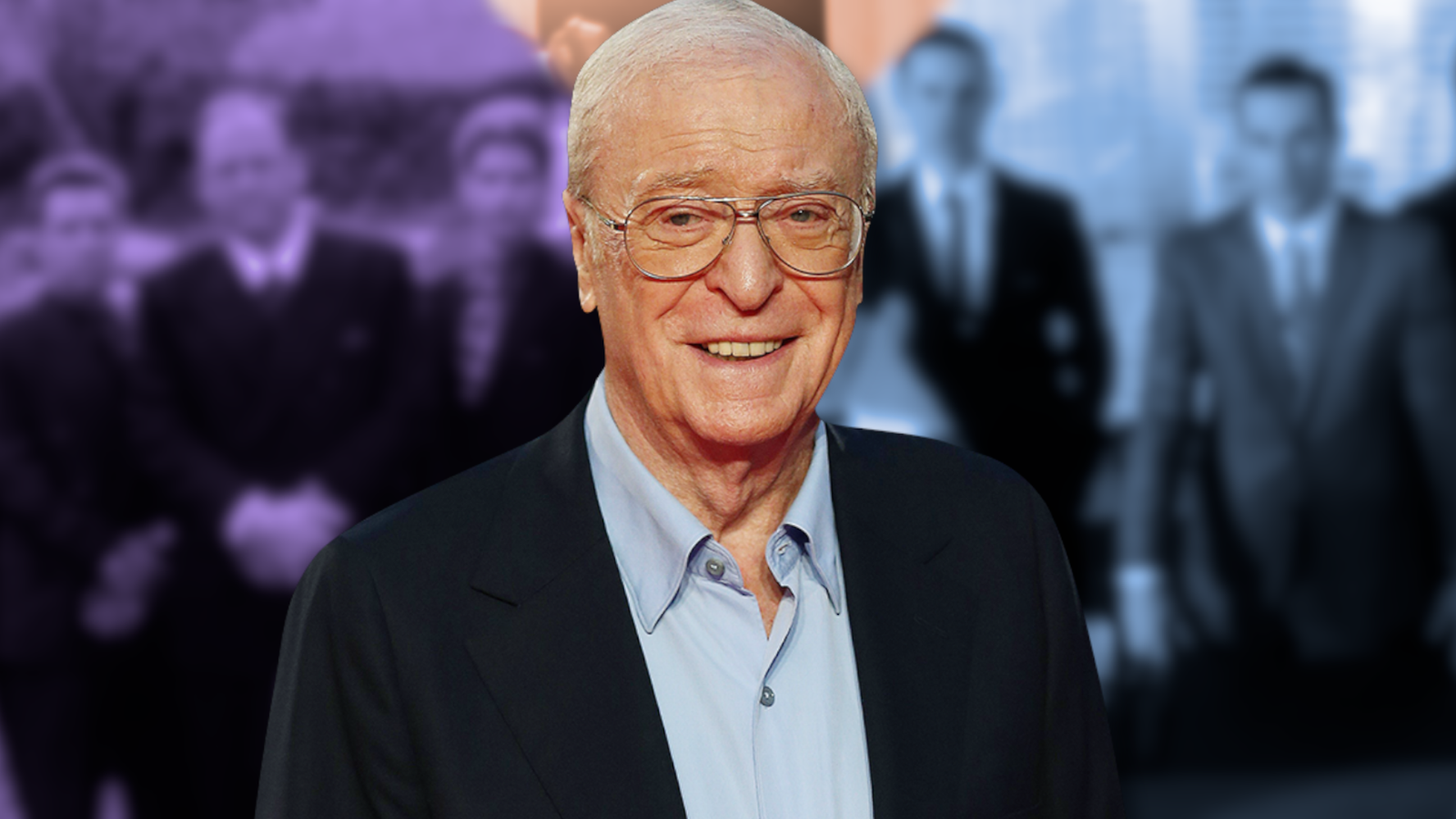
Published Sep 15, 2026, 11:58 PM EDT Kolt Day is a tenured freelancer who has brought invigorating and provocative takes to Screen Rant and ComicBook, alongside loads of writing experience in other realms. Outside of media journalism, Kolt loves music production and philosophy (particularly Nietzsche, Derrida, and Foucault). Acclaimed veteran actor Michael Caine had some words to say about the best TV show of all time, and while they aren't necessarily surprising, they've got a depth that makes his declaration all the more intriguing. When one considers the best television shows of all time, countless names come up: The Sopranos, The Wire, The West Wing, M*A*S*H, Lost, the list could go on practically endlessly. The problem with just declaring a single best show of all time, though, is that it's obviously a matter of preference. Michael Caine, however, seemed to have an easy answer: Vince Gilligan's genre-changing neo-Western Breaking Bad. But what makes this story most interesting is Caine's description of precisely why Breaking Bad is the best television series of all time. It makes for a deceptively deep trench, one that digs into its history, roots, and difficulties as a series. Michael Caine Declared Breaking Bad The Best TV Show Of All Time In 2016, British daytime program This Morning shared on Facebook an appearance by Sir Roger Moore, whose encounter with Bryan Cranston at the studio led to Breaking Bad being discussed. Moore recounted that Caine had gifted him a Breaking Bad boxset and that Caine had called it "the best written, the best directed, the best acted, the best scored show there'll ever be." Moore followed up on Caine's commendation, saying "and he's absolutely right, I watched it." Between two titans of the film industry such as Caine and Moore, this acclaim is vivid and not to be taken lightly. And it's absolutely true, historically speaking: Breaking Bad received a mountain of accolades, including 16 Emmy wins (out of 58 nominations) and two Golden Globe Awards (out of seven). Caine's survey of the show's creative landscape also has teeth: its wins came across the board, from Breaking Bad's breathtaking performances, to Vince Gilligan's excellent direction and writing, to the evocative music of composer Dave Porter, to the series' score of talented editors and crew. But what makes Breaking Bad such a remarkable landmark in television history is something that can easily be missed today—yet something which is obvious to those like Moore and Caine, veterans of the entertainment industry. Breaking Bad Changed What Television Could Do (But That's Not All) It's almost become a trite mantra of contemporary criticism to say that Breaking Bad was groundbreaking or changed television, and while it's absolutely true, it has the effect of collapsing a much richer story. While it's also absolutely true that Gilligan's oft-repeated aim to "turn Mr. Chips into Scarface" was a creative goldmine, it wasn't a literal goldmine for that era of the television industry, and Gilligan struggled to get Breaking Bad made in the first place. While rich characterization and methodical storytelling weren't unusual for the likes of prestige networks such as HBO, they were largely foreign to mainstream cable networks like AMC and FX. What actually made Breaking Bad tick—and what provides such a precarious vantage point for today's retrospectives on the series—was a combination of chance and passion that nearly fell apart at the seams. By Gilligan's own admission, Breaking Bad wouldn't have survived without Netflix. While the show was always a critical darling, it was the (risky) chance decision to stream the series' first three seasons ahead of its fourth season's premiere which actually provided Breaking Bad with the ratings it needed to stick around. And of course, it was the extreme passion motivating its loaded cast and its spirited creative team that actually made Breaking Bad a show worth binging on Netflix and tuning in every week to watch how Walter and Jesse's respective sagas would play out. This ignited a chain reaction that would propel Breaking Bad from a troubled critical darling to an entire cultural zeitgeist. But what makes Breaking Bad unique and somewhat perplexing is that its success wasn't contingent on Vince Gilligan's creative foresight or prophetic genius, nor was it contingent on the universally revered acting chops of, say, Bryan Cranston. Its massive success was contingent on its time and place, a neat little time capsule of an era where Nielsen ratings and nascent streaming services acted symbiotically. And it was only through its sheer excellence and pervasive ethos of risk that it was able to make full use of that symbiosis in a way other experimental series of the time—say, Mad Men—weren't able to do. Even Today, Breaking Bad Holds Up As The Best Television Show Ever Image via MovieStillsDB In other words, Breaking Bad's massive success and influence served to make its specific approach to television both viable and desirable. For a while, it was par for the course to even predict the next Breaking Bad. Partially as a result, in today's blessed ecosystem, excellent television shows are a dime a dozen. As such, it's natural to wonder if, when shows like Succession, Severance, and The Bear exist and are able to speak to more specific niches and immediate anxieties, Breaking Bad still deserves the spot Caine bestowed upon it—or if Caine himself simply got caught up in hype. Above all, what would get lost in that conversation is precisely what figures like Caine would sense and admire: Breaking Bad's influence exists because it was such a strange show for its time and place. Its odd pacing, ingenious experimental episodes like "The Fly", willingness to let even its ostensibly sympathetic characters be prickly and unlikable, sparsely decorative soundtrack, and off-kilter visual language were anathema to much of the mainstream television ethos of the time. There's a friction between the mainstream cable setting and the borrowed mechanics of previous prestige television which propelled Breaking Bad into the realm of artistic singularity. It also wouldn't be off at all to say that, though certain elements of its visual language and storytelling have become old-hat now, it's primarily because of its own outsized influence. Breaking Bad's prescience permeates first watches, yet that doesn't stop the first watch of Breaking Bad from being mind-blowing. Breaking Bad falls victim to this paradox of influence from time to time, and rote descriptions like Caine's of what makes the series legendary can often be combatively dismissed as the series being overrated or stale. This is a trait the series could be said to share with other definitive moments in the history of cinema and television, like Citizen Kane, The Godfather, or even Dragon Ball Z. Caine's acclaim gets to the heart of something much bigger, though, that gives his assessment serious weight: Breaking Bad wasn't created as an assemblage of awards and pop culture references; those were by-products of how Breaking Bad turned television on its head through creative ambition, belabored (sometimes wonky) storytelling, sheer excellence, and a bit of dumb luck. The debate over the actual best television series of all time will never be settled, but that's also almost beside the point. Michael Caine's admiration for Breaking Bad (and his enthusiastic willingness to call it the best TV show there'll ever be) is far more than a simple list of traits—it's a list of all the tools that Breaking Bad deployed to earn its claim to the throne.
Michael Caine Declared This Neo-Western Drama The Best TV Show Of All Time
Full Article
Original Source
Read the full article at Screenrant →KhanList aggregates and links to publicly available news content. We do not host full articles from third-party sources. Always verify important information with original sources.