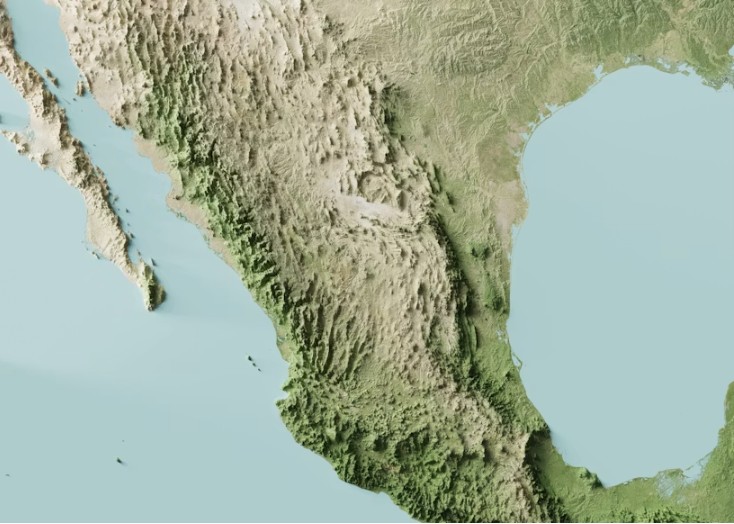
Mexico acted as a natural filter, helping determine which species eventually spread across the Americas.(CN) — Before North American mammals spread into South America, many of them may have spent millions of years in Mexico.Researchers say the region served as an evolutionary holding pen, where mammals adapted and diversified for at least 10 million years before a land bridge connected North and South America about 2.8 million years ago.The study, publishedThursday in Science, offers a new explanation for why North American mammals were far more successful at colonizing South America than South American mammals were at moving north.When the Panamanian land bridge formed about 2.8 million years ago, it set off one of the biggest migrations in Earth’s history. Animals and plants moved between the continents, reshaping ecosystems on both sides. But the exchange was lopsided. More than half of South America’s living mammal groups descended from North American ancestors, while only a small number of North American mammals trace their roots to South America.Scientists have a good idea of when that migration happened. What has been less clear is what led up to it.In order to answer that question, researchers collected new fossil mammals from Mexico and reconstructed how species moved across North America over millions of years.The fossil record showed many species remained in Mexico long before expanding farther south, suggesting the region played a much larger role in their evolution than previously thought.“Our most exciting finding is the observation that Mexico’s role as a natural ‘holding pen’ in shaping mammal movements north to south (and vice versa) goes back at least 10 million years, much longer than what previous evidence suggests,” wrote lead author Jack Tseng in an email.The researchers think Mexico’s geography may help explain why.As North America narrows toward Central America, changing environments may have acted like a natural filter, allowing some mammals to continue south while others never made it through.“We don’t know for sure why Mexico happened to be the holding pen region, but the geography of North America seems to suggest that as landmass becomes narrower going from north to south, the changing environment may have provided a filtering effect that allowed some mammals to continue and prevented others from doing so,” Tseng said. “One might think of this effect like a funnel with a bottleneck; the Mexican holding pen is the bottleneck that selected which species ultimately passed through.”Once the new fossils were included, the pattern was hard to miss.“We were surprised by how clear the holding pen pattern was once we put all the new fossil data into our analyses. Despite the entire North American continent being completely connected to each other during the time period we studied, a north to south pattern of mammal movements really popped out in our results,” Tseng said.Researchers also found evidence that Mexico became drier during this period. Mammals better adapted to those conditions, including larger-bodied species, may have been more likely to survive the evolutionary bottleneck before eventually spreading into South America.This work could also help scientists understand how species respond to environmental change today.Tseng said the same traits that helped mammals survive millions of years ago may help researchers predict which modern species are most likely to thrive, spread or disappear as climates continue to change.“Our findings suggest that the survivability of living species in the Americas enduring ongoing climatic changes could be traced back to whether their ancestors were able to survive the holding pen and cross-continental trek. This information might help biologists predict which species (native or invasive) are more likely to succeed (or go extinct) during current day biotic interchange events. It remains to be seen if such a pattern applies to biotic events on other continents, as well,” he said.Subscribe to our free newslettersOur weekly newsletter Closing Arguments offers the latest about ongoing trials, major litigation and rulings in courthouses around the U.S. and the world, while the monthly Under the Lights dishes the legal dirt from Hollywood, sports, Big Tech and the arts.Additional Reads
Mexico may explain a migration mystery
Full Article
Original Source
Read the full article at Courthousenews →KhanList aggregates and links to publicly available news content. We do not host full articles from third-party sources. Always verify important information with original sources.