
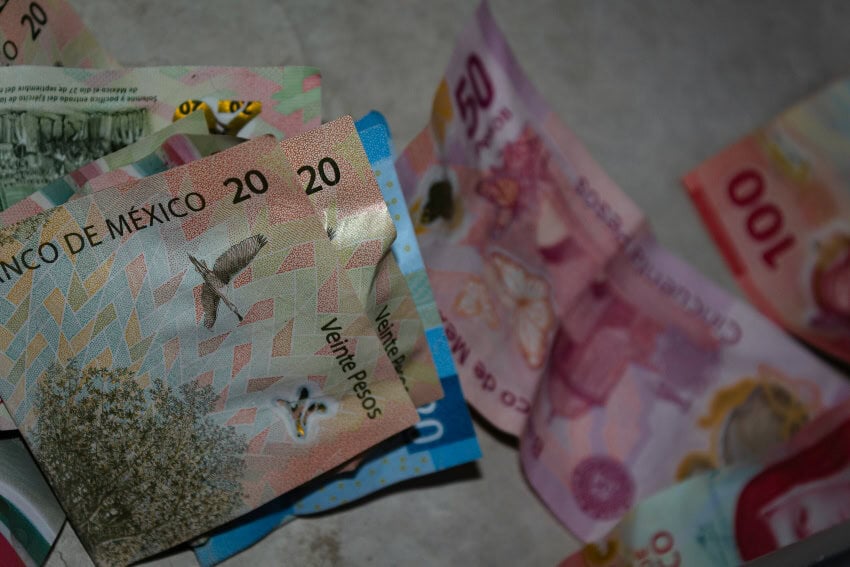
After nearly five years in Mexico, I’m now worried about something I never even considered worrying about before: being given counterfeit pesos. Back in 2008, I received some fake pesos (the Argentine variety) from a taxi driver in Buenos Aires. At the time, I felt like an idiot for being duped. Since then, I hadn’t given it another thought. The 500 peso bill is the most commonly counterfeited in Mexico. (Cristina Espinosa Aguilar/Cuartoscuro) Until this year, I’d never even seen this problem mentioned in the press. But it turns out that the threat from counterfeit currency is on the rise in Mexico. So being aware of the risks — and how to spot fake bills — is increasingly important. How big is the problem of counterfeit money in Mexico? Banco de México (also known as Banxico) removes hundreds of thousands of counterfeit notes from circulation annually. It remains such a serious problem because Mexico is still a cash-centric economy. Last year, Banxico seized 291,673 counterfeit notes, up from 286,917 bogus notes in 2024, but below the peak level of more than 350,000 notes in 2022. While those numbers are huge, counterfeit money in Mexico is nothing new. The problem dates back nearly a century. Authorities discovered the first massive counterfeiting operation in Mexico City back in October 1934. The operation was masterminded by Alfredo Héctor Donadieu, a Frenchman originally from Marseille known here by the alias “Enrico Sampietro.” Monsieur Sampietro was a colorful character and supremely gifted artist who forged Mexican banknotes throughout the 1930s and 1940s, living lavishly off the proceeds before he was caught. He served a total of 13 years in Mexico City’s infamous Lecumberri prison before being deported back to his native France. Bogus bills on the rise: Number of counterfeit pesos in circulation hits 3-year high Fast-forward to the 21st century, Banxico has engaged in a technical arms race against organized crime to protect the currency, introducing ever more sophisticated features to make Mexican banknotes more difficult to forge. The central bank’s innovations include the addition of security threads, watermarks, color-shifting elements and specialized printing. But these enhancements have been matched by parallel innovations in digital printing, high-resolution scanning and commercial printing equipment, which criminals have embraced in their quest to produce high-fidelity fake currency. The most commonly counterfeited bills in Mexico While the data vary a bit from year to year, criminals generally prefer to forge high-denomination bills used in high volumes. The simple reason is that larger bills offer a better return on investment than smaller bills. In 2025, 51% of all counterfeit notes removed from circulation were 500-peso notes. The second most frequently forged bill was the 100-peso note, accounting for about 25% of the total. The 200-peso note was the third most common target, accounting for another 19% of bills confiscated last year. All other denominations accounted for the remaining 3% of fake bills seized in 2025. Where the risk is highest to encounter forged banknotes Mexico City is the center of counterfeiting operations in the country, including this one, which resulted in three arrests. (PGR/Cuartoscuro) The chance of receiving counterfeit money varies significantly depending on where you are in Mexico. Mexico City consistently leads the nation, with tens of thousands of fake bills reported annually. The state of Mexico (excluding the capital) and Jalisco, home to both Guadalajara and Puerto Vallarta, are also considered the highest-risk locations. Outside of big cities, the Yucatán Peninsula is a popular target for counterfeiters due to its heavy tourist traffic and relatively heavy reliance on cash. In this region, Mérida and Valladolid have reported significant counterfeit activity in recent years. Conversely, states with lower population densities, such as Baja California Sur and Campeche, see the lowest incidence of counterfeit currency. Penalties are stiff for passing illegal money in Mexico Under Article 234 of Mexico’s Código Penal Federal, passing counterfeit currency carries a strict penalty of five to 12 years in prison. If you receive a suspicious note, the recommended action is to hand it over to a bank teller, who will issue a receipt and submit the note or notes to Banxico for forensic analysis. To be clear, when you do this, the bank will not replace your forged note with a legitimate one. “Check it” pens are one of the best ways to identify counterfeit pesos. (Amazon) While the federal government doesn’t publish official statistics on cases brought against counterfeiters, independent investigations by InSight Crime and others have found that records from the Fiscalía General de la República (FGR), along with judicial data, reveal a massive disconnect between the huge volume of fake notes seized annually and the number of cases prosecuted. The large gap exists because the legal bar to convict counterfeiters is quite high. Namely, prosecutors must prove not only that the accused passed fake bills, but that the user had criminal intent. Pleading ignorance is a strategy that works rather well in these cases. When charges do get brought, they tend to be focused on sophisticated, large-scale counterfeiting operations, not cases against individuals. Learn to identify genuine Mexican banknotes to protect yourself Counterfeiters prey on unsuspecting consumers and businesses. So, it helps to be familiar with the signature details of authentic Mexican banknotes to avoid being duped. Conveniently, your own hands are one of the best tools for detecting fake money. Real Mexican banknotes have a special texture that you can feel, because they’re made of cotton and polymer. It’s one of the easiest ways to distinguish a genuine banknote from a counterfeit one. Mexico and My Money: Investing in Mexico as a foreigner (beyond real estate) In addition, raised print is used for denominations and signatures, allowing you to easily check their authenticity by running your finger over them. When viewed against a bright light, you can also see the following features on real Mexican money: Microprinted security threads that change color when the paper is moved Ink that glows under ultraviolet light Tiny numbers displaying the name and series Fake notes will have certain flaws and one or more distinguishing features. The most obvious tells are smooth paper and text, uneven colors and blurry faces or monuments. If you notice any of these things when receiving money at a business, street market or from an individual, decline it and ask for a replacement. For those who work in Mexico and handle cash regularly, it’s also worth buying a small, portable UV lamp or specialized marker pen like Check It to verify that the notes you receive are authentic. From tipping and working with local contractors to moving money into Mexico from abroad, check out more from MND’s “Mexico and My Money” archive. MND writer Dawn Stoner is reporting from Guadalajara.
Mexico and My Money: Protecting yourself from counterfeit bills
Full Article
Original Source
Read the full article at Mexiconewsdaily →KhanList aggregates and links to publicly available news content. We do not host full articles from third-party sources. Always verify important information with original sources.