
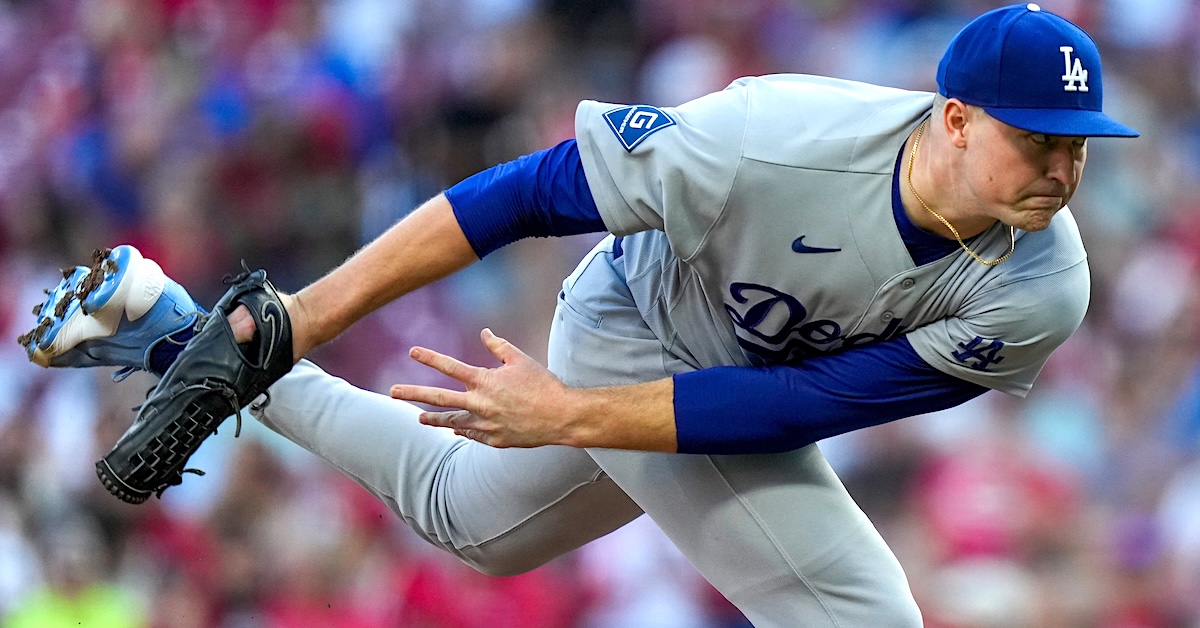
Sam Greene/The Enquirer / USA TODAY NETWORK via Imagn Images Never put off until tomorrow what you can do today. Four days before Thanksgiving and nine days before the start of the anticipated lockout, the New York Mets have come home with the biggest turkey at the supermarket: Two-time AL Cy Young winner Tarik Skubal. Skubal, who turned 30 on Friday, is either the best starting pitcher in baseball or very close to it. Over the past three seasons, he’s first among starting pitchers in WAR, second in strikeouts, and (despite missing six weeks with loose bodies in his elbow this year) fourth in innings pitched. Among pitchers with at least 300 innings over the past three years, Skubal is second in both ERA and FIP. When that track record collides with the league’s richest owner (for now), a multi-billionaire with a desire to knock his club out of a decade-long rut, the resulting contract is even more eye-popping than Skubal’s stats: nine years, $450 million, with a full no-trade clause. This is the fourth-richest contract in baseball history, in terms of total value, and the third-richest by AAV, if you account for the deferrals in Shohei Ohtani’s deal. And while Ohtani’s here, it bears mentioning that Skubal’s deal is the richest ever for a full-time pitcher by both measures. The going AAV rate for older aces on short-term deals — Max Scherzer in 2022, Justin Verlander in 2023, Zack Wheeler in 2025 — has been in the low $40 millions for a few years now. Mets owner Steve Cohen knows this better than anyone, since it was he who signed Scherzer and Verlander to contracts worth $43.3 million per year. The last time a pitcher like Skubal hit the open market in the prime of his career, the Yankees signed Gerrit Cole to a nine-year $324 million contract after the 2019 season. Skubal’s deal is the Scherzer-Verlander AAV, multiplied by the term of Cole’s deal. The resulting contract breaks the previous record for a pitcher (Yoshinobu Yamamoto’s 12-year, $325 million deal, which he signed heading into his age-25 season) by some $125 million. Even if you’re a bit jaded from watching small-market teams give out $50 million deals to rookies over the past few seasons, this is a bracing amount of money. Certainly, it’s more than we anticipated. Ben Clemens predicted that Skubal would ring the bell for $380 million over 10 years. Our crowdsourced median contract was a little closer to reality; it put Skubal in line for $336 million over eight years, which is a $42 million AAV. ZiPS projects that Skubal will be worth $352 million over nine years. ZiPS Projection – Tarik Skubal Year W L ERA G GS IP H ER HR BB SO ERA+ WAR 2027 15 5 2.58 30 30 181.7 140 52 16 34 220 159 5.2 2028 14 6 2.70 29 29 176.7 141 53 17 33 207 152 4.8 2029 13 6 2.87 27 27 166.3 137 53 16 31 189 143 4.3 2030 12 6 3.01 26 26 152.3 130 51 16 28 168 136 3.7 2031 11 6 3.18 24 24 147.3 132 52 17 28 157 129 3.2 2032 10 7 3.45 24 24 146.0 137 56 18 29 151 119 2.9 2033 10 7 3.54 23 23 139.7 133 55 18 29 141 116 2.5 2034 9 7 3.77 23 23 136.0 132 57 18 30 133 109 2.2 2035 8 7 3.99 21 21 124.0 123 55 17 30 118 103 1.7 By now, you’ve seen enough long-term free agent contracts to know how these work. The value is front loaded; the Mets are interested in Skubal more for what he can do for them in 2027 than in 2036. The last few years are just a way to spread out the overall cost of the deal; hopefully, by that point, continued salary inflation will render that $45 million-a-year price tag a little less shocking. Remember when Giancarlo Stanton signed that paradigm-destroying 13-year, $325 million contract all those years ago? It’s finally coming to an end next season; in 2027, Stanton will be at most the Yankees’ sixth-highest-paid player, out-earning David Bednar by just 8%. A 50th-percentile projection also understates a player’s upside, or at least balances it against the possibility of catastrophe. That table has Skubal projected for a peak WAR of 5.2 WAR and no other seasons of five or more WAR. I’d take the over on both of those numbers. Finally, there’s Friedman’s Law to contend with: “If you’re always rational about every free agent, you will finish third on every free agent.” Based on ZiPS and the wisdom of crowd, Skubal is worth somewhat less than what the Mets paid for him. So let’s say that $350 million is the price for Skubal; the extra $100 million is to make sure he goes to the Mets, and not the Dodgers or the Yankees or the Padres or, I dunno, maybe Jerry Dipoto goes nuts and tries to bring Skubal home to Seattle. Consider also that while the Mets have plenty of talent and resources, they finished dead last in the NL East this past season. And that’s going to continue to be one of the toughest divisions in baseball to navigate. The Braves are perennial contenders. The Phillies’ competitive window is narrowing but isn’t closed yet. The Nationals seem to finally be close to figuring things out for the first time in the post-Juan Soto era. And while it seems like it’s Marlins franchise policy to break up the roster whenever there’s a danger of making the playoffs, they’re also usually good enough to be annoying to the other teams in the division. The Mets’ outlook should be rosier in 2027: They brought up a trio of talented rookies in Carson Benge, Nolan McLean, and A.J. Ewing this past season. Soto missed significant time in 2026 for the first time in his career, and count me among those who predict a big year for post-vasectomy Francisco Lindor. But the Mets’ roster continues to be riddled with holes. Skubal might produce twice as much WAR as most pitchers, but he still only takes up one spot in the rotation. Right now, McLean is the only other pitcher in the Mets’ projected rotation — maybe on the entire big league pitching staff — whom I’d trust in a must-win game. And if you think $45 million a year is a lot for Skubal, consider how little value the Mets got in 2026 from last offseason’s big free agents: A combined 0.5 WAR from $59 million worth of Jorge Polanco and Bo Bichette. If you want to tack on Devin Williams and trade pickup Marcus Semien, that comes to $107 million in salary (including $5 million that went to Texas to pay for Brandon Nimmo) for a total of 0.8 WAR. That’s not a difficult bar for Skubal to clear. Nevertheless, this is a player who’s now used to pitching in the postseason but has yet to win a title; getting him to devote the rest of his prime to a club that needs to prove it can win would take some extra persuading. Ultimately, this is a very, very easy transaction to analyze. Contrast it to Jake Bauers’ deal with the Red Sox, for example. There are multiple defensible viewpoints on how good Bauers is, how valuable his skill set is to the Red Sox, how well he fits on their roster, and whether the money Boston’s spending on him could be put to better use elsewhere. That’s not really the case here. Skubal is the best player in this free agent class by an enormous margin, and the Mets had a dire need for starting pitching. Anyone who disagrees with either of those points isn’t worth listening to. Is there a better place to spend Skubal’s salary this offseason? I think not. Our no. 2 and no. 3 free agents, Seiya Suzuki and Trevor Rogers, each brought in median crowdsourced estimates of $24 million a year. No GM in the league would trade Skubal for Suzuki and Rogers put together. From Skubal’s perspective, this contract puts him on a team with a motivated and well-resourced owner, and makes him the richest pitcher who ever lived. I can’t think of a reason for him not to sign it. There’s another advantage to the Mets moving quickly and decisively. ESPN’s Alden Gonzalez reports that while the Dodgers were interested in bringing Skubal back, they never made a formal offer because of concerns over “the uncertainty of a new CBA and what the economic model might look like” after the lockout. Let’s finish by engaging with that angle. In general, I have no patience for baseball discourse based in a fatalistic fear of the Dodgers’ financial power. They might sign a lot of big-name free agents, but they just got their faces caved in by a small-market team owned by a lesser Wall Street billionaire who likes to advance the narrative that his franchise is the Little Sisters of the Poor. The Dodgers do have structural advantages, but nothing about those advantages makes their success inevitable. Just ask the Mets. Nevertheless, it is nice to see another team get the drop on baseball’s big bad, if only for the sake of novelty. And the fact that Cohen dropped almost half a billion dollars on one player while the Dodgers hemmed and hawed speaks to the fact that the Mets need Skubal more than the Dodgers do. All other things being equal, the Mets ought to have offered Skubal more than anyone else. But what if the Dodgers are right? What if the post-lockout financial structure of Major League Baseball is radically different from what we have now? In other words, are the Mets already over the salary cap, months before the salary cap even exists? Don’t worry about it. My contention from the start has been that in order to get a salary cap, the owners would need to break the union. That’s been done before, by the NFL in 1982 and 1987, and the NHL in 2005. But the MLBPA is much stronger and better organized than its sibling unions and has been on high alert since at least 2020; anyone who thinks the league could wear the MLBPA down without losing at least the entire 2027 season doesn’t know what they’re talking about. I believe the owners want a cap badly; I don’t think they want it enough to pay what it’d be likely to cost. Let’s say I’m wrong about all that. The owners have already backed themselves into a corner with their most recent salary cap proposal. The current offer on the table sets a cap at $258.1 million, to be instituted in 2028. Under U.S. labor law, they can’t propose to lower that number or install a cap for 2027 — that would constitute regressive bargaining. In reality, those numbers would have to go way up in order to even tempt star players to undermine the union, as was the case in the NFL and NHL. I don’t think a 2027 cap is even practicable; with most of the free agent class still unsigned, five teams are already over $258 million in payroll by the math used for the competitive balance tax. There’s just no way to make the math work before 2028. By then, Sean Manaea, Polanco, and likely Kodai Senga will be off the Mets’ books. Bichette’s 2028 player option and a handful of pending arbitration cases leave the exact payroll figure up in the air, but the short version is that the Mets would be under any salary cap that’s possible short of Dick Monfort waking up tomorrow as God-Emperor of the known universe. Truly great players don’t come along that often. When one is available, you’ve got to strike fast. The Mets did. It doesn’t need to be any more complicated than that.
Mets Make Tarik Skubal Rich Beyond the Dreams of Avarice
Full Article
Original Source
Read the full article at Blogs →KhanList aggregates and links to publicly available news content. We do not host full articles from third-party sources. Always verify important information with original sources.