
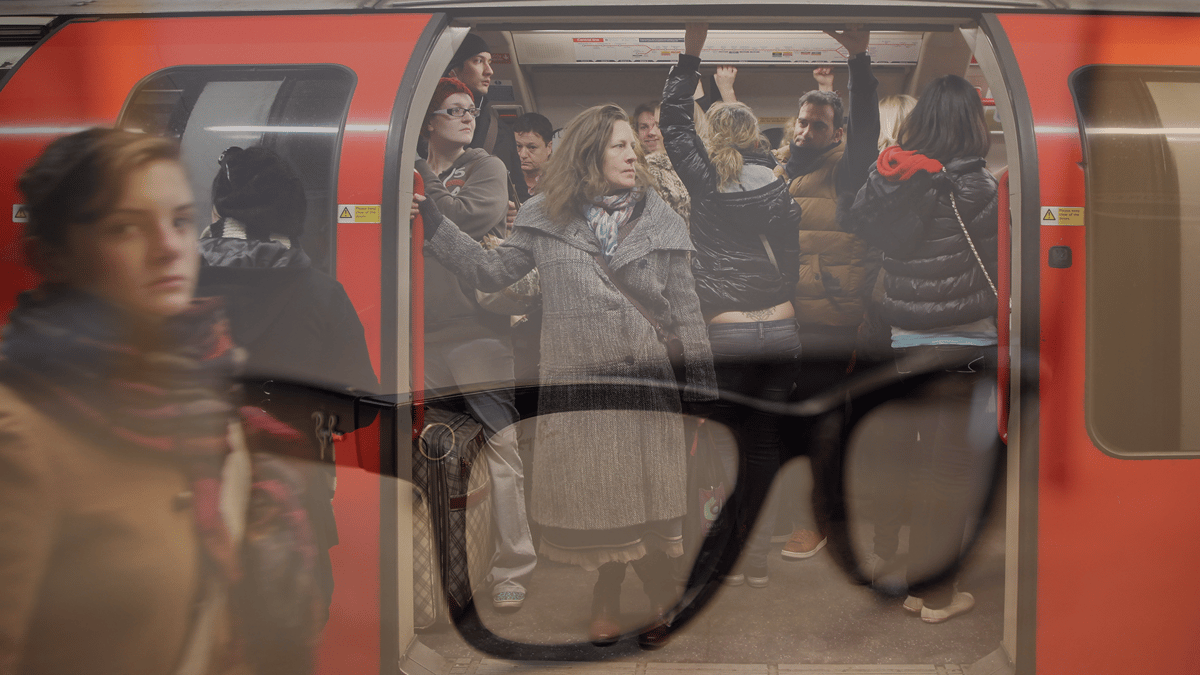
Campaigners are calling for a ban on Meta’s “pervert” AI glasses as concerns continue to grow over their impact on women’s safety across the TfL network. Sexual offences on the Tube reached a five year high in December last year, with Tube carriages and train stations becoming a hotspot for violence and harassment against women. As many as 58% of these incidents take place directly inside the carriage, while an overwhelming 99% of upskirting victims are women, according to a 2026 study using British Transport Police data. This existing problem could be exacerbated by the highly controversial specs, say campaigners, who have called for for their ban. Liz Hunter, campaigner at Stop Smart Glasses argues that “public transport, trains, buses, and night buses, can already be frightening for women,” but that AI glasses open the floodgates to a plethora of abuse and exploitation. “You don’t need to have a wild imagination to think about all the awful possibilities and ways they could be used,” she says. “They are a gift to criminals and people with bad intentions.” Meta glasses could pose a threat to women across the TfL networkGetty/The Standard Campaigners say the use of the glasses on public transport is among their biggest areas of concern for women.“We know that it is likely more and more harm will be caused to vulnerable people”, Guy Holder, fellow campaigner at Stop Smart Glasses, warned.Beyond voyeurism and upskirting, Guy Holder, warns the glasses can facilitate doxxing - the unauthorised sharing of personal details online - and stalking. The covert filming ability of the glasses is a primary concern to campaigners, who argue it is a way of "encouraging and facilitating violence against vulnerable people.” Meta has maintained that the white light on its glasses blinks to indicate that the frames are recording or capturing content. The tech giant’s guidance says that users should stop recording if someone expresses discomfort or objects. Read MoreHowever, Ms Hunter and Mr Holder argue this places vulnerable victims into confrontation. “If you don’t say anything, that means you’re consenting to being filmed and the only way to stop that is to challenge that person,” he says. “What kind of power dynamic does that set?” Ms Hunter adds: “You’re showing that a woman’s request to stop means nothing.”Campaigners added that Big Tech glasses are designed to be “discreet”, making them ideal for covert filming, leaving many victims unaware that they are being filmed. Recent social media trends have seen creators secretly film women and girls for views. Beth Knight was just 17 when she was filmed by a man wearing Meta glasses at London Waterloo station. Speaking about the incident on Channel 4 News, Ms Knight said she was left feeling “scared” and “angry” and is now using her story to drive awareness of the issue. She said: “I got angry because he was using my face, and my voice and my image to convey an image that I did not stand by.” It is not generally illegal to film people in a public space, but Mr Holder warns that the technology could easily slip into “all sorts of London spaces” to the detriment of vulnerable people. “What about nightclubs? School gates! Even parks and other crowded places,” he says. “They are pervert glasses!”Ms Hunter and Mr Holder have campaigned for a ban on smart glassesLinkedInCritics of the campaign, Mr Holder notes, are primarily male. He says they claim that smart glasses are no different from filming on a phone or another device. But Mr Holder rejects that argument, claiming that just because “things are terrible”, it does not mean that “we should pour fuel on it.” “It’s like saying, women are already being harassed so let’s make it easier,” he argues. Jack Coulson, head of advocacy at campaign group Big Brother Watch adds: “Men taking photos of women without them noticing, or aggressively taking photos, has been a problem for a long time. But the glasses make the ability to do it easier.” Mr Coulson is another critic of the glasses, also branding them “pervert glasses.” Big Brother Watch has not explicitly called for a ban of the glasses, but has demanded tighter regulation for the glasses and surveillance technology in general, including Live Facial Recognition deployed by the police. The campaign group admits there are some use cases where it welcomes the AI glasses, namely where they are worn by people with disabilities. “They could be transformative and help people to navigate through the world around them,” said Mr Coulson. “We’re sympathetic to people wanting to use them for that specific use case.” Stop Smart Glasses admits this is a vulnerability in their campaign, but Ms Hunter says that “accessibility and privacy must not be pitted against each other.” “We are more than capable of protecting both,” she said. A TfL spokesperson said: "Anyone using any device on our network must do so in a way that complies with the law. We do not tolerate any form of harassment on our network, and encourage customers to report any behaviour that makes them feel uncomfortable to us or to the police."It is understood that TfL has no plans to restrict the use of specific devices on its network.A Met Police spokesperson said: “Protecting women and girls from harm remains a top priority. While unsolicited filming in a public space is not an offence, officers will take action if filming is intentionally causing harassment or distress, or where there was a criminal purpose.“Anyone who has experienced repeated unsolicited filming in public or filming within a private space, such as a bathroom, is encouraged to report to police via 101.“We would urge anyone who has been made to feel uncomfortable to report. These reports are vital in helping us improve our intelligence and understanding of patterns within offending.”Meta has been contacted for comment. A spokesperson for the tech giant said previously: “The people who use them and those around them need to trust them. That’s why we built privacy into our AI glasses from the ground up. “For example, every pair has a capture LED that blinks when you take a photo or video that you can save or share, it can’t be turned off, and if someone covers or damages the LED, the camera is disabled. We will keep strengthening our protections as our glasses become even more capable.” Stop Smart Glasses have launched a petition to ban the sale and promotion of smart glasses. It has garnered some 8,000 in three months.
Meta’s ‘pervert’ glasses pose growing threat to women and girls on London Tubes, say campaigners
Full Article
Original Source
Read the full article at Standard →KhanList aggregates and links to publicly available news content. We do not host full articles from third-party sources. Always verify important information with original sources.